




The coffee sector is a key pillar of agricultural development in Son La province, with over 21,400 hectares under cultivation and an annual production of 35,000–45,000 tons of green coffee beans. However, Son La currently lacks specific mechanisms to implement waste management policies in coffee processing. The widely practiced wet processing method generates large volumes of organic-rich wastewater and coffee husk by-products, while most household-scale and cooperative processing facilities do not have appropriate treatment systems. The direct discharge of waste into the environment is causing localized pollution, affecting community health and increasing environmental management pressure at the local level.
Son La province has issued Resolution No. 128/2020/NQ-HĐND to encourage investment in agriculture and agro-processing, including support for processing facilities. However, in practice, support mechanisms for wastewater treatment and coffee by-product recycling have not yet been clearly operationalized.
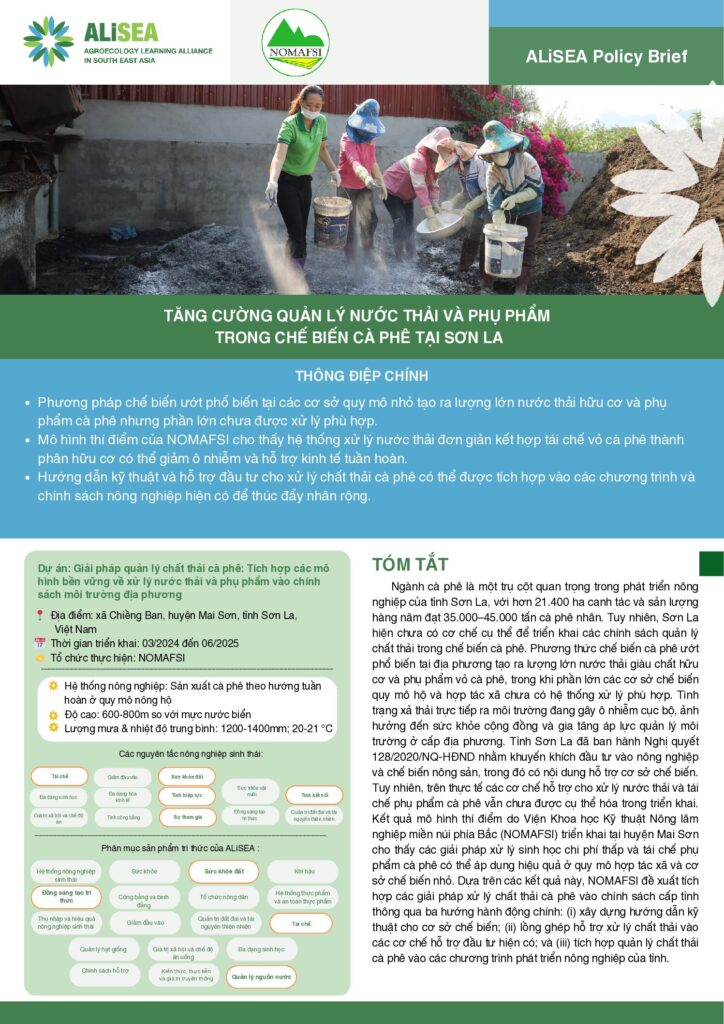
Pilot models implemented by the Northern Mountainous Agriculture and Forestry Science Institute (NOMAFSI) in Mai Son district demonstrate that low-cost biological treatment solutions and coffee by-product recycling can be effectively applied at cooperative and small-scale processing levels. Based on these results, NOMAFSI proposes integrating coffee waste management solutions into provincial policies through three main actions: (i) developing technical guidelines for processing facilities; (ii) integrating waste treatment support into existing investment support mechanisms; and (iii) incorporating coffee waste management into provincial agricultural development programs.