




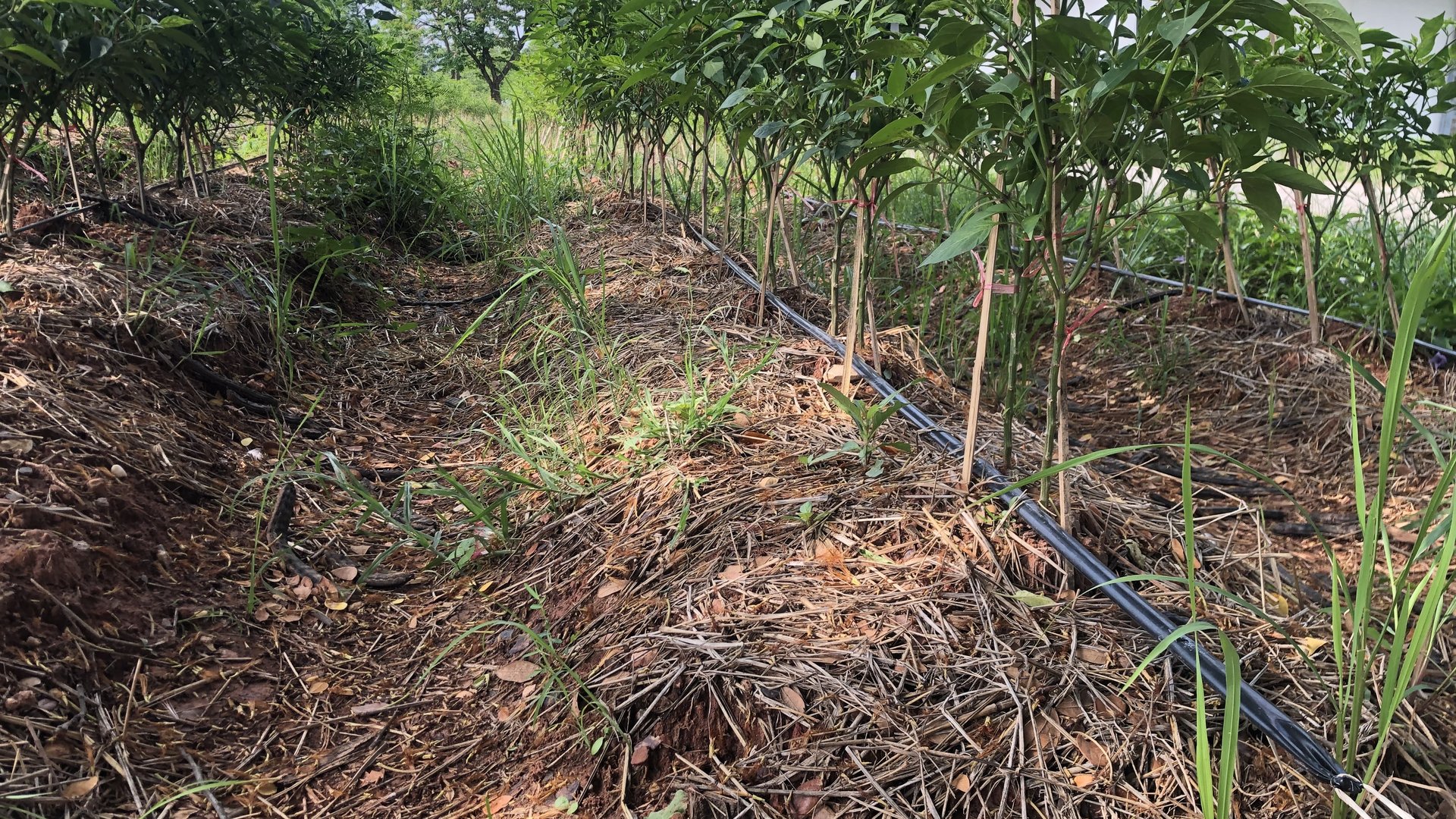
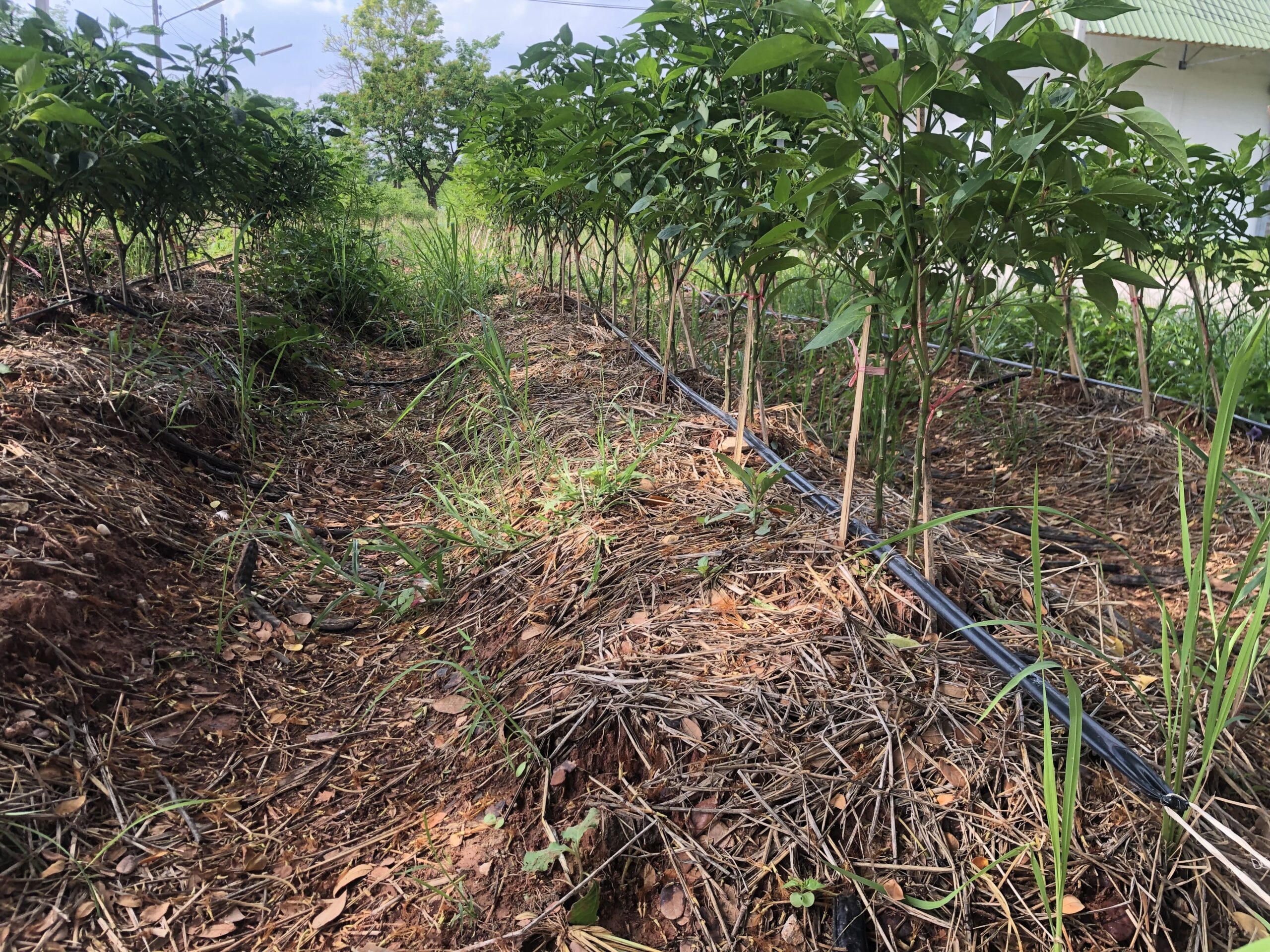
Salinity and associated land degradation in parts of the Northeast of Thailand limits production. Knowledge of saline soil management was integrated into an organic agriculture system: dolomite application adjusted pH levels, manure increased the soil’s organic matter, while fermented bio-extracts stimulated root systems. Yields of chili pepper and parsley improved greatly.
Integrated Agriculture-Based Land Use In Areas With Saline Soils
1.1 Summary
1.2 Background
The problem of soil degradation in regions with saline soil such as parts of the Northeast of Thailand shows up as chemical and physical deterioration and low fertility, which are significant limitations to land use. These issues are exacerbated by water shortages in the dry season and excessive rainfall during the cropping season. To address this, a group of farmers interested in learning effective soil management strategies has formed. Their aim is to mitigate the effects of salinity and improve crop productivity on their farms.
Section 2: Geographic context
2.4 Topography
Plateau
Ridge
Mountain slope
Hill slope
Foot slope
Valley floor
Littoral
Delta
2.5 Rainfall and temperature
Average annual rainfall (mm/year): 1500
| Jan | Feb | Mar | Apr | May | Jun | Jul | Aug | Sep | Oct | Nov | Dec | |
|---|---|---|---|---|---|---|---|---|---|---|---|---|
| Rainy Season | – | – | – | – | ✓ | ✓ | ✓ | ✓ | ✓ | – | – | – |
| Average Rainfall | – | – | – | – | 240 | 360 | 300 | 270 | 330 | – | – | – |
| Coldest (average temp.) | 16.3 | – | – | – | – | – | – | – | – | – | – | – |
| Hottest (average temp.) | – | – | – | 37.4 | – | – | – | – | – | – | – | – |
2.6 Agroclimatic zone
Tropical wet
Tropical monsoon
Tropical wet and dry
Humid subtropical
Semi-arid
Mountain
2.7 Agricultural system
Rice paddies
Plantation agriculture
Swidden agriculture
Horticultural system
Agroforestry system
Aquaculture
Forest-based system
Urban land use
Section 3: Categorization of initiative
3.1 Typology
3 = main objective
2 = secondary objective
1 = not actively pursued
0 = not at all part of initiative
| The initiative was aiming to... | Score | Comments or description |
|---|---|---|
| ... develop, test, improve, adapt, or out-scale agroecological practices at plot or farm level | 3 | The area is outside the full irrigation zone and has a local or community small size water sources. |
| ... foster institutional, financial, or policy mechanisms, or build skills needed to promote the development of agroecological practices | 0 | |
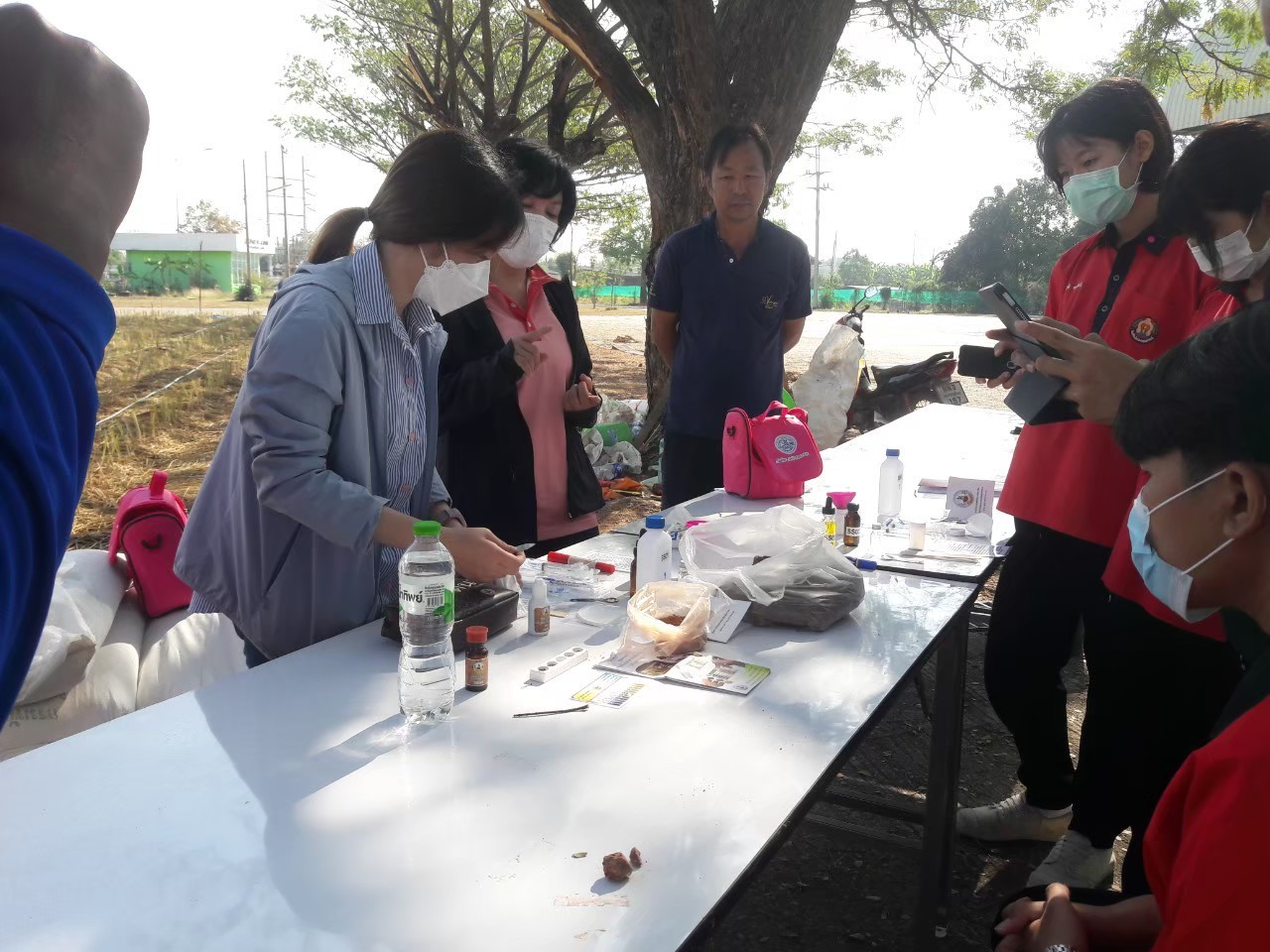
| ... create fundamental or practice-oriented knowledge to support the implementation of practices or approaches | 2 | The area is outside the full irrigation zone and has a local or community small size water sources. |
The problem of soil degradation in regions with saline soil such as parts of the Northeast of Thailand shows up as chemical and physical deterioration and low fertility, which are significant limitations to land use.
3.2 Contribution to agroecological principles
0 = no contribution at all
1 = very low contribution
2 = low contribution
3 = medium contribution
4 = high contribution
5 = very high contribution
| Agroecological Principles | Achieved Contribution |
|---|---|
| Recycling | 012345 |
| Input reduction | 012345 |
| Soil health | 012345 |
| Animal health | 012345 |
| Biodiversity | 012345 |
| Synergy | 012345 |
| Economic diversification | 012345 |
| Co-creation of knowledge | 012345 |
| Social values and diet | 012345 |
| Fairness | 012345 |
| Connectivity | 012345 |
| Land and natural resources governance | 012345 |
| Participation | 012345 |
Section 4: Detailed description
4.1 Objective of initiative
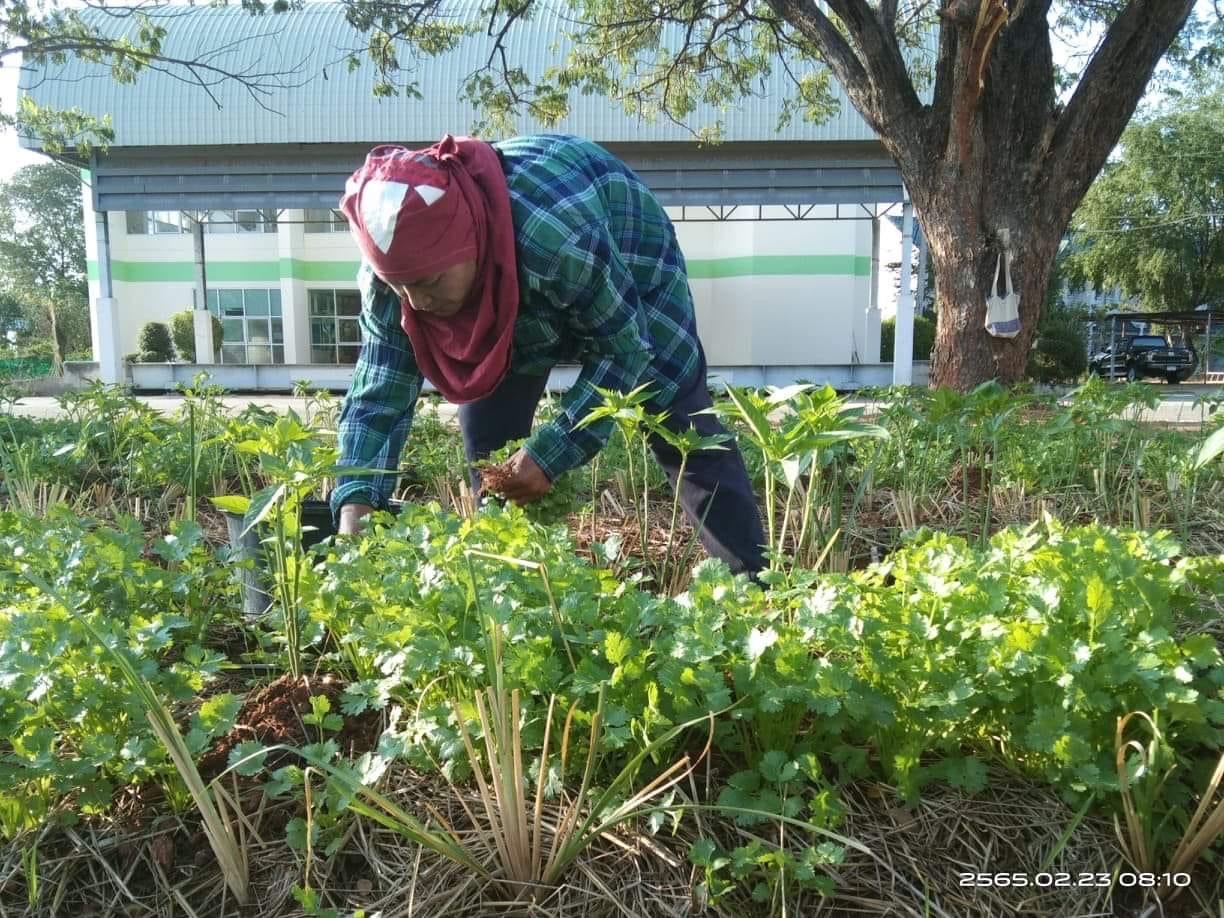
Salinity and associated land degradation in parts of the Northeast of Thailand limits production. Knowledge of saline soil management was integrated into an organic agriculture system: dolomite application adjusted pH levels, manure increased the soil’s organic matter, while fermented bio-extracts stimulated root systems. Yields of chili pepper and parsley improved greatly.
4.2 Rationale of initiative
Salinity and associated land degradation in parts of the Northeast of Thailand limits production. Knowledge of saline soil management was integrated into an organic agriculture system: dolomite application adjusted pH levels, manure increased the soil’s organic matter, while fermented bio-extracts stimulated root systems. Yields of chili pepper and parsley improved greatly.
4.3 Scale of study
Plot or parcel
Farm or household
Cooperative or other grouping
Village or local community
Landscape (e.g. watershed)
Sub-national administrative unit
Country
Region
4.4 Actors
| Actors | Visioning and lead | Coordination and management | Knowledge and innovation | Education and training | Community engagement and support | Advocacy and policy | Financial and resource management | Operational implementation |
|---|---|---|---|---|---|---|---|---|
| 1. Farmers, land users | – | – | – | – | – | – | – | ✓ |
| 2. Farmer groups or associations | – | – | – | – | ✓ | ✓ | – | – |
| 3. Other community groups | – | – | – | – | – | – | – | – |
| 4. Extension services | – | – | – | – | – | – | – | – |
| 5. Local authorities | – | – | – | – | – | ✓ | – | – |
| 6. Sub-national authorities | – | – | – | – | – | – | – | – |
| 7. National authorities | – | – | – | – | – | – | – | – |
| 8. Private sector actors | – | – | – | – | – | – | – | – |
| 9. Local or national NGO | – | – | – | ✓ | ✓ | – | – | – |
| 10. International NGO | – | ✓ | – | – | – | – | ✓ | – |
| 11. Research institution | – | – | ✓ | – | – | – | – | – |
| 12. Donor agency | – | – | – | – | – | – | – | – |
| 13. Website Developer | – | – | ✓ | – | – | – | – | – |
The website developer was included just to have an example for this section.
4.5 Implementation process
| Step | From month / year | To month / year | Description | Approx. costs (local currency) | Labour input (person days) | Skills required (description) | Equipment (list of items) |
|---|---|---|---|---|---|---|---|
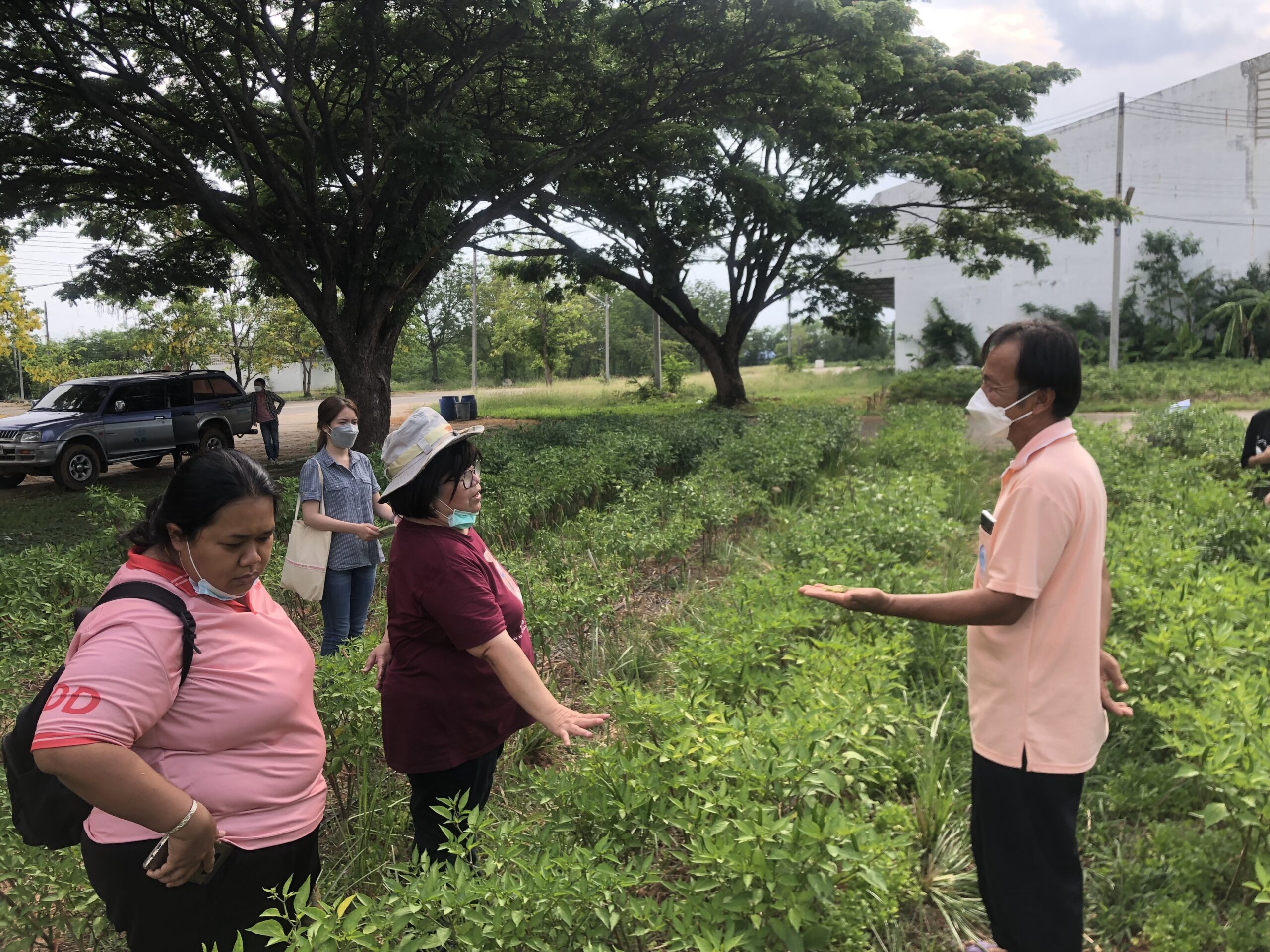
| 1 | 04/2020 | 05/2020 |
Cultivation plot preparation: |
40,000 | 120 | Tractor driving | Tractor |
| 2 | 05/2020 | 09/2020 |
Planting and maintenance: |
120,000 | 600 | Rake | |
| 3 | 11/2020 |
Harvesting yields: |
75,000 | 14 | Tractor driving | Tractor |
Section 5: Results and learnings
5.1 Results
| Type | Main Results | Stakeholder Opinions / Statements |
|---|---|---|
| Practice |
Nutrients increase from integrated cropping such as chili peppers, parsley, vetiver etcnts increase from integrated cropping such as chili peppers, parsley, vetiver etc |
Reliable and stable stream flows in dry season |
| Approach |
Test |
|
| Research |
Plant varieties which are cultivated in the area grow more such as chili peppers, parsley, vetiver etc. |
Farmers manage soil and water and use integrated farming methods, leading to additional income opportunities. |
5.2 Recommendations
This technique will help:
- improve production
- prevent, reduce land degradation; restore/rehabilitate land
- preserve/ improve biodiversity
- create beneficial economic impact
Section 6: Imprint
6.1 Authors
6.2 Experts
6.3 Sources
| Authors | Title | Journal or publisher | ISBN or ISSN number |
|---|---|---|---|
| Jipsa Anders de Groot | Development in Brackish Territory | WordPress | 1234567890 |
| Albrecht Ehrensperger | How to work the land | CDE, Bern | 0987654321 |
The area can be classified as belonging to a type-1 rice paddy system.