




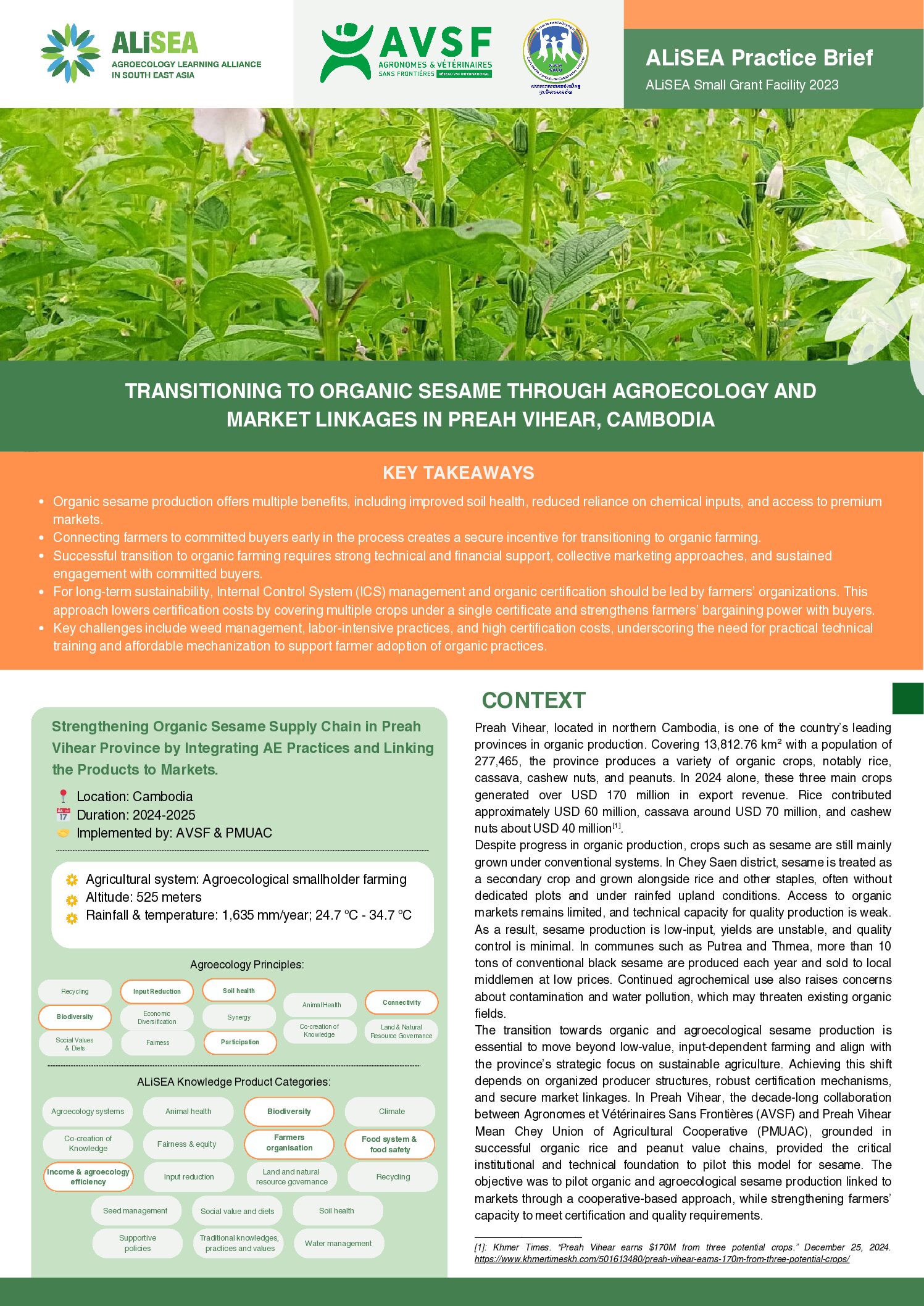
Chuyển đổi sản xuất mè hữu cơ thông qua nông nghiệp sinh thái và liên kết thị trường tại Preah Vihear, Campuchia
Tài liệu này trình bày mô hình thí điểm hỗ trợ nông hộ nhỏ tại Preah Vihear chuyển từ sản xuất mè truyền thống sang sản xuất hữu cơ thông qua các thực hành nông nghiệp sinh thái và liên kết thị trường dựa trên hợp tác xã. Mô hình kết hợp đào tạo kỹ thuật, hệ thống kiểm soát nội bộ và tiếp thị tập thể nhằm cải thiện sức khỏe đất, giảm sử dụng đầu vào hóa học và tăng khả năng tiếp cận các thị trường ổn định, giá trị cao.

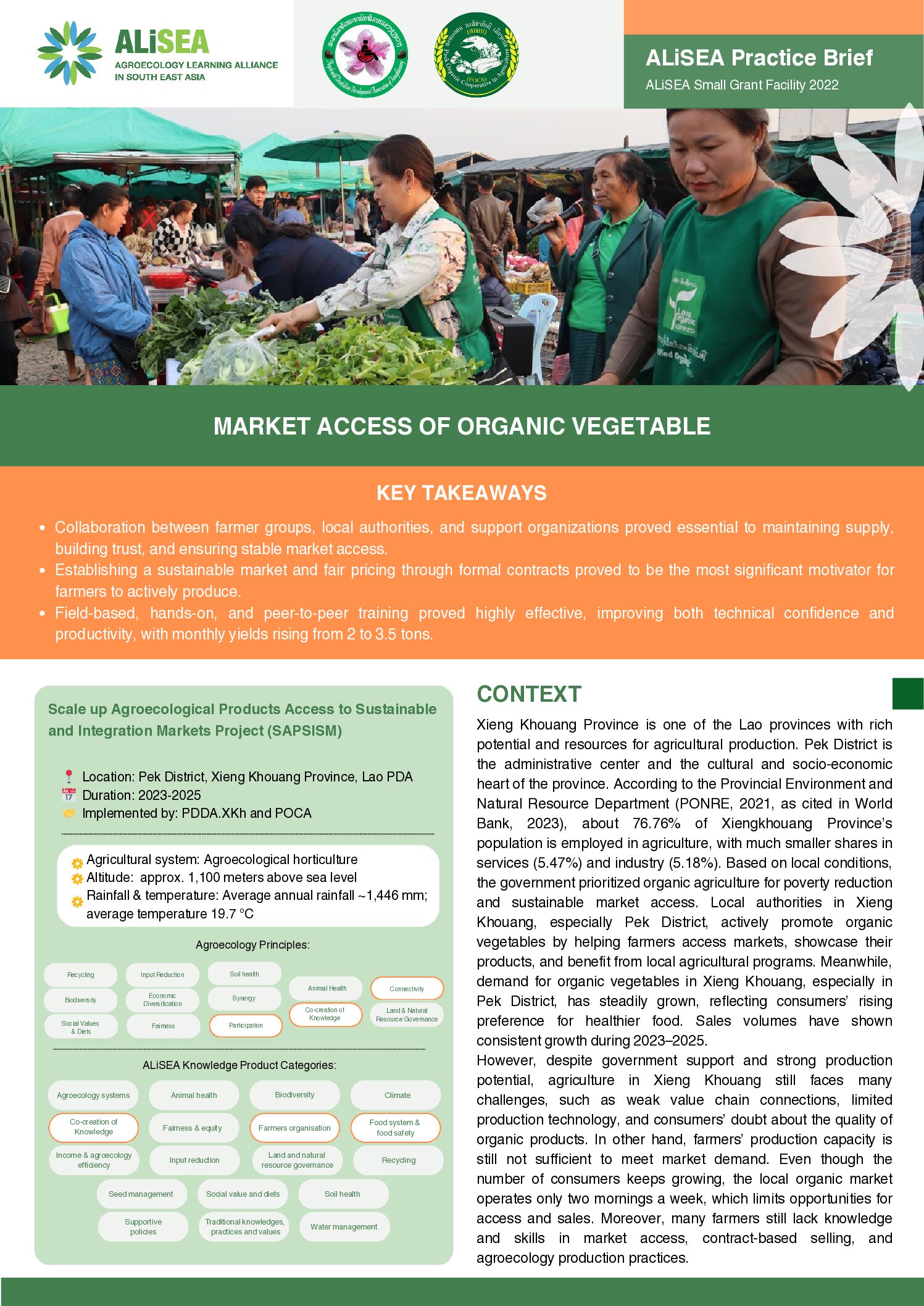
Improving Market Access for Organic Vegetable Farmers in Pek District, Xiengkhouang Province
This practice focuses on strengthening market access for organic vegetable farmers in Pek District, Xiengkhouang Province, Lao PDR. Through collaboration between PDDA and POCA, agroecological capacity building was combined with structured buyer engagement to better align production with market demand. The experience highlights how improved market linkages can enhance income stability while supporting the continued development of organic farming systems.
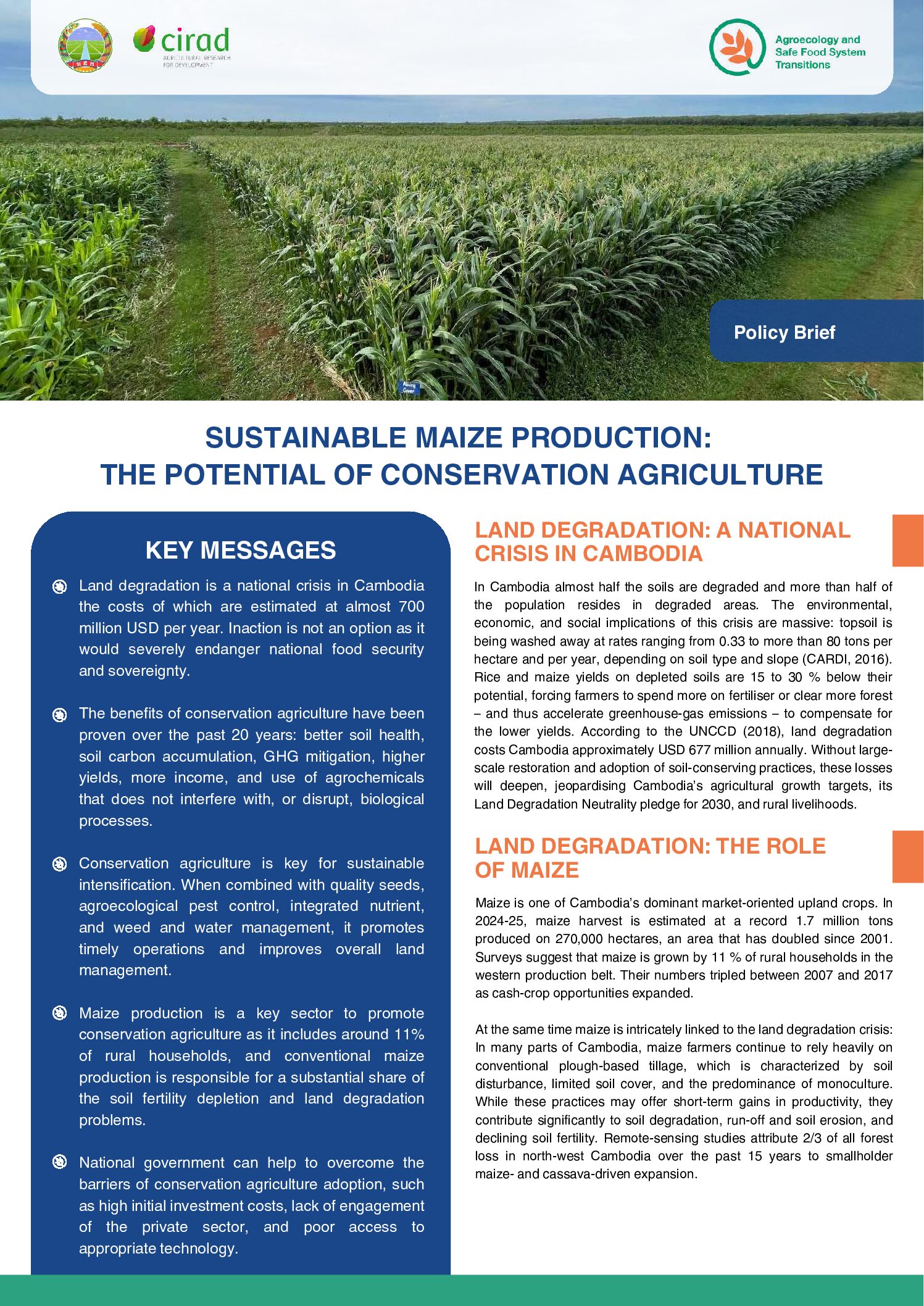
Sustainable Maize production: The potential of Conservation Agriculture
This policy brief presents the potential of conservation agriculture to overcome soil fertility depletion and land degradation problems due substantially to conventional maize production. It promotes the benefits of conservation agriculture as well as key priorities and options for policy;
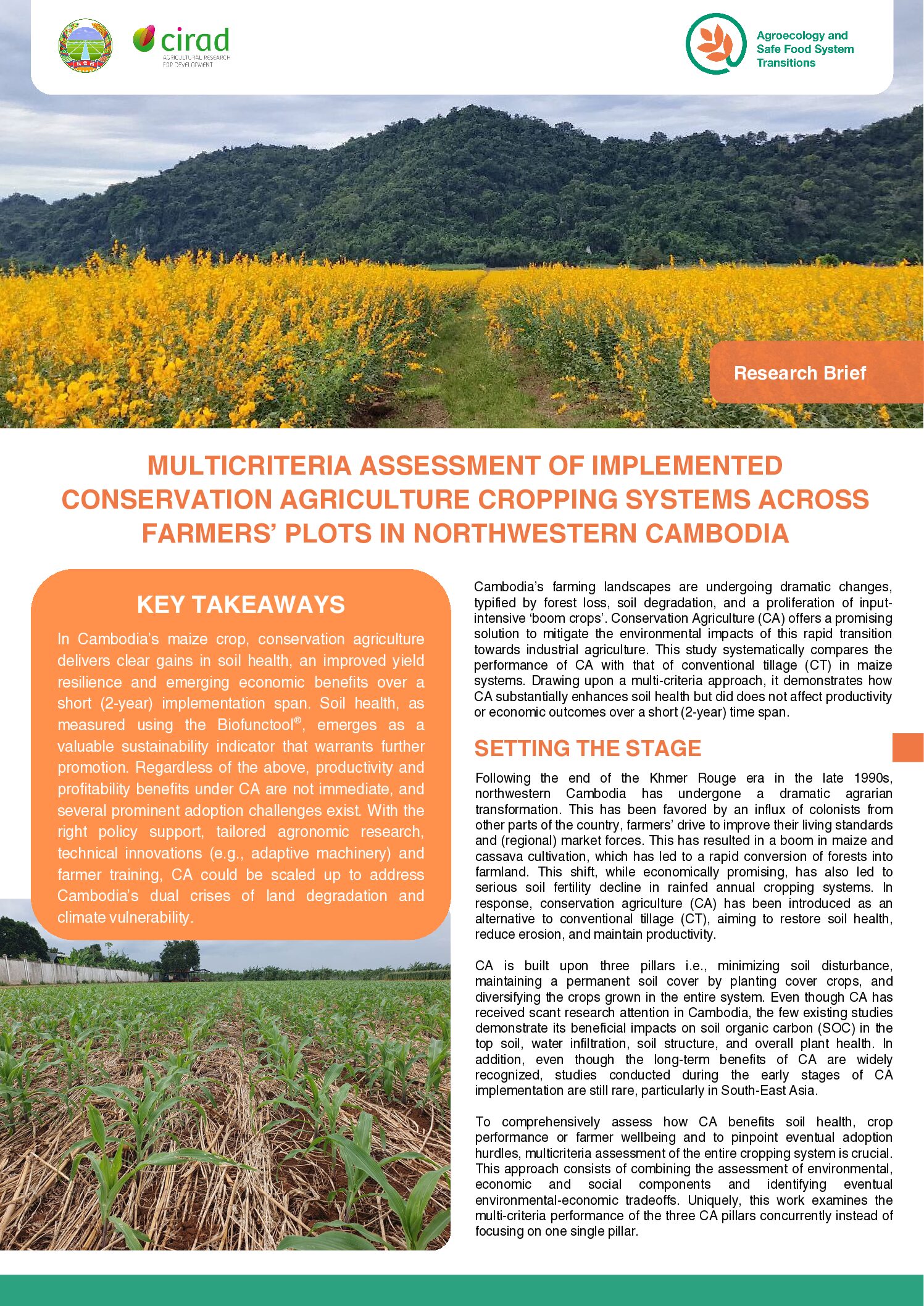
Multicriteria Assessment of Implemented Conservation Agriculture Cropping Systems Across Farmers’ Plots in Northwestern Cambodia
In Cambodia’s maize crop, conservation agriculture delivers clear gains in soil health, an improved yield resilience and emerging economic benefits over a short (2-year) implementation span. Soil health, as measured using the Biofunctool, emerges as a valuable sustainability indicator that warrants further promotion. Regardless of the above, productivity and profitability benefits under CA are not immediate, and several prominent adoption challenges exist. With the right policy support, tailored agronomic research, technical innovations (e.g., adaptive machinery) and farmer training, CA could be scaled up to address Cambodia’s dual crises of land degradation and climate vulnerability
The Institutionalization of Agroecology in Viet Nam
This policy brief, after reviewing agrarian transition, agricultural public policies, actors and organisations supporting Agroecology in Vietnam, presents a rationale to develop agroecology and gives recommendations on different interventions and approaches that could be leveraged by public authorities and other stakeholders to catalyze and bring to scale a full-fledged agroecological transition in Viet Nam.
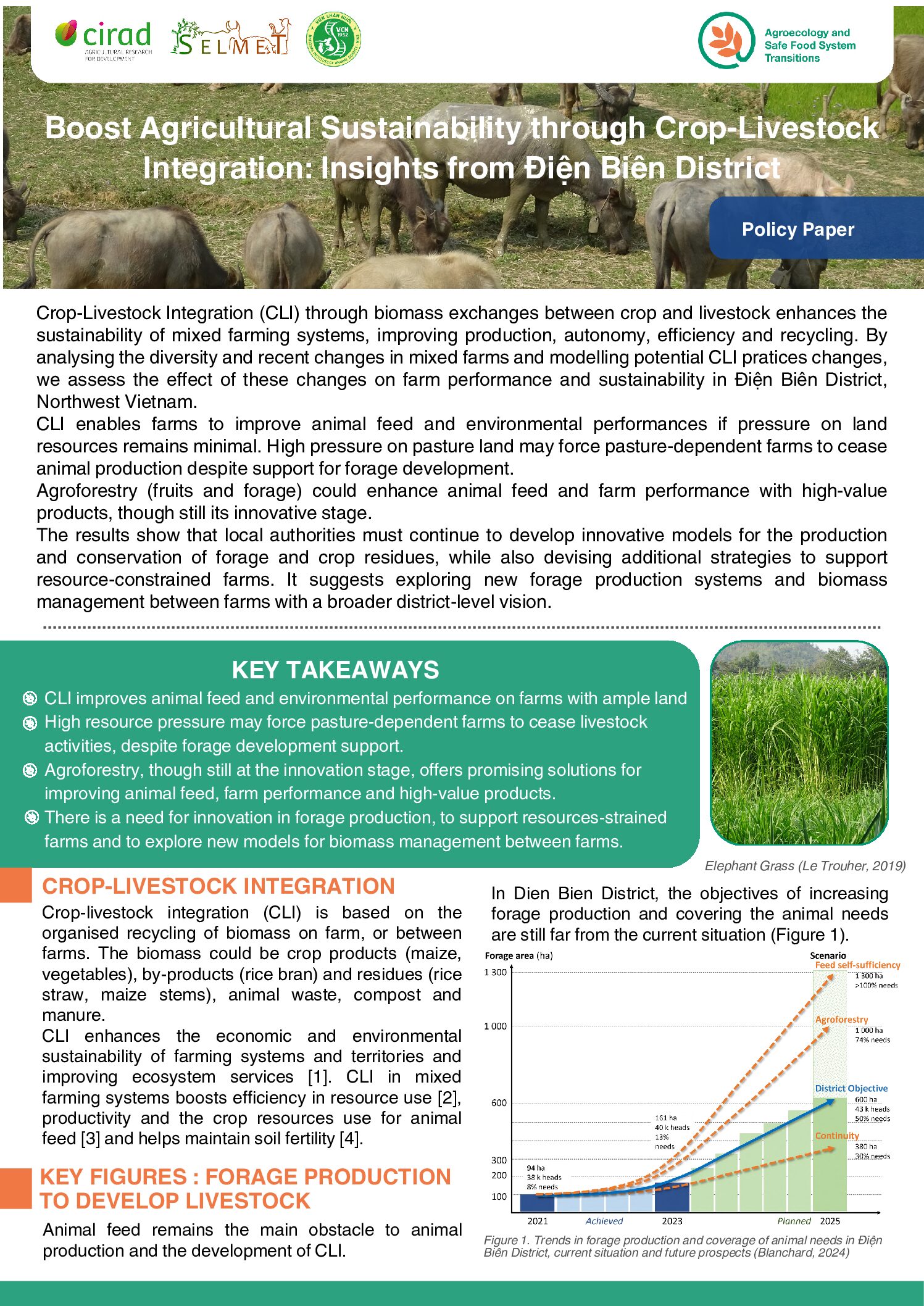
Tăng cường tính bền vững nông nghiệp thông qua Kết hợp Trồng trọt – Chăn nuôi: Bài học từ huyện Điện Biên
Kết hợp trồng trọt-chăn nuôii (Crop- livestock integration; CLI) thông qua trao đổi sinh khối giữa cây trồng và vật nuôi giúp tăng cường tính bền vững của các hệ thống canh tác hỗn hợp, cải thiện sản xuất, tính tự chủ, hiệu quả và tái chế. Bằng cách phân tích tính đa dạng và những thay đổi gần đây của các nông hộ và mô hình hóa các thay đổi trong thực hành CLI tiềm năng, chúng tôi đánh giá tác động của những thay đổi này đối với năng suất và tính bền vững của các nông hộ tại huyện Điện Biên, Tây Bắc Việt Nam. CLI giúp các nông hộ cải thiện nguồn thức ăn chăn nuôi và hiệu suất môi trường nếu áp lực lên tài nguyên đất vẫn ở mức tối thiểu. Áp lực cao lên đất đồng cỏ có thể buộc các hộ phụ thuộc vào chăn thả phải ngừng chăn nuôi ngay cả khi có chính sách hỗ trợ trồng cỏ. Nông lâm kết hợp (trồng cây ăn quả kết hợp trồng cây thức ăn thô xanh) có thể gia tăng nguồn thức ăn chăn nuôi và hiệu quả sản xuât của nông…
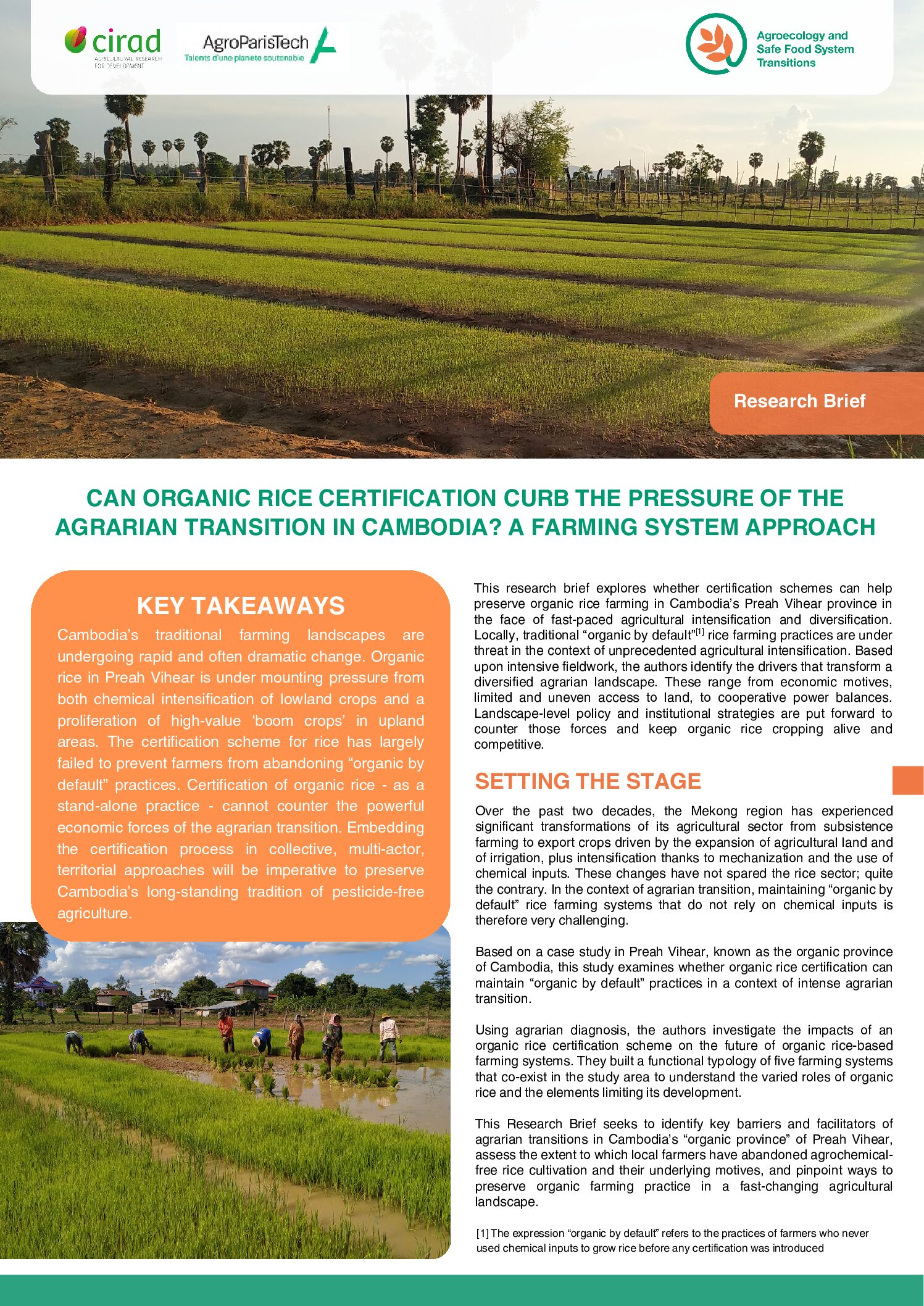
Can organic rice certification curb the pressure of the agrarian transition in Cambodia? A farming system approach
Over the past two decades, the Mekong region has experienced significant transformation of its agricultural sector from subsistence farming to export crops driven by the expansion of agricultural land and of irrigation, plus intensification thanks to mechanization and the use of chemical inputs. In the context of agrarian transition, maintaining “organic by default” rice farming systems that do not rely on chemical inputs, is challenging. Based on a case study in Preah Vihear, the organic province of Cambodia, this paper examines whether organic rice certification can maintain “organic by default” practices in a context of unprecedented agricultural intensification.
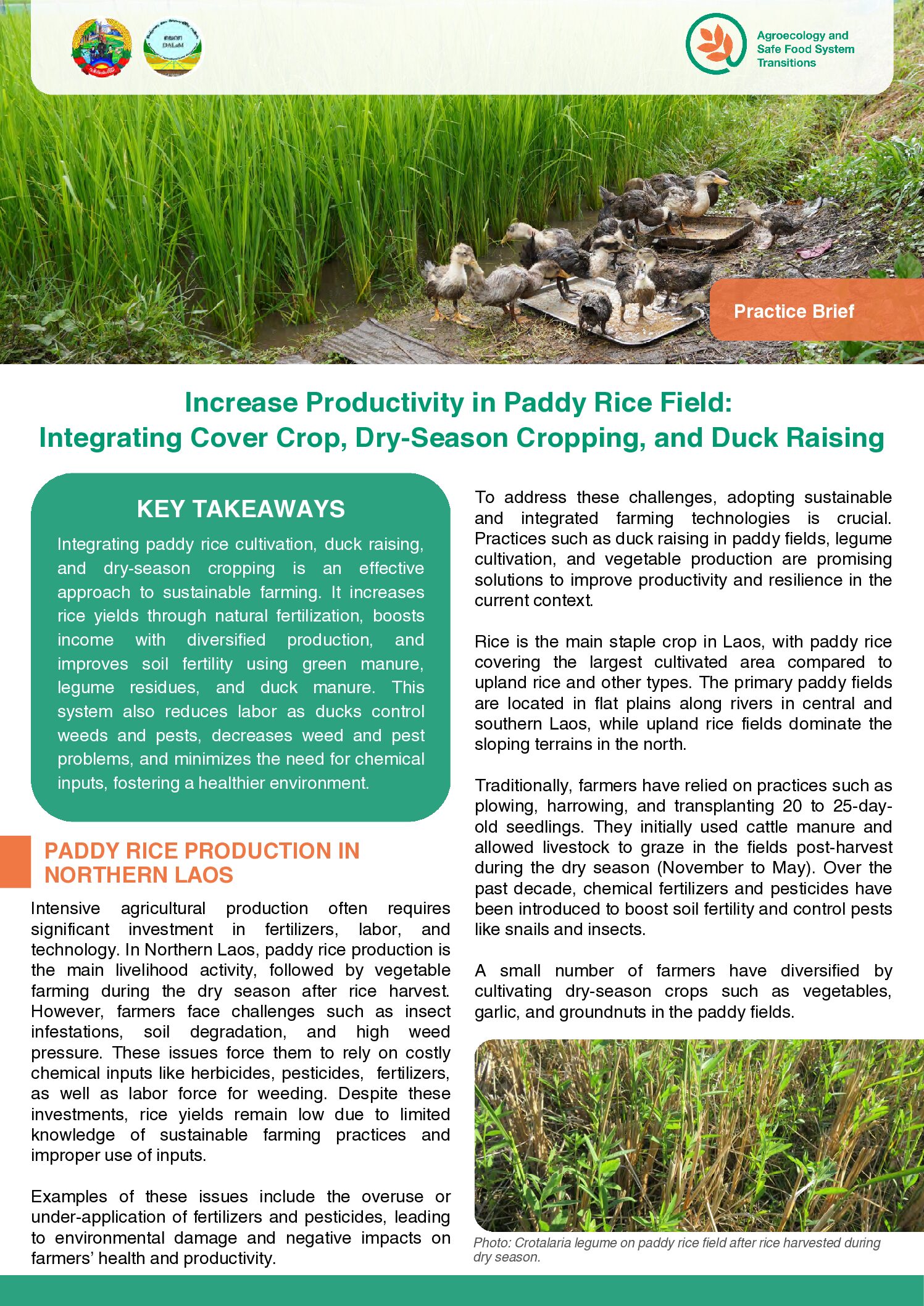
Increase Productivity in Paddy Rice Field: Integrating Cover Crop, Dry-Season Cropping, and Duck Raising
Integrating paddy rice cultivation, duck raising, and dry-season cropping is an effective approach to sustainable farming. It increases rice yields through natural fertilization, boosts income with diversified production, and improves soil fertility using green manure, legume residues, and duck manure. This system also reduces labor as ducks control weeds and pests, decreases weed and pest problems, and minimizes the need for chemical inputs, fostering a healthier environment.
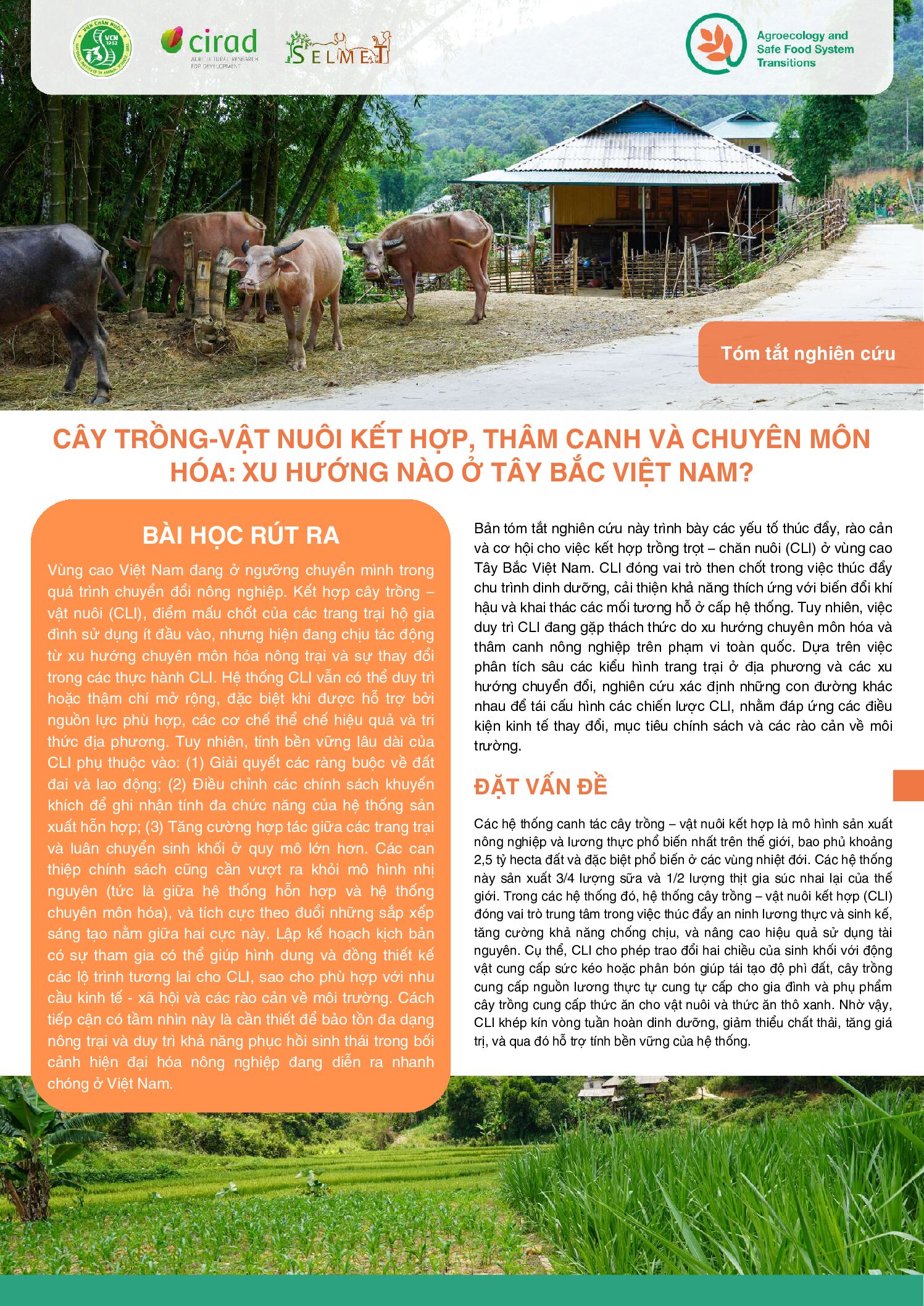
Cây trồng – vật nuôi kết hợp, thâm canh và chuyên môn hóa: Xu hướng nào ở Tây Bắc Việt Nam?
Vùng cao Việt Nam đang ở ngưỡng chuyển mình trong quá trình chuyển đổi nông nghiệp. Kết hợp cây trồng vật nuôi (CLI), điểm mấu chốt của các trang trại hộ gia đình sử dụng ít đầu vào, nhưng hiện đang chịu tác động từ xu hướng chuyên môn hóa nông trại và sự thay đổi trong các thực hành CLI. Hệ thống CLI vẫn có thể duy trì hoặc thậm chí mở rộng, đặc biệt khi được hỗ trợ bởi nguồn lực phù hợp, các cơ chế thể chế hiệu quả và tri thức địa phương.
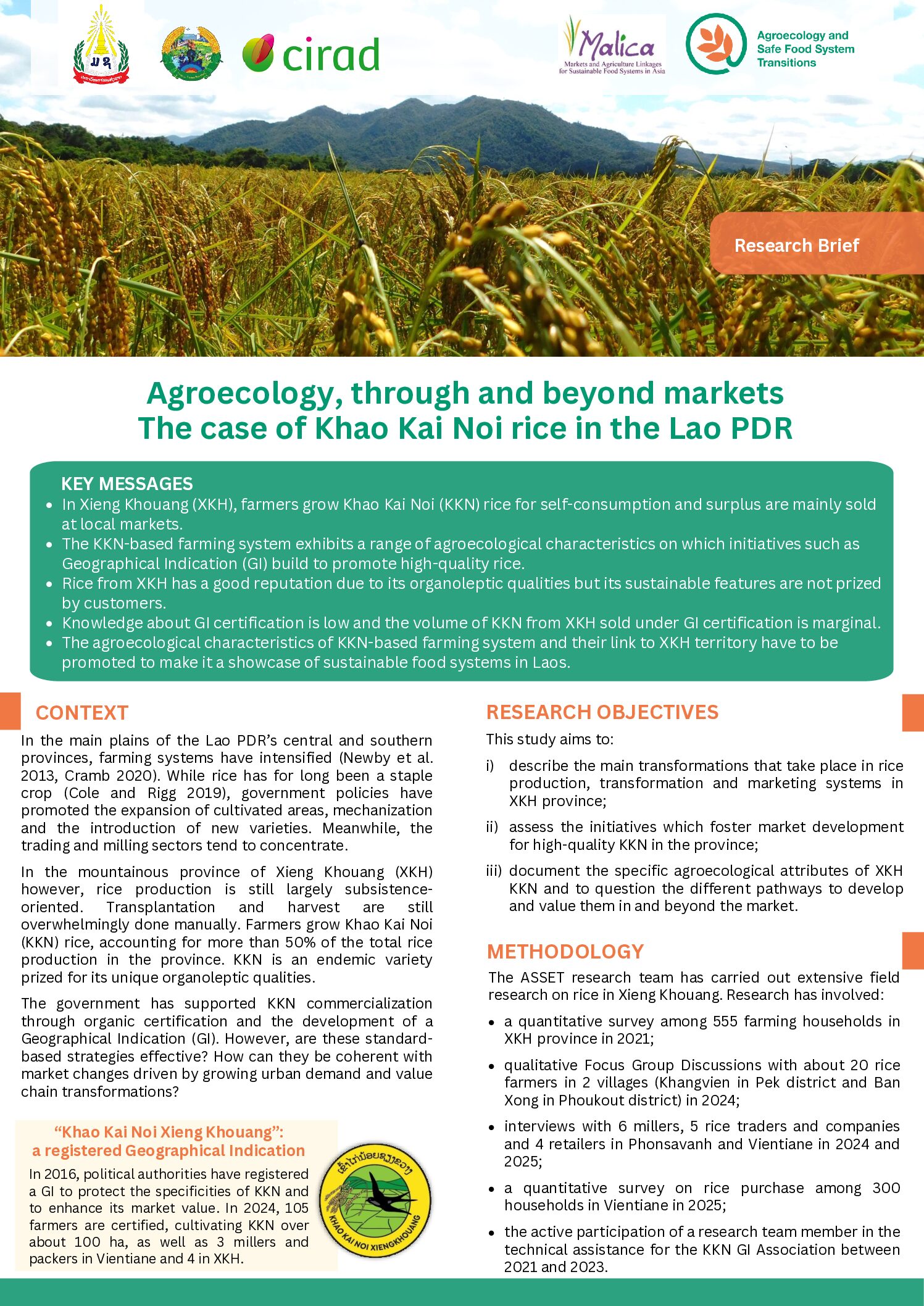
Agroecology, through and beyond markets : The case of Khao Kai Noi rice in the Lao PDR
• In Xieng Khouang (XKH), farmers grow Khao Kai Noi (KKN) rice for self-consumption and surplus are mainly sold at local markets. • The KKN-based farming system exhibits a range of agroecological characteristics on which initiatives such as Geographical Indication (GI) build to promote high-quality rice. • Rice from XKH has a good reputation due to its organoleptic qualities but its sustainable features are not prized by customers. • Knowledge about GI certification is low and the volume of KKN from XKH sold under GI certification is marginal. • The agroecological characteristics of KKN-based farming system and their link to XKH territory have to be promoted to make it a showcase of sustainable food systems in Laos.