




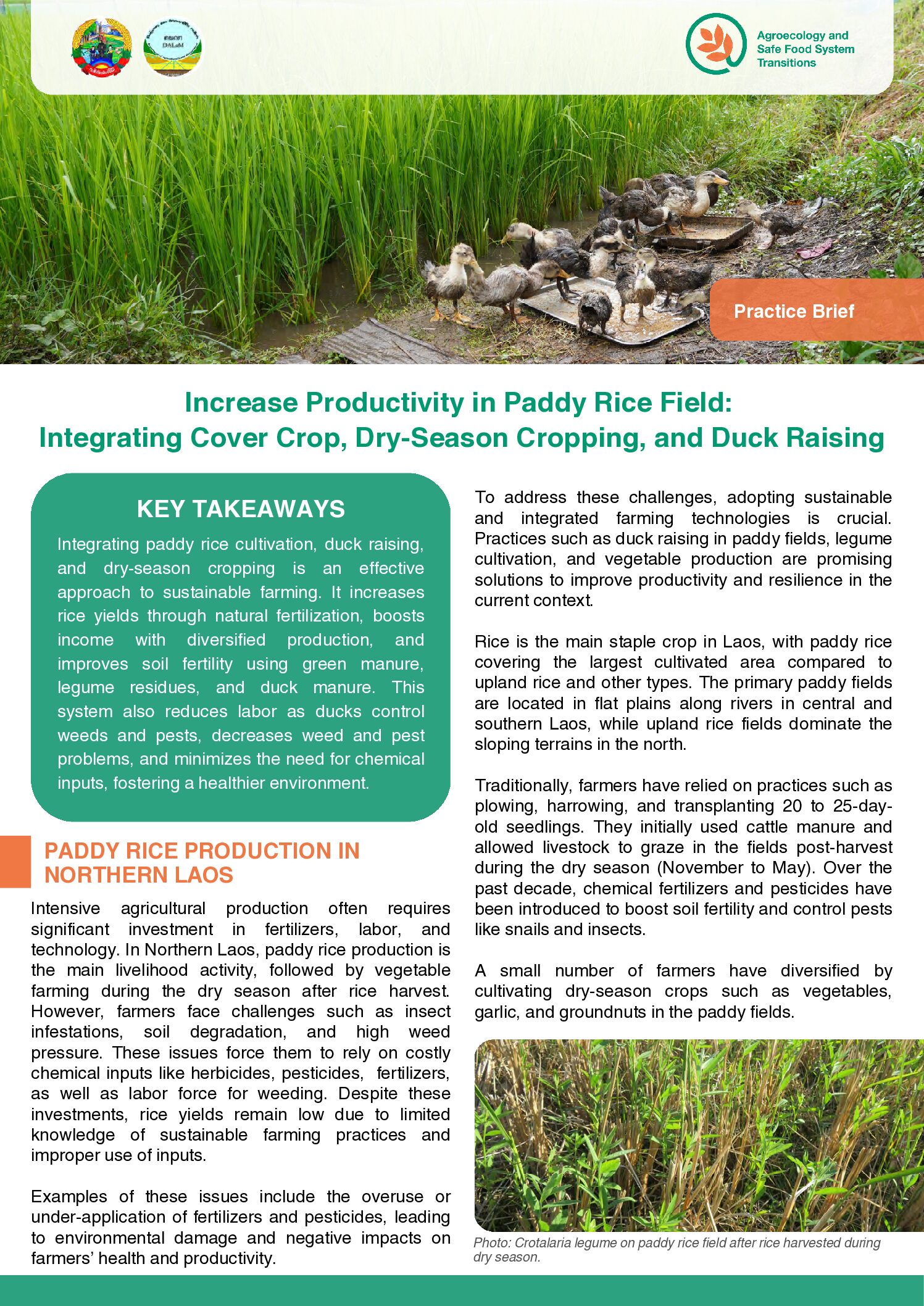
Increase Productivity in Paddy Rice Field: Integrating Cover Crop, Dry-Season Cropping, and Duck Raising
Integrating paddy rice cultivation, duck raising, and dry-season cropping is an effective approach to sustainable farming. It increases rice yields through natural fertilization, boosts income with diversified production, and improves soil fertility using green manure, legume residues, and duck manure. This system also reduces labor as ducks control weeds and pests, decreases weed and pest problems, and minimizes the need for chemical inputs, fostering a healthier environment.

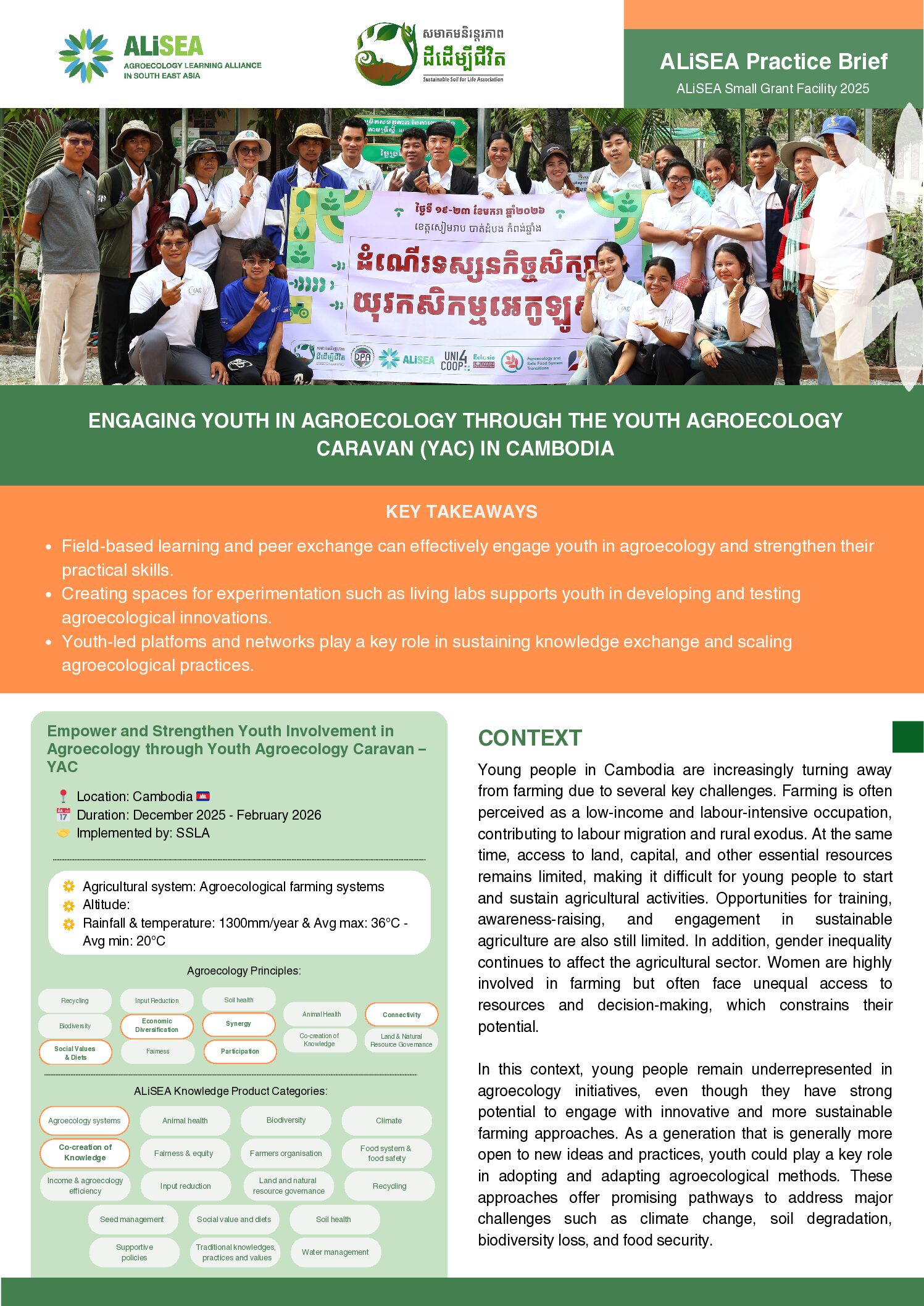
Thu hút thanh niên tham gia nông nghiệp sinh thái thông qua chương trình Youth Agroecology Caravan (YAC) tại Campuchia
Tài liệu thực hành này giới thiệu cách chương trình Youth Agroecology Caravan (YAC) tăng cường sự tham gia của thanh niên trong nông nghiệp sinh thái thông qua các chuyến học tập thực địa, học hỏi đồng đẳng và trao đổi kiến thức. Sáng kiến này giúp nông dân trẻ, sinh viên và những người làm nông nghiệp phát triển kỹ năng thực hành, mở rộng mạng lưới kết nối và áp dụng các đổi mới trong nông nghiệp sinh thái tại cộng đồng của mình. Tài liệu cũng cho thấy vai trò quan trọng của học tập trải nghiệm trong việc thúc đẩy nông nghiệp bền vững cho thế hệ trẻ.
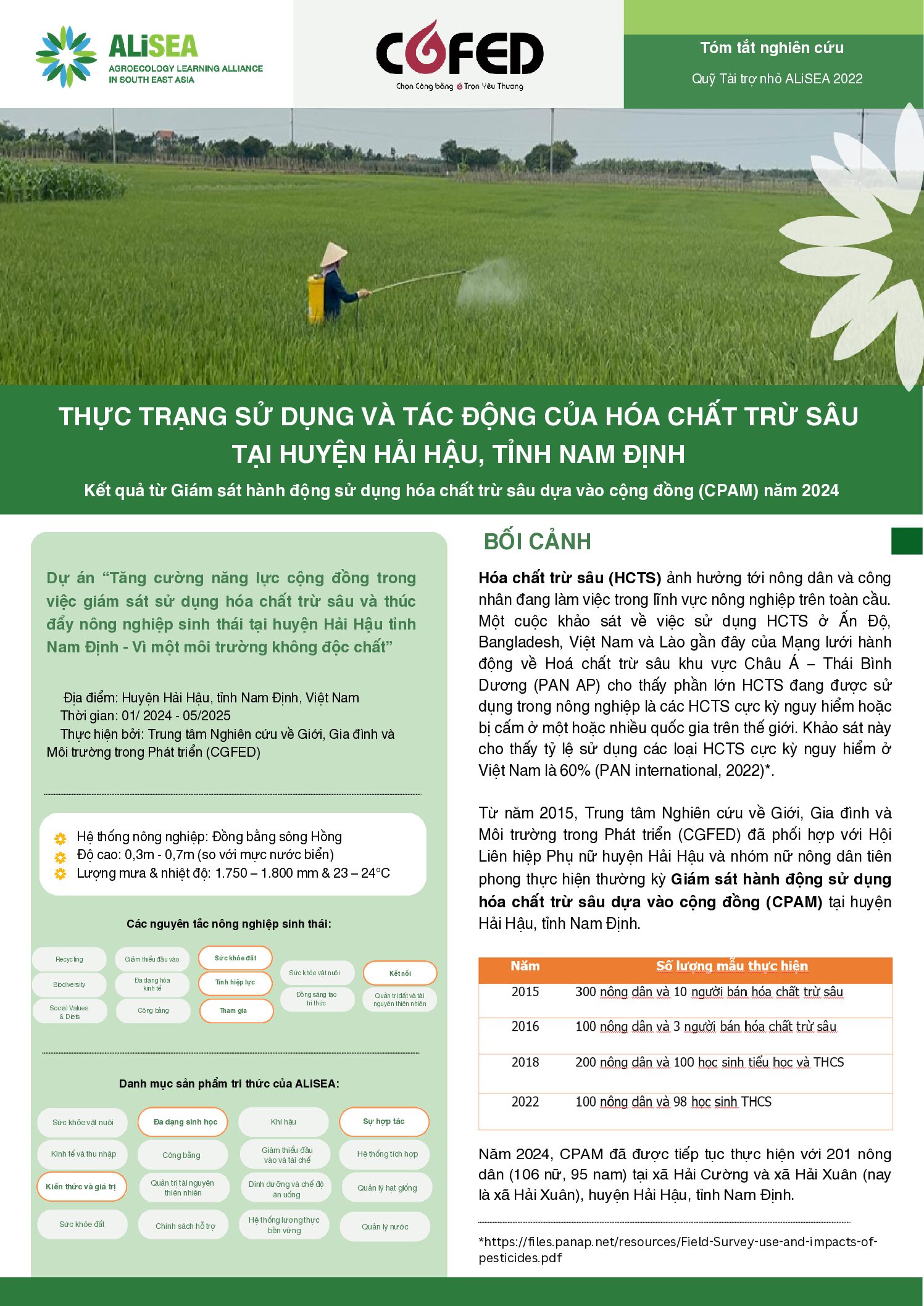
Thực trạng sử dụng và tác động của hóa chất trừ sâu tại huyện Hải Hậu, tỉnh Nam Định
Tài liệu tóm lược kết quả giám sát cộng đồng về việc sử dụng hóa chất trừ sâu tại huyện Hải Hậu, tỉnh Nam Định, qua phương pháp CPAM. Nghiên cứu chỉ ra mức độ sử dụng phổ biến, các rủi ro đối với sức khỏe và môi trường, đồng thời phân tích nhận thức và thực hành của nông dân. Trên cơ sở đó, tài liệu đưa ra các khuyến nghị nhằm giảm thiểu tác hại và thúc đẩy chuyển đổi sang nông nghiệp bền vững.
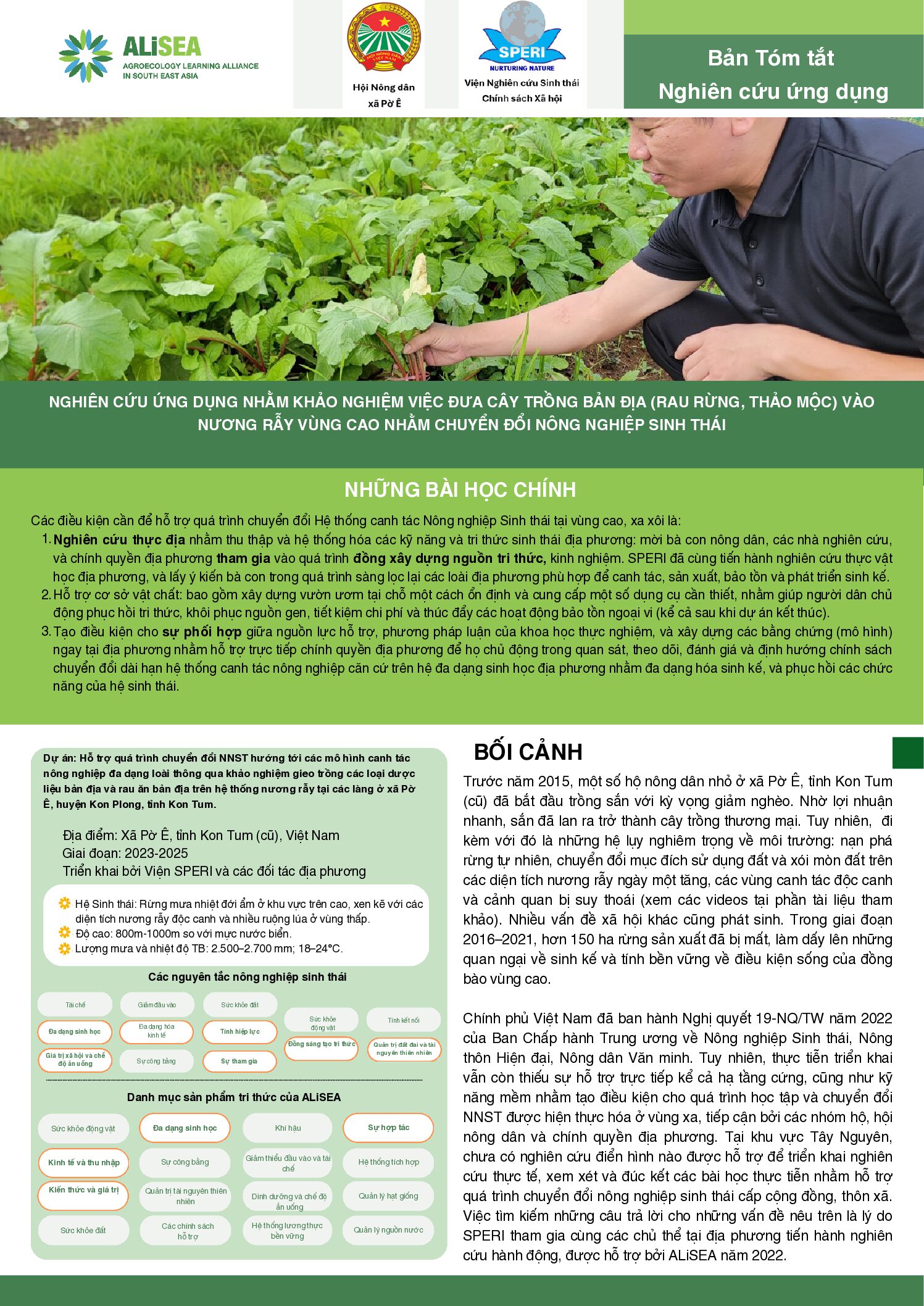
Nghiên cứu ứng dụng nhằm khảo nghiệm việc đưa cây trồng bản địa (rau rừng, thảo mộc) vào nương rẫy vùng cao nhằm chuyển đổi nông nghiệp sinh thái
Tài liệu này tóm lược kinh nghiệm thực tiễn từ nghiên cứu ứng dụng tại xã Pờ Ê, Kon Tum, nhằm thúc đẩy chuyển đổi nông nghiệp sinh thái thông qua tích hợp cây bản địa vào hệ thống nương rẫy. Thông qua cách tiếp cận đồng xây dựng tri thức giữa nông dân, nhà nghiên cứu và chính quyền địa phương, tài liệu rút ra các bài học và hướng đi cho phát triển sinh kế bền vững và bảo tồn đa dạng sinh học.
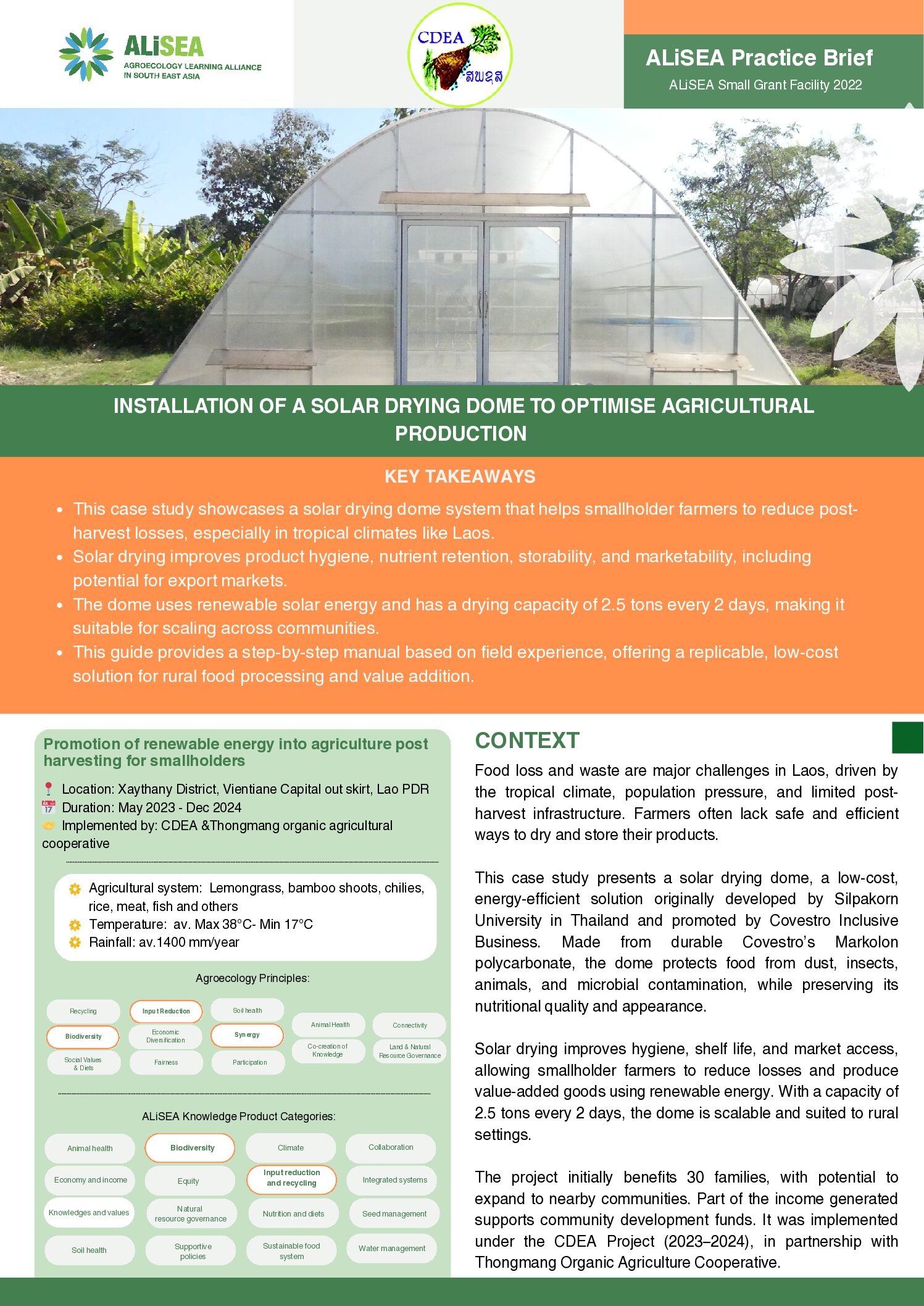
Installation of a solar drying dome for agricultural post harvest
This case study presents a solar drying dome, a low-cost, energy-efficient solution originally developed by Silpakorn University in Thailand . Made from durable polycarbonate, the dome protects food from dust, insects, animals, and microbial contamination, while preserving its nutritional quality and appearance.
Improving Market Access for Organic Vegetable Farmers in Pek District, Xiengkhouang Province
This practice focuses on strengthening market access for organic vegetable farmers in Pek District, Xiengkhouang Province, Lao PDR. Through collaboration between PDDA and POCA, agroecological capacity building was combined with structured buyer engagement to better align production with market demand. The experience highlights how improved market linkages can enhance income stability while supporting the continued development of organic farming systems.
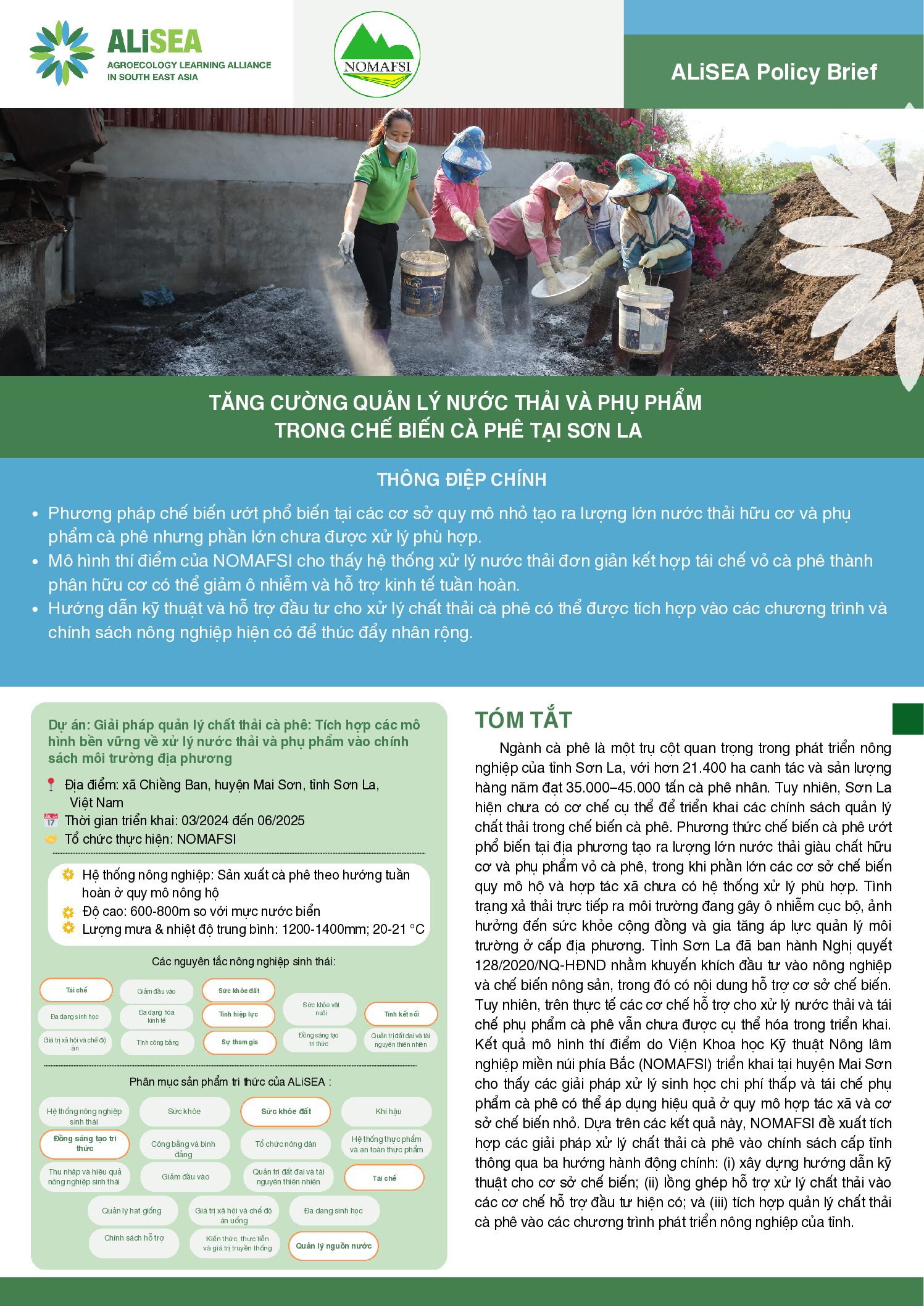
Tăng cường quản lý nước thải và phụ phẩm trong chế biến cà phê tại Sơn La
Ngành cà phê là một trụ cột quan trọng trong phát triển nông nghiệp của tỉnh Sơn La, với hơn 21.400 ha canh tác và sản lượng hàng năm đạt 35.000–45.000 tấn cà phê nhân. Tuy nhiên, Sơn La hiện chưa có cơ chế cụ thể để triển khai các chính sách quản lý chất thải trong chế biến cà phê. Phương thức chế biến cà phê ướt phổ biến tại địa phương tạo ra lượng lớn nước thải giàu chất hữu cơ và phụ phẩm vỏ cà phê, trong khi phần lớn các cơ sở chế biến quy mô hộ và hợp tác xã chưa có hệ thống xử lý phù hợp. Tình trạng xả thải trực tiếp ra môi trường đang gây ô nhiễm cục bộ, ảnh hưởng đến sức khỏe cộng đồng và gia tăng áp lực quản lý môi trường ở cấp địa phương. Tỉnh Sơn La đã ban hành Nghị quyết 128/2020/NQ-HĐND nhằm khuyến khích đầu tư vào nông nghiệp và chế biến nông sản, trong đó có nội dung hỗ trợ cơ sở chế biến. Tuy nhiên, trên thực tế các cơ chế hỗ trợ cho xử lý nước thải và tái chế phụ…
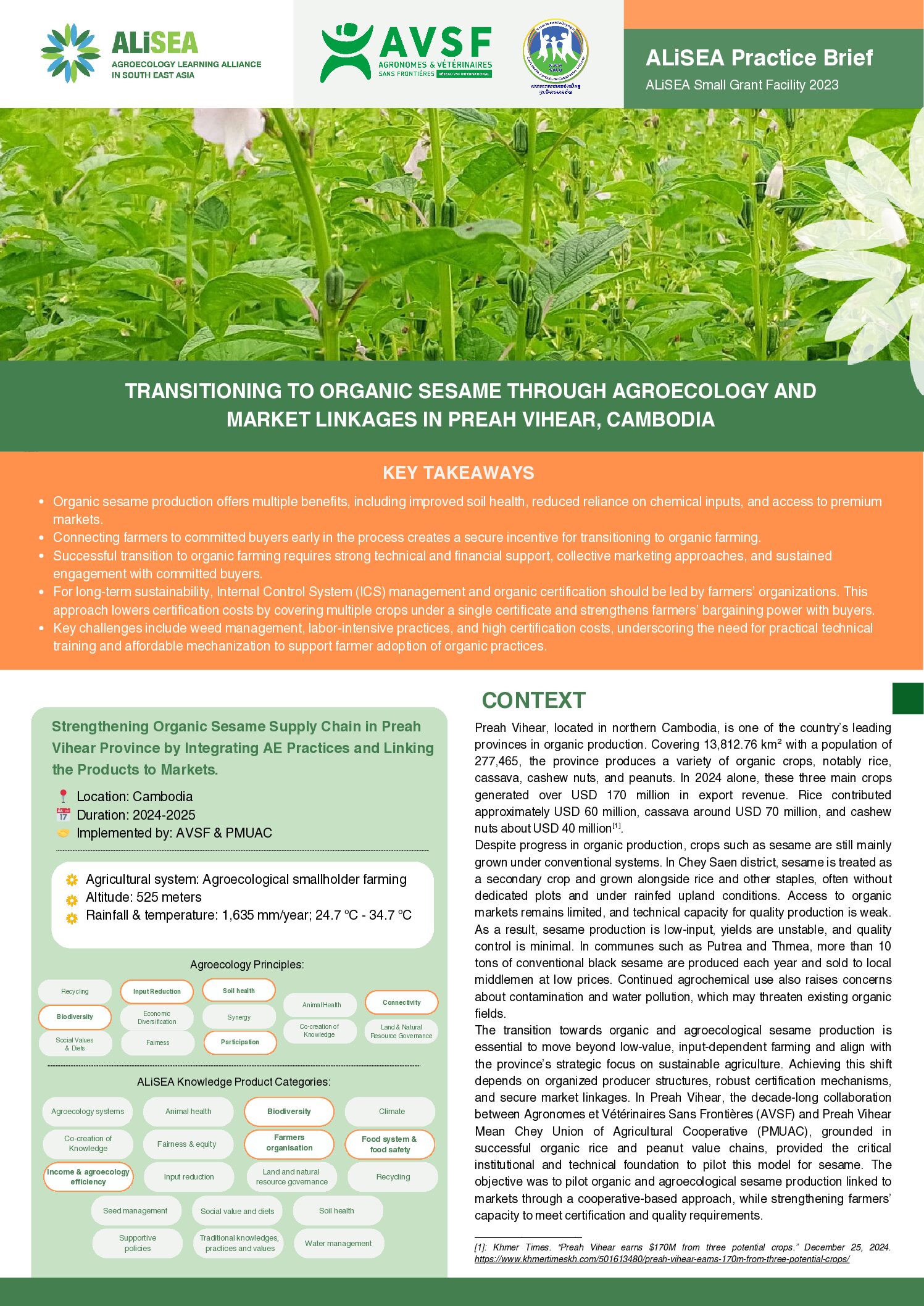
Chuyển đổi sản xuất mè hữu cơ thông qua nông nghiệp sinh thái và liên kết thị trường tại Preah Vihear, Campuchia
Tài liệu này trình bày mô hình thí điểm hỗ trợ nông hộ nhỏ tại Preah Vihear chuyển từ sản xuất mè truyền thống sang sản xuất hữu cơ thông qua các thực hành nông nghiệp sinh thái và liên kết thị trường dựa trên hợp tác xã. Mô hình kết hợp đào tạo kỹ thuật, hệ thống kiểm soát nội bộ và tiếp thị tập thể nhằm cải thiện sức khỏe đất, giảm sử dụng đầu vào hóa học và tăng khả năng tiếp cận các thị trường ổn định, giá trị cao.
Sustainable Maize production: The potential of Conservation Agriculture
This policy brief presents the potential of conservation agriculture to overcome soil fertility depletion and land degradation problems due substantially to conventional maize production. It promotes the benefits of conservation agriculture as well as key priorities and options for policy;
Multicriteria Assessment of Implemented Conservation Agriculture Cropping Systems Across Farmers’ Plots in Northwestern Cambodia
In Cambodia’s maize crop, conservation agriculture delivers clear gains in soil health, an improved yield resilience and emerging economic benefits over a short (2-year) implementation span. Soil health, as measured using the Biofunctool, emerges as a valuable sustainability indicator that warrants further promotion. Regardless of the above, productivity and profitability benefits under CA are not immediate, and several prominent adoption challenges exist. With the right policy support, tailored agronomic research, technical innovations (e.g., adaptive machinery) and farmer training, CA could be scaled up to address Cambodia’s dual crises of land degradation and climate vulnerability