




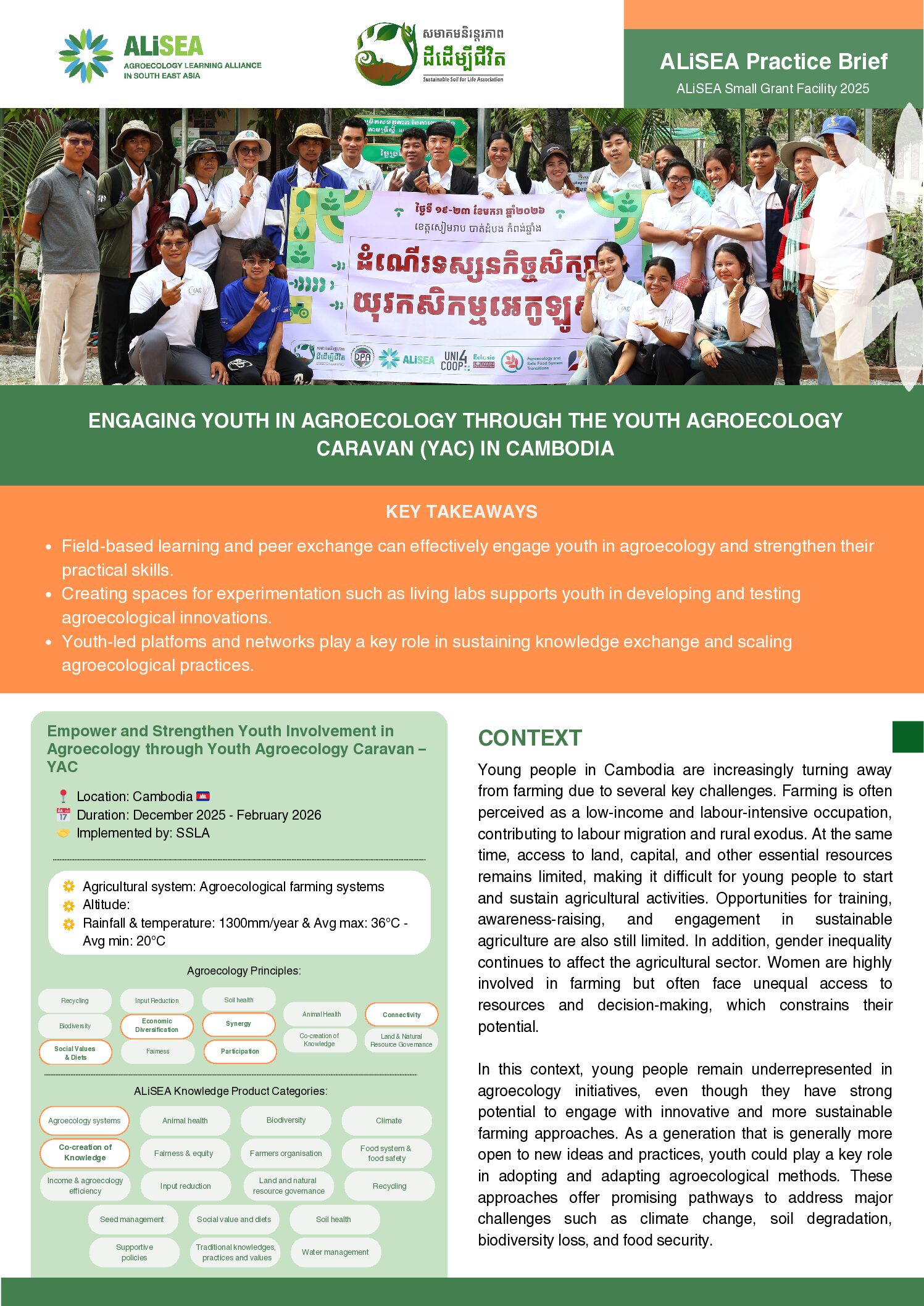
Engaging Youth in Agroecology through the Youth Agroecology Caravan (YAC) in Cambodia
This practice brief highlights how the Youth Agroecology Caravan (YAC) strengthens youth engagement in agroecology through field visits, peer learning, and knowledge exchange. The initiative helps young farmers, students, and agricultural practitioners develop practical skills, expand professional networks, and apply agroecological innovations in their communities. It demonstrates the important role of experiential learning in promoting sustainable agriculture among young people.

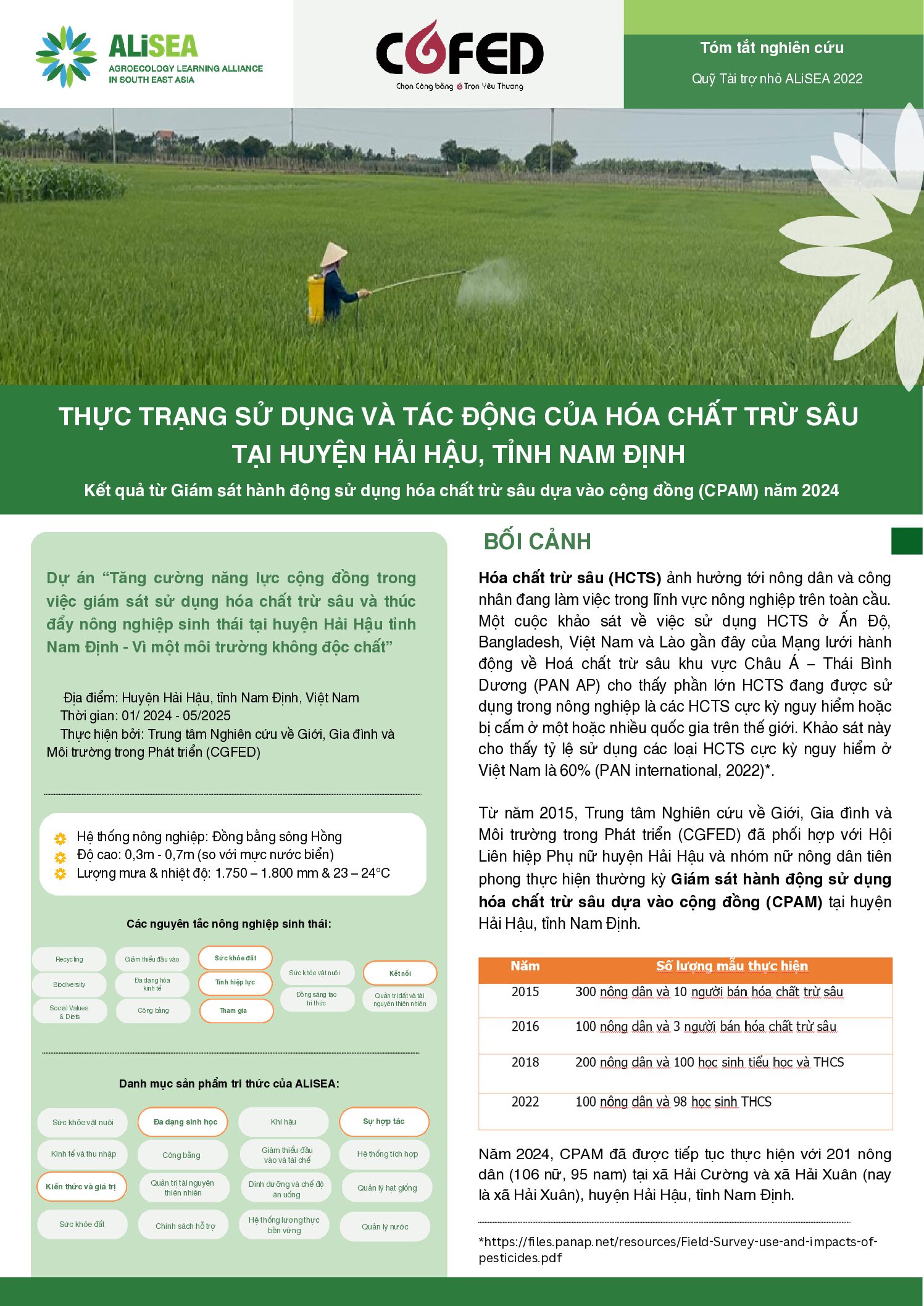
Use and impacts of pesticide in Hai Hau district, Nam Dinh province
This research brief present the results of a survey aiming at documenting the use and impacts of hazardous pesticides among farmers. This survey employed the Community-Based Pesticide Action Monitoring (CPAM) methodology developed by the Pesticide Action Network Asia Pacific (PAN AP)
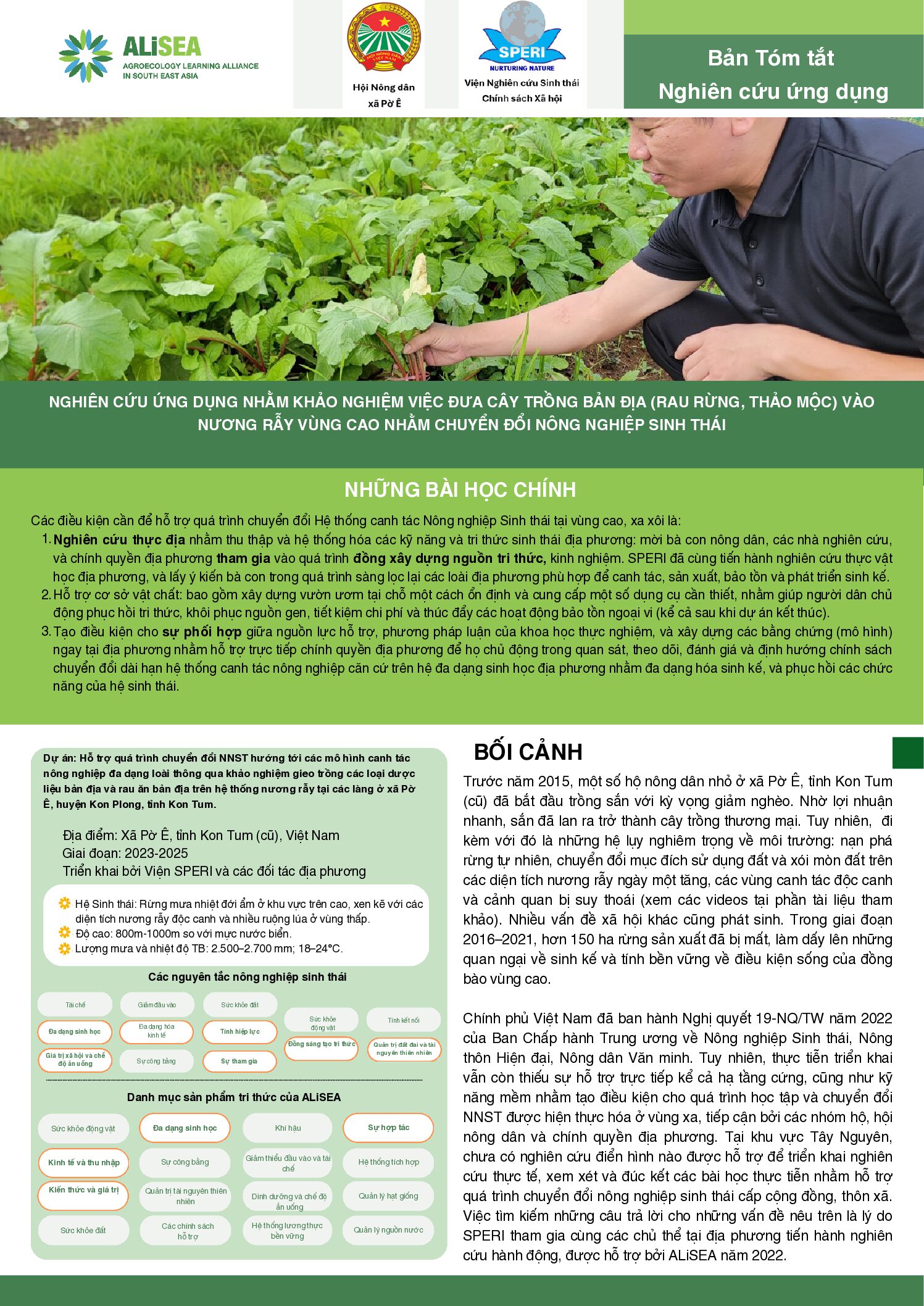
A Research Action to Integrate Native Edible Herb Cultivation into Transitioning Agroecological Farms
This July 2025 research brief by SPERI describes an action-research project in Po E commune, Vietnam, integrating native edible herbs into transitioning agroecological farms to replace cassava monocultures, restore biodiversity, and improve livelihoods. Using a social cluster approach, ethnobotanical research, nurseries, and pilot farms, it engaged farmers, tested local species, and fostered collaboration among communities, scientists, and authorities to support long-term agroecological transition.
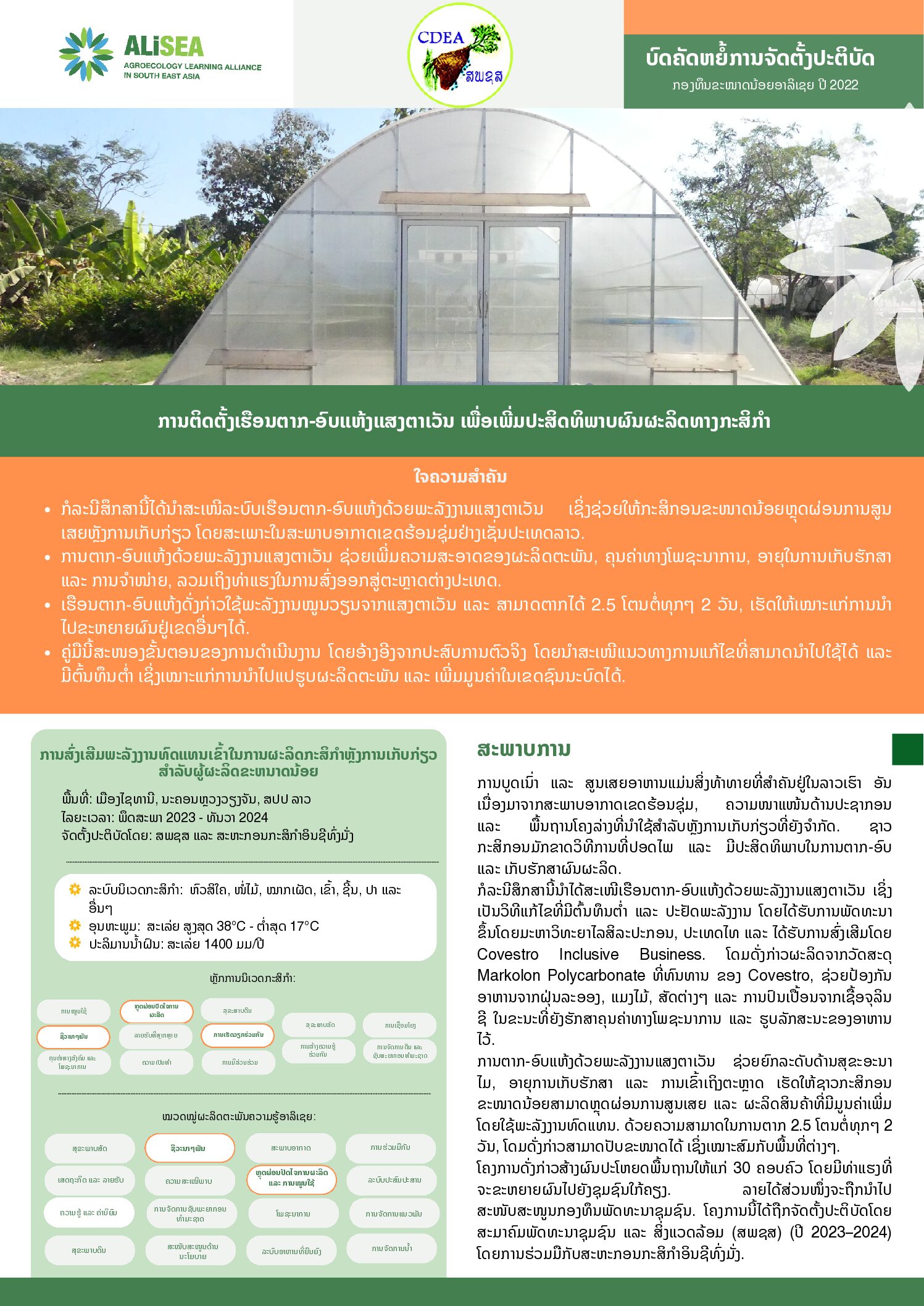
Installation of a solar drying dome for agricultural post harvest
This case study presents a solar drying dome, a low-cost, energy-efficient solution originally developed by Silpakorn University in Thailand . Made from durable polycarbonate, the dome protects food from dust, insects, animals, and microbial contamination, while preserving its nutritional quality and appearance.
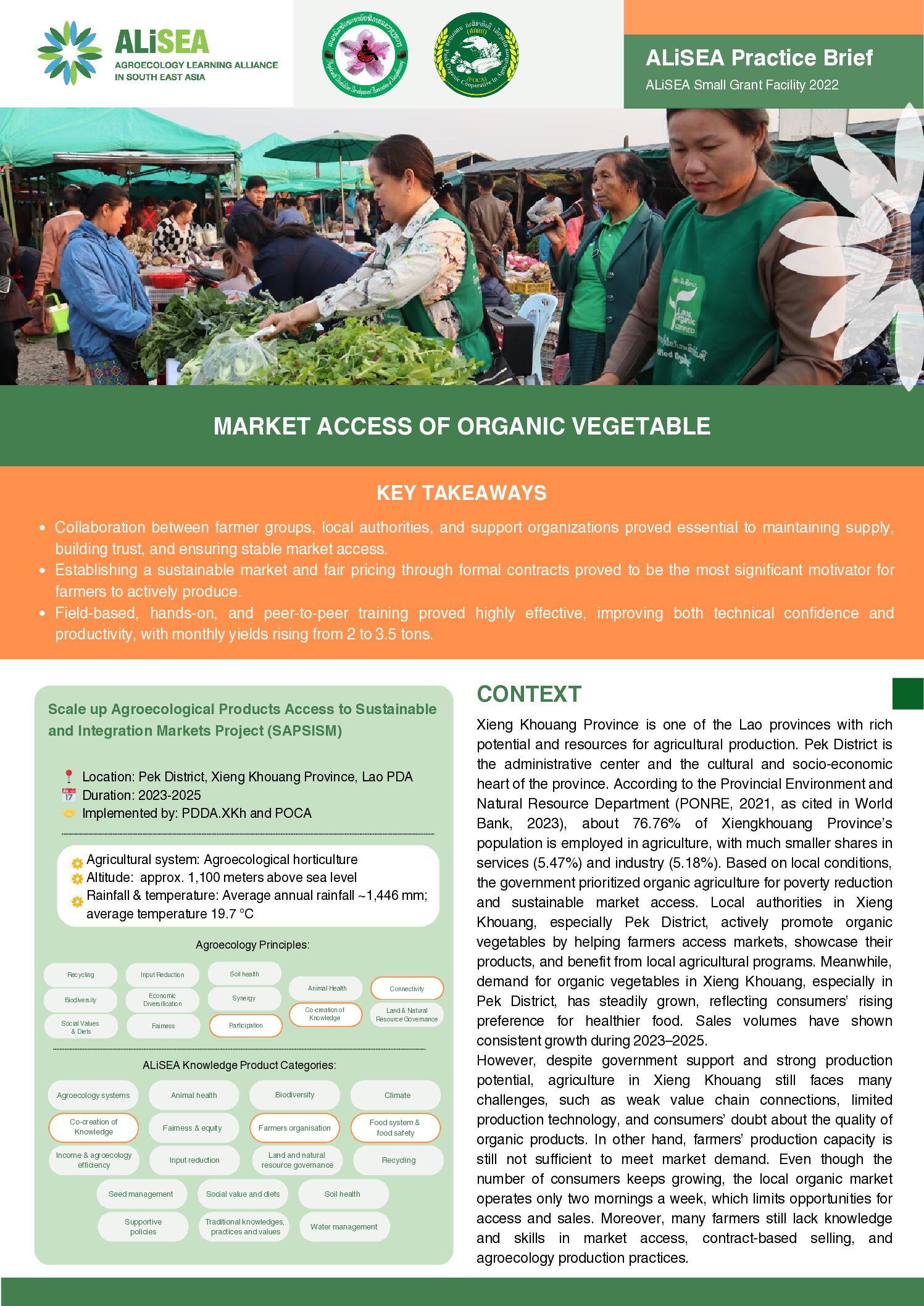
Improving Market Access for Organic Vegetable Farmers in Pek District, Xiengkhouang Province
This practice focuses on strengthening market access for organic vegetable farmers in Pek District, Xiengkhouang Province, Lao PDR. Through collaboration between PDDA and POCA, agroecological capacity building was combined with structured buyer engagement to better align production with market demand. The experience highlights how improved market linkages can enhance income stability while supporting the continued development of organic farming systems.
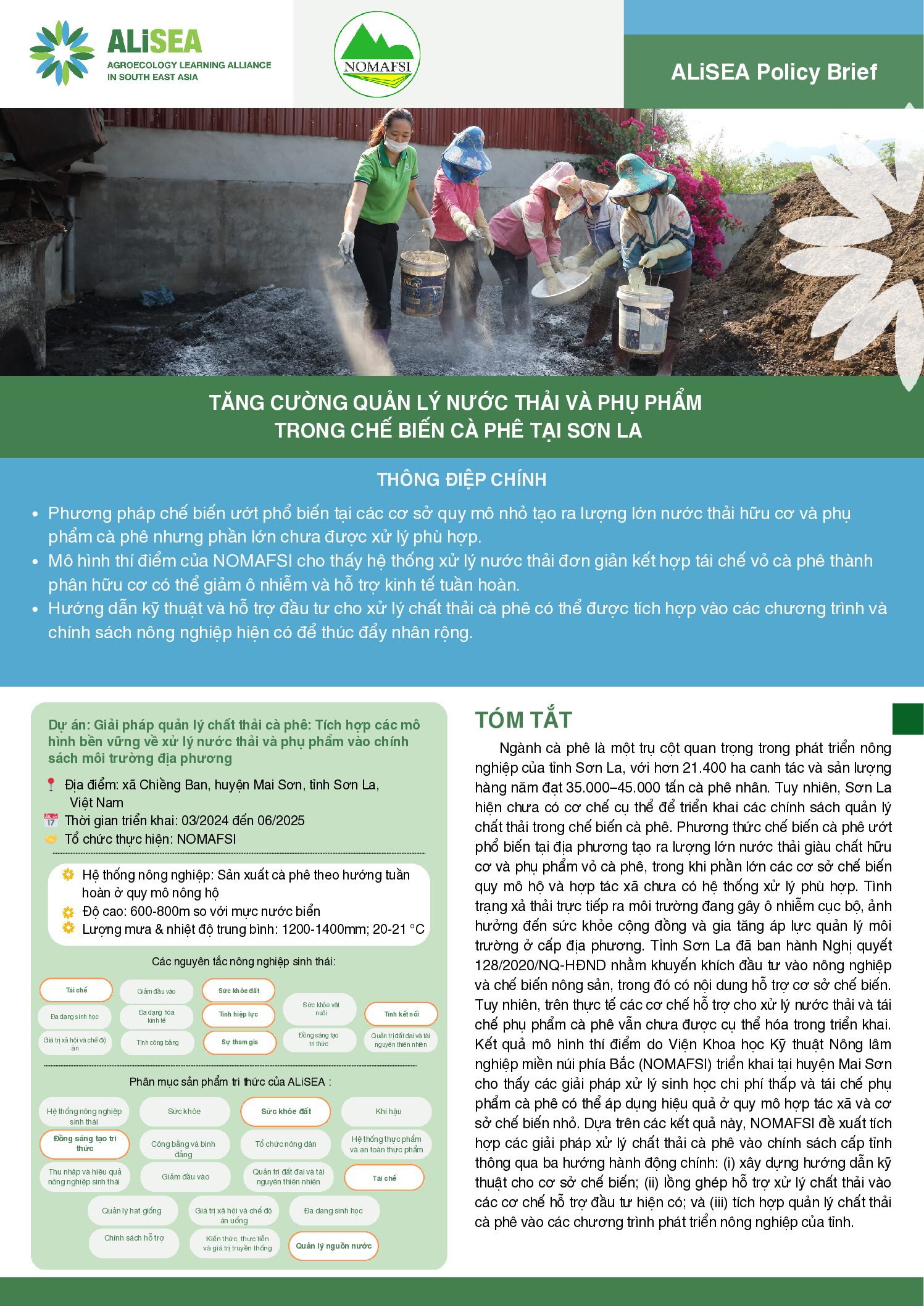
Strengthening Wastewater and By-product Management in Coffee Processing in Son La
The coffee sector is a key pillar of agricultural development in Son La province, with over 21,400 hectares under cultivation and an annual production of 35,000–45,000 tons of green coffee beans. However, Son La currently lacks specific mechanisms to implement waste management policies in coffee processing. The widely practiced wet processing method generates large volumes of organic-rich wastewater and coffee husk by-products, while most household-scale and cooperative processing facilities do not have appropriate treatment systems. The direct discharge of waste into the environment is causing localized pollution, affecting community health and increasing environmental management pressure at the local level. Son La province has issued Resolution No. 128/2020/NQ-HĐND to encourage investment in agriculture and agro-processing, including support for processing facilities. However, in practice, support mechanisms for wastewater treatment and coffee by-product recycling have not yet been clearly operationalized. Pilot models implemented by the Northern Mountainous Agriculture and Forestry Science Institute (NOMAFSI) in Mai Son district demonstrate that low-cost biological treatment solutions and coffee by-product recycling can be effectively applied at cooperative and small-scale processing levels. Based on these results, NOMAFSI proposes integrating coffee waste management solutions into provincial policies through three main actions: (i) developing technical guidelines for processing facilities; (ii)…
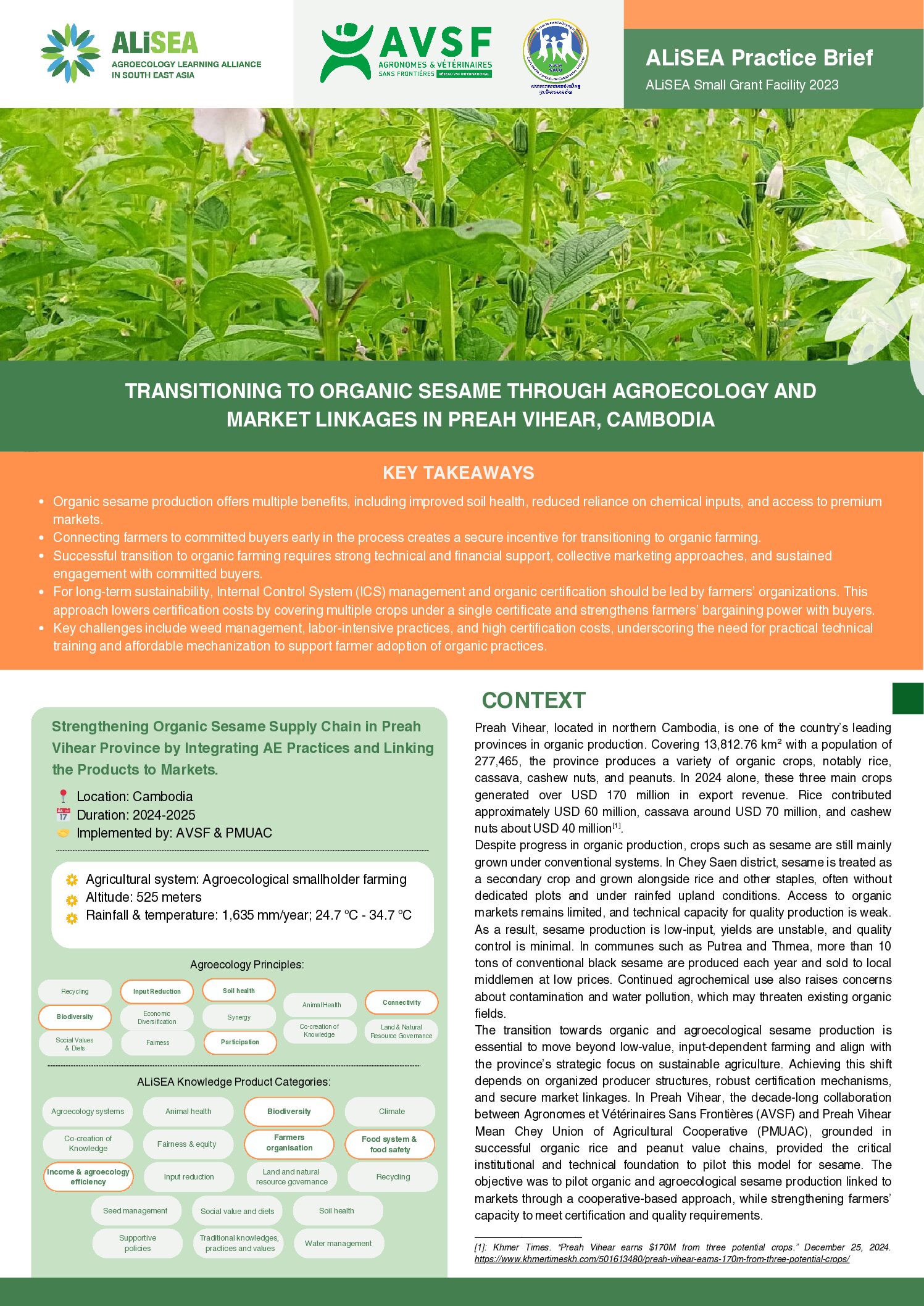
Transitioning to Organic Sesame through Agroecology and Market Linkages in Preah Vihear, Cambodia
This practice brief presents a pilot initiative supporting smallholder farmers in Preah Vihear to transition from conventional to organic sesame production through agroecological practices and cooperative-based market linkages. The model combines technical training, internal control systems, and collective marketing to improve soil health, reduce chemical inputs, and strengthen farmers’ access to stable and higher-value markets.
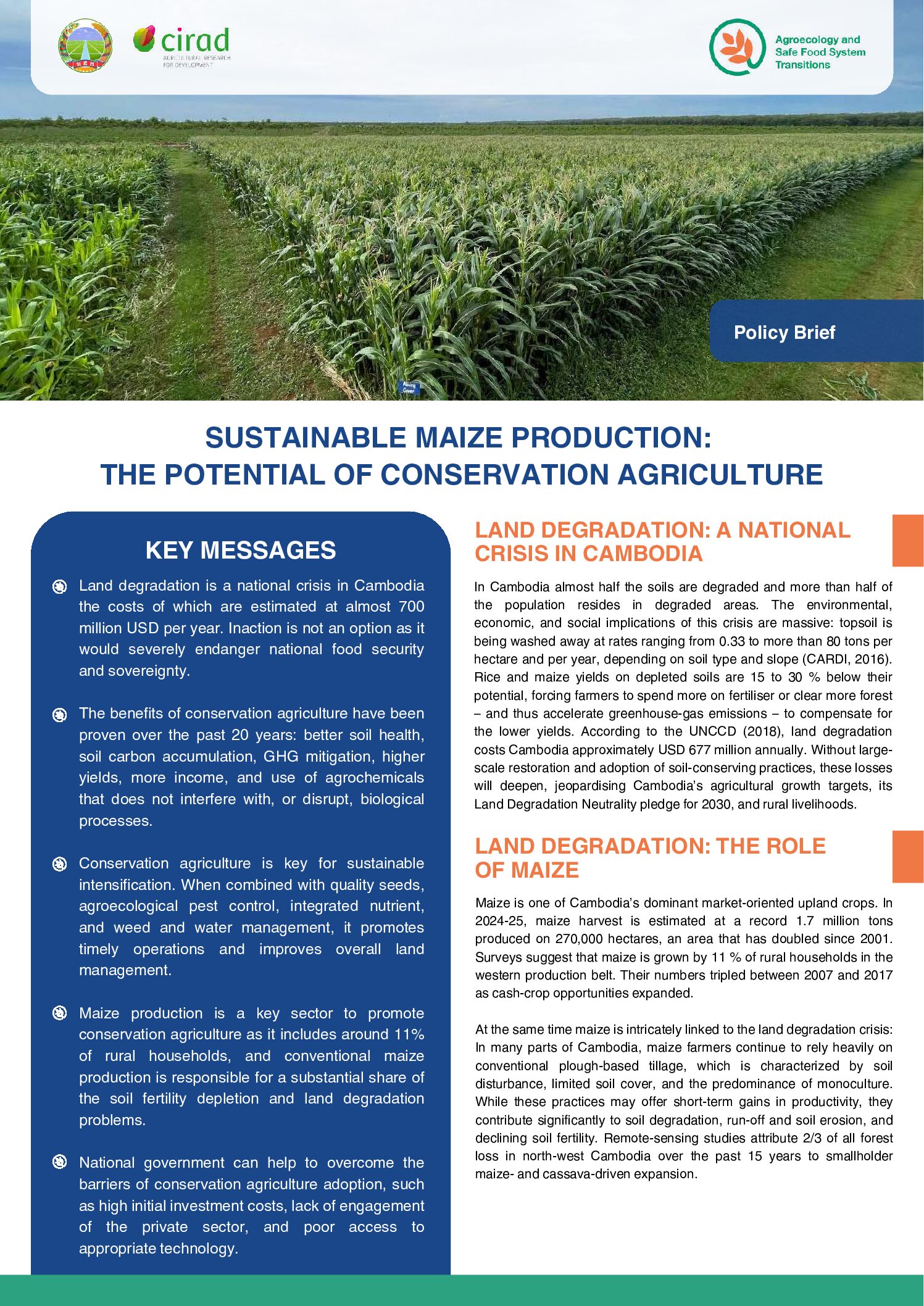
Sustainable Maize production: The potential of Conservation Agriculture
This policy brief presents the potential of conservation agriculture to overcome soil fertility depletion and land degradation problems due substantially to conventional maize production. It promotes the benefits of conservation agriculture as well as key priorities and options for policy;
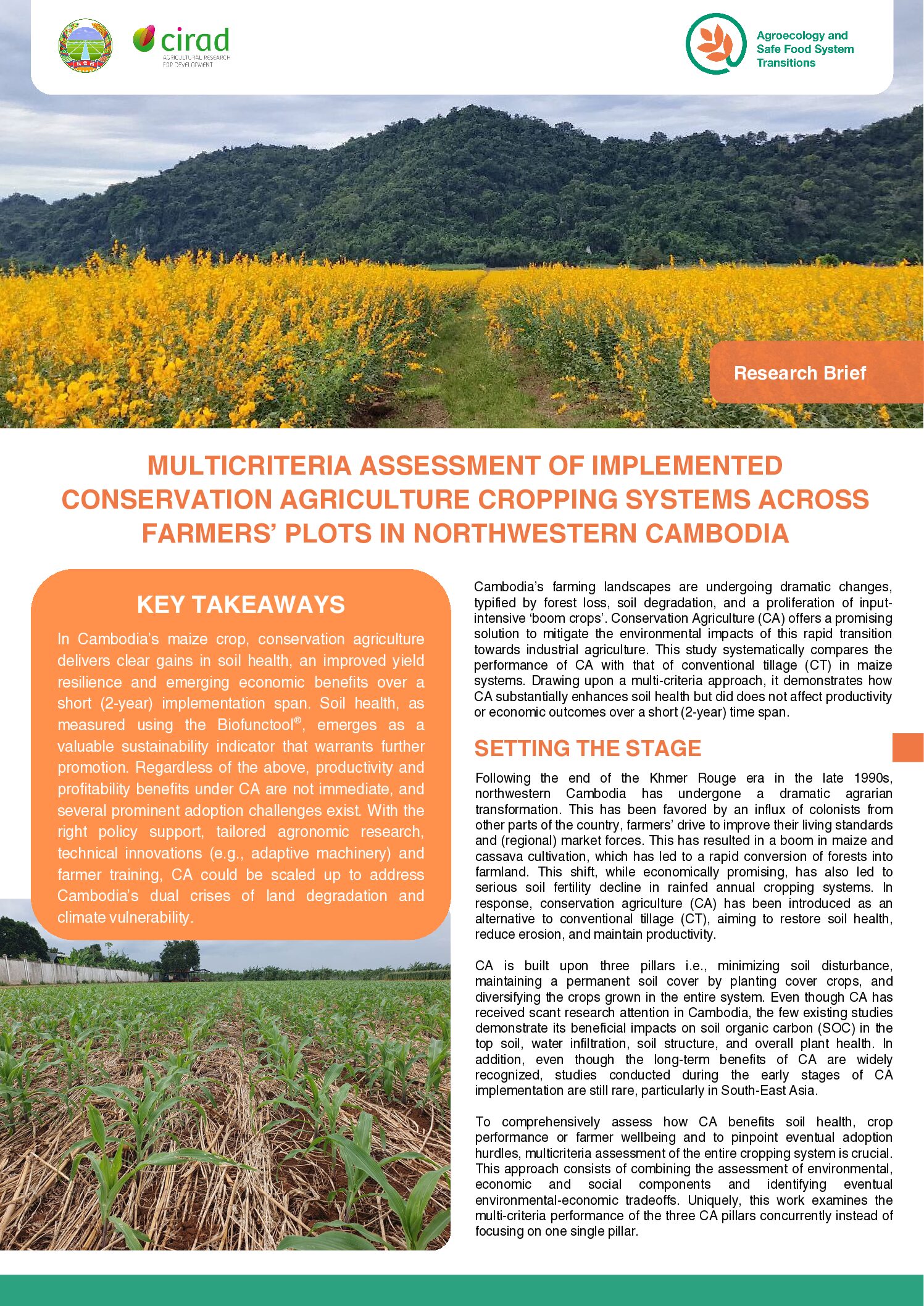
Multicriteria Assessment of Implemented Conservation Agriculture Cropping Systems Across Farmers’ Plots in Northwestern Cambodia
In Cambodia’s maize crop, conservation agriculture delivers clear gains in soil health, an improved yield resilience and emerging economic benefits over a short (2-year) implementation span. Soil health, as measured using the Biofunctool, emerges as a valuable sustainability indicator that warrants further promotion. Regardless of the above, productivity and profitability benefits under CA are not immediate, and several prominent adoption challenges exist. With the right policy support, tailored agronomic research, technical innovations (e.g., adaptive machinery) and farmer training, CA could be scaled up to address Cambodia’s dual crises of land degradation and climate vulnerability
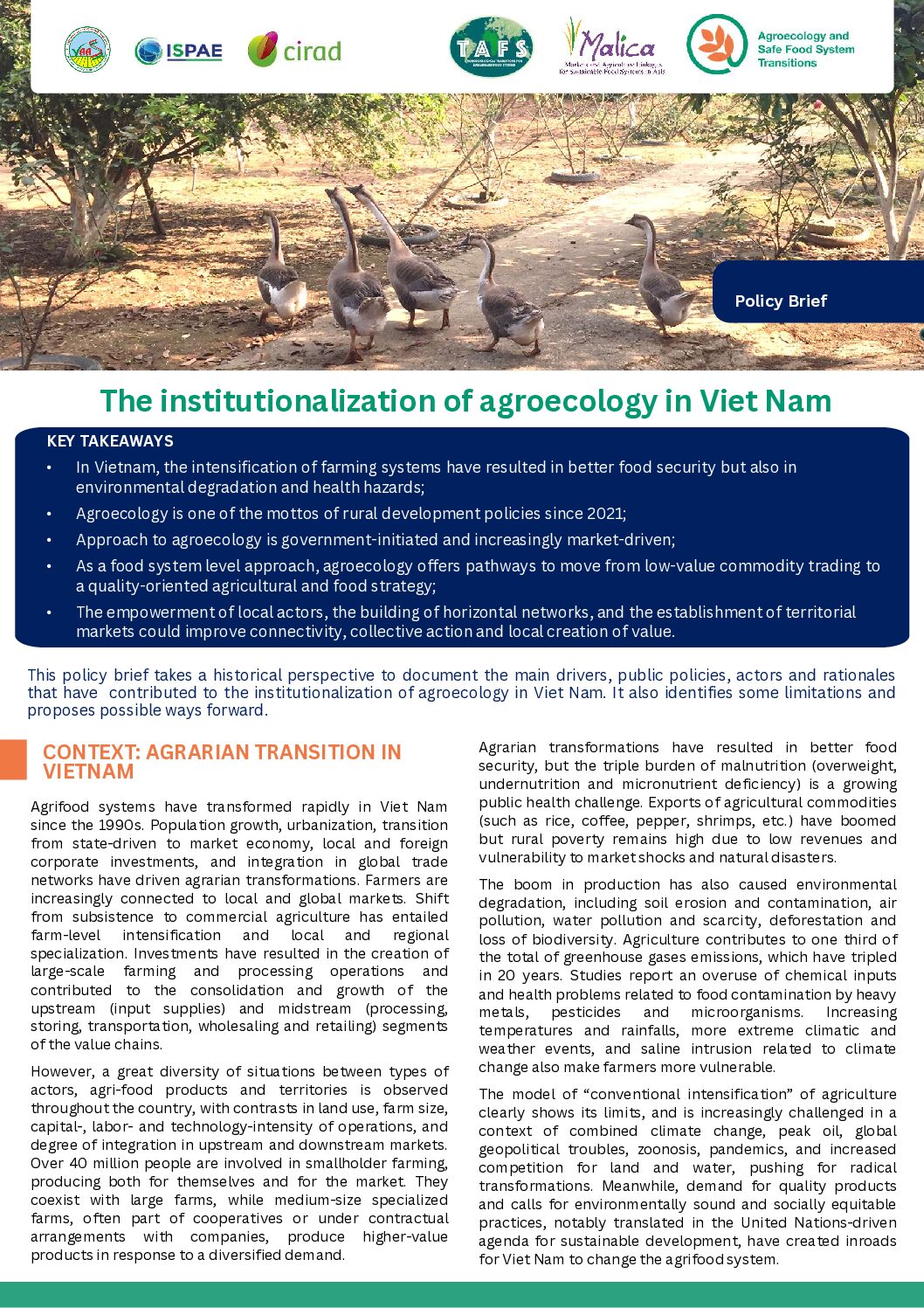
The Institutionalization of Agroecology in Viet Nam
This policy brief, after reviewing agrarian transition, agricultural public policies, actors and organisations supporting Agroecology in Vietnam, presents a rationale to develop agroecology and gives recommendations on different interventions and approaches that could be leveraged by public authorities and other stakeholders to catalyze and bring to scale a full-fledged agroecological transition in Viet Nam.