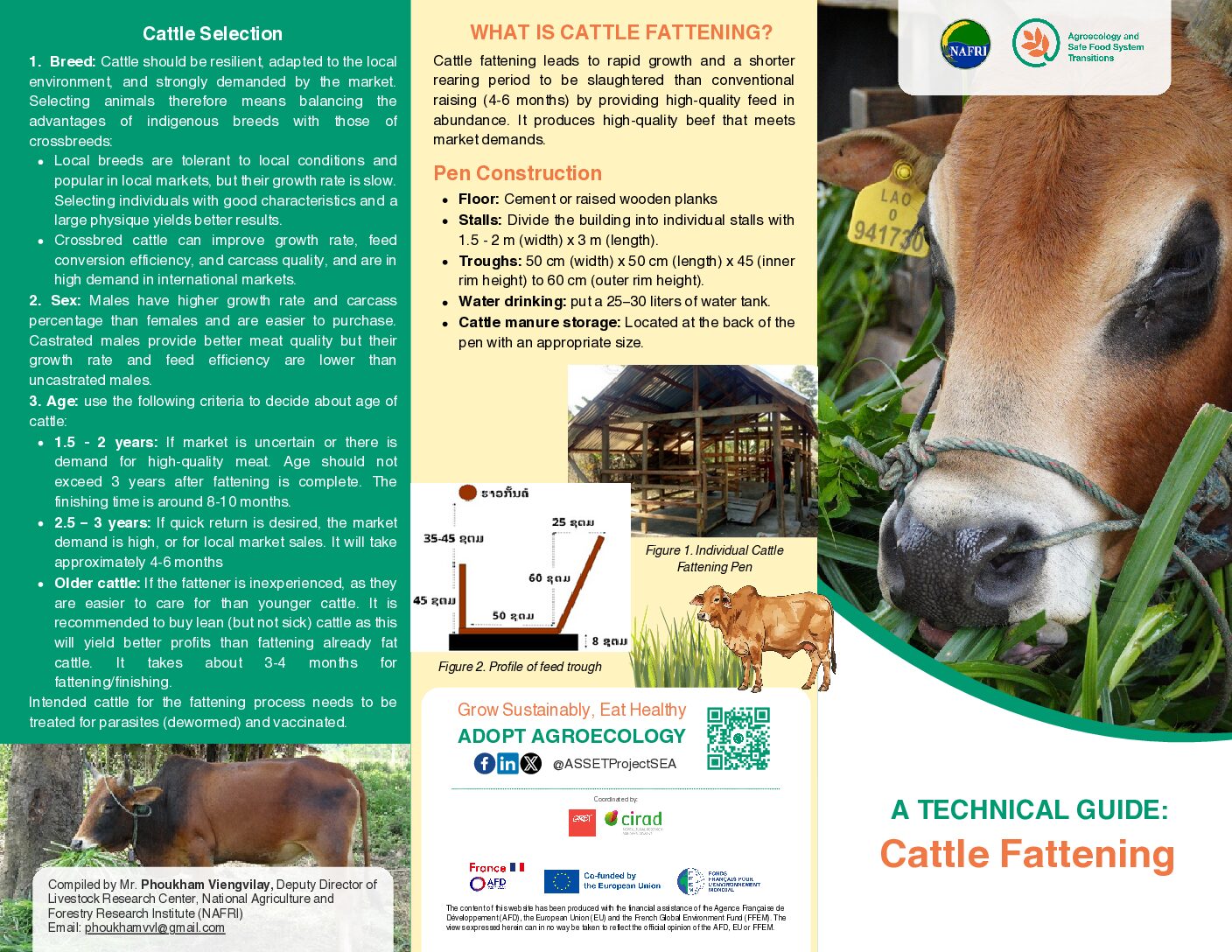
Weaver Ant: a natural ecological practice to protect cashew nut plantations
𝐃Did you know weaver ants are helpful for pest control? Weaver ants are considered farmers’ friends as they protect crops like cashews from pests. Introducing weaver ants is just one of many techniques used in Agroecological Crop Protection (ACP), which combines the principles of agroecology, Integrated Pest Management (IPM), Organic Agriculture, and regenerative agriculture. This natural solution reduces crop damages, improves yields and nut quality, ends the need to spray chemical pesticides, reduces production costs and increase’s farmers profit margins. Moreover, it maintains the health of farmers and the environment while also improve the resilience of farming systems. Watch this video to learn about weaver ant management techniques and the successful experiences of organic cashew farmers in Preah Vihear province.

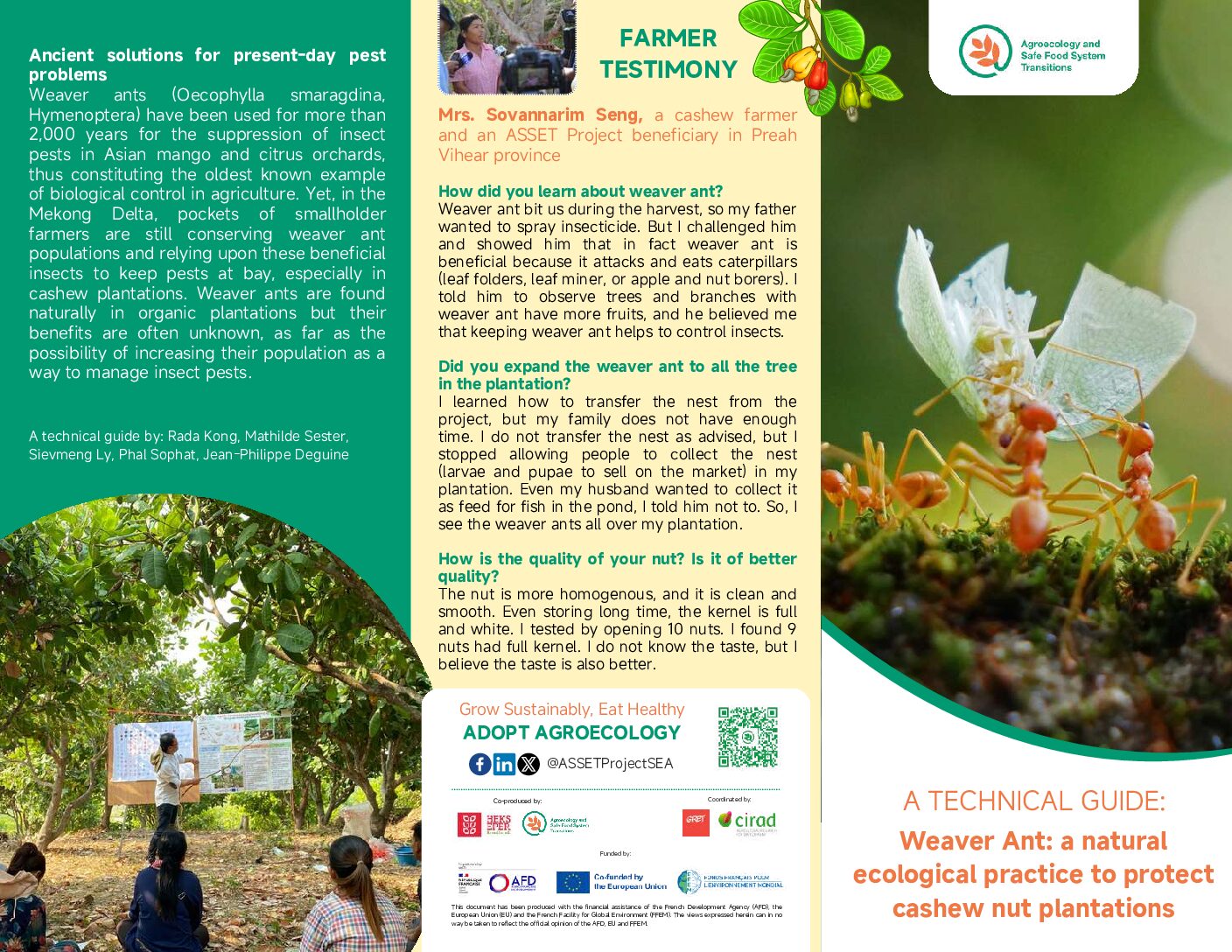
Weaver ant, a natural ecological practice to protect cashew nut plantations
Weaver ants (Oecophylla smaragdina, Hymenoptera) have been used for more than 2,000 years for the suppression of insect pests in Asian mango and citrus orchards, thus constituting the oldest known example of biological control in agriculture. Yet, in the Mekong Delta, pockets of smallholder farmers are still conserving weaver ant populations and relying upon these beneficial insects to keep pests at bay, especially in cashew plantations. Weaver ants are found naturally in organic plantations but their benefits are often unknown, as far as the possibility of increasing their population as a way to manage insect pests.
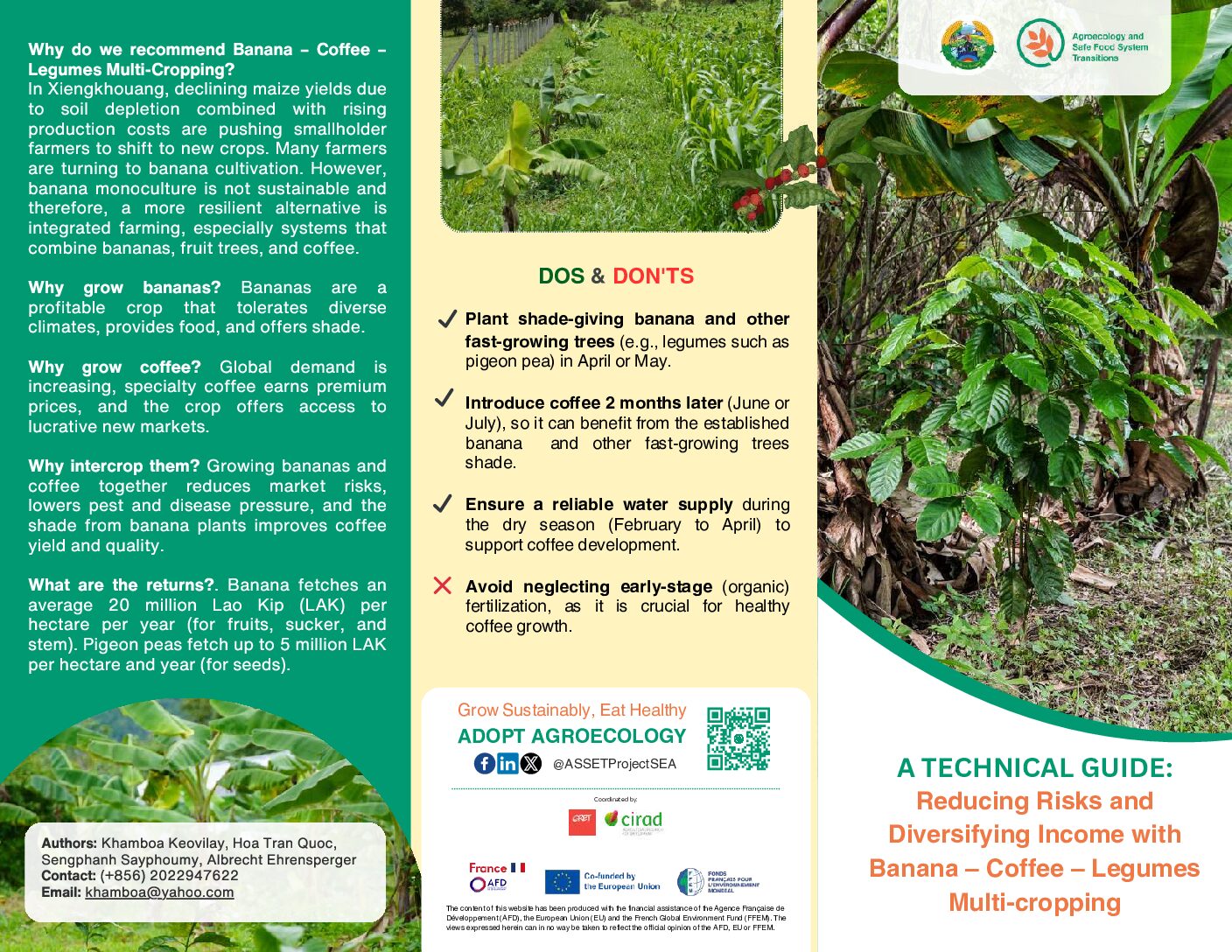
Reducing Risks and Diversifying Income with Banana – Coffee – Legumes Multi-cropping
In Xiengkhouang, declining maize yields due to soil depletion combined with rising production costs are pushing smallholder farmers to shift to new crops. Many farmers are turning to banana cultivation. However, banana monoculture is not sustainable and therefore, a more resilient alternative is integrated farming, especially systems that combine bananas, fruit trees, and coffee.
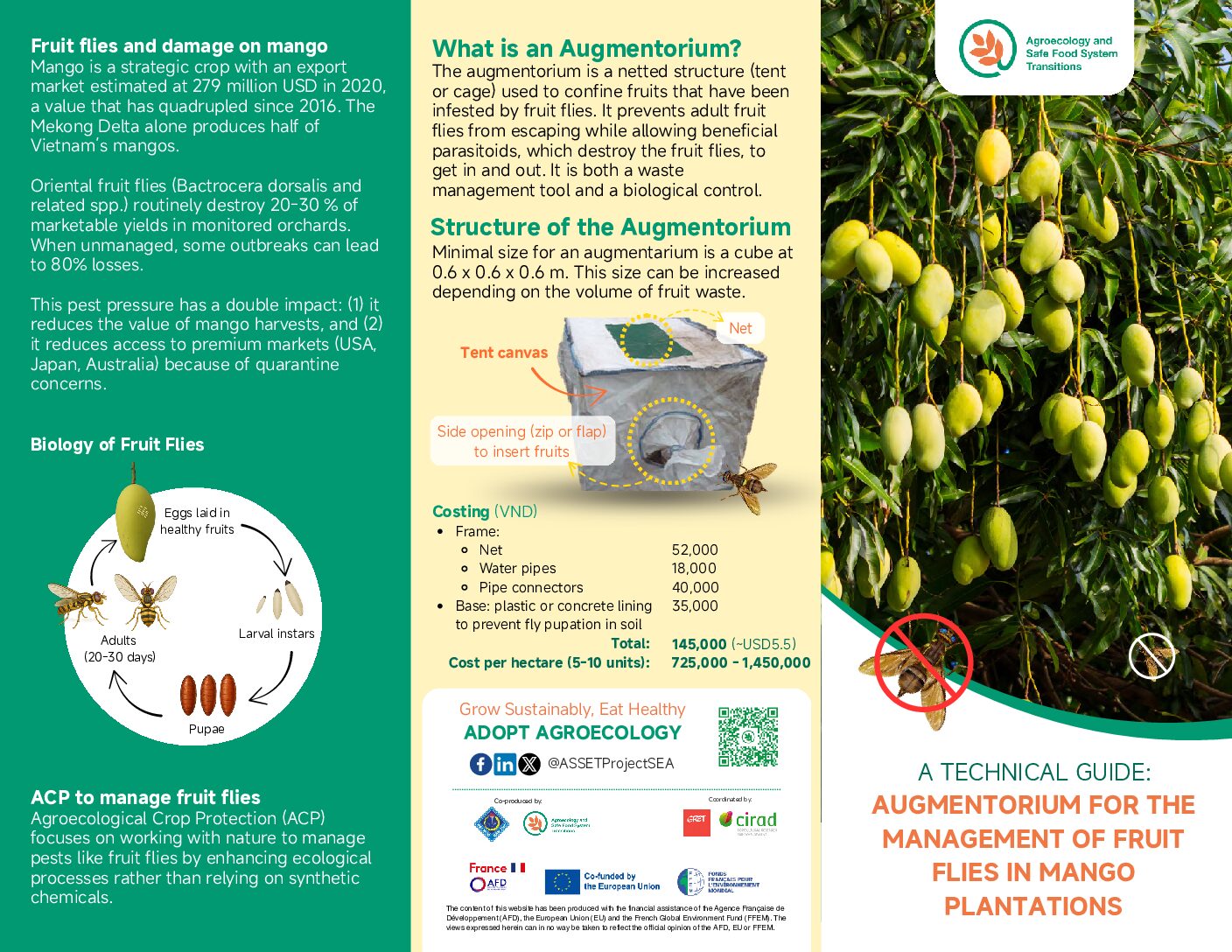
Augmentorium for the management of fruit flies in mango plantations
The augmentorium is a netted structure (tent or cage) used to confine fruits that have been infested by fruit flies. It prevents adult fruit flies from escaping while allowing beneficial parasitoids, which destroy the fruit flies, to get in and out. It is both a waste management tool and a biological control. This technical leaflet presents step by step how to use an augmentarium for managing fruit flies in the mango plantations
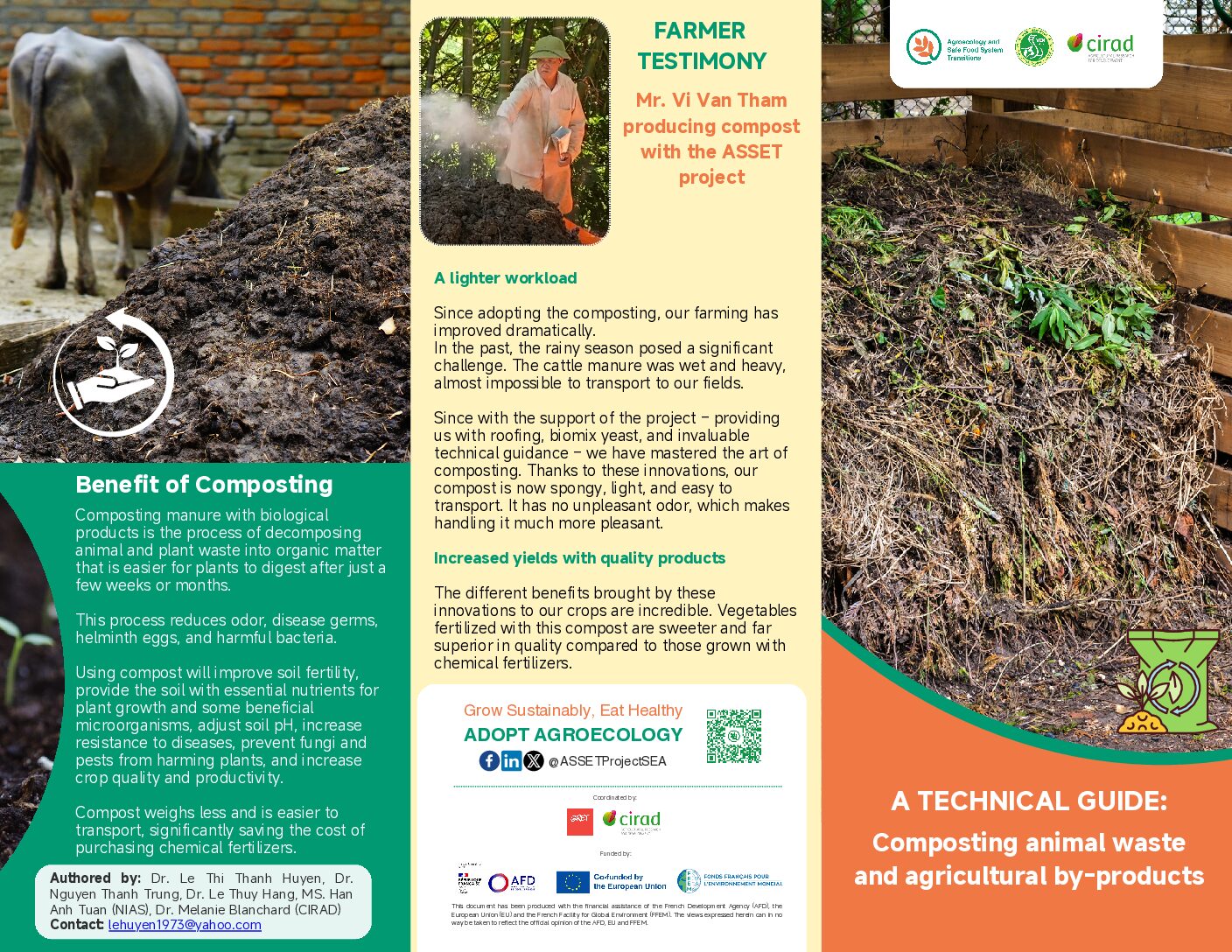
Composting animal waste and agricultural by-products
A technical guide for composting composting animal waste and agricultural by-products. Composting manure with biological products is the process of decomposing animal and plant waste into organic matter that is easier for plants to digest after just a few weeks or months. This process reduces odor, disease germs, helminth eggs, and harmful bacteria.
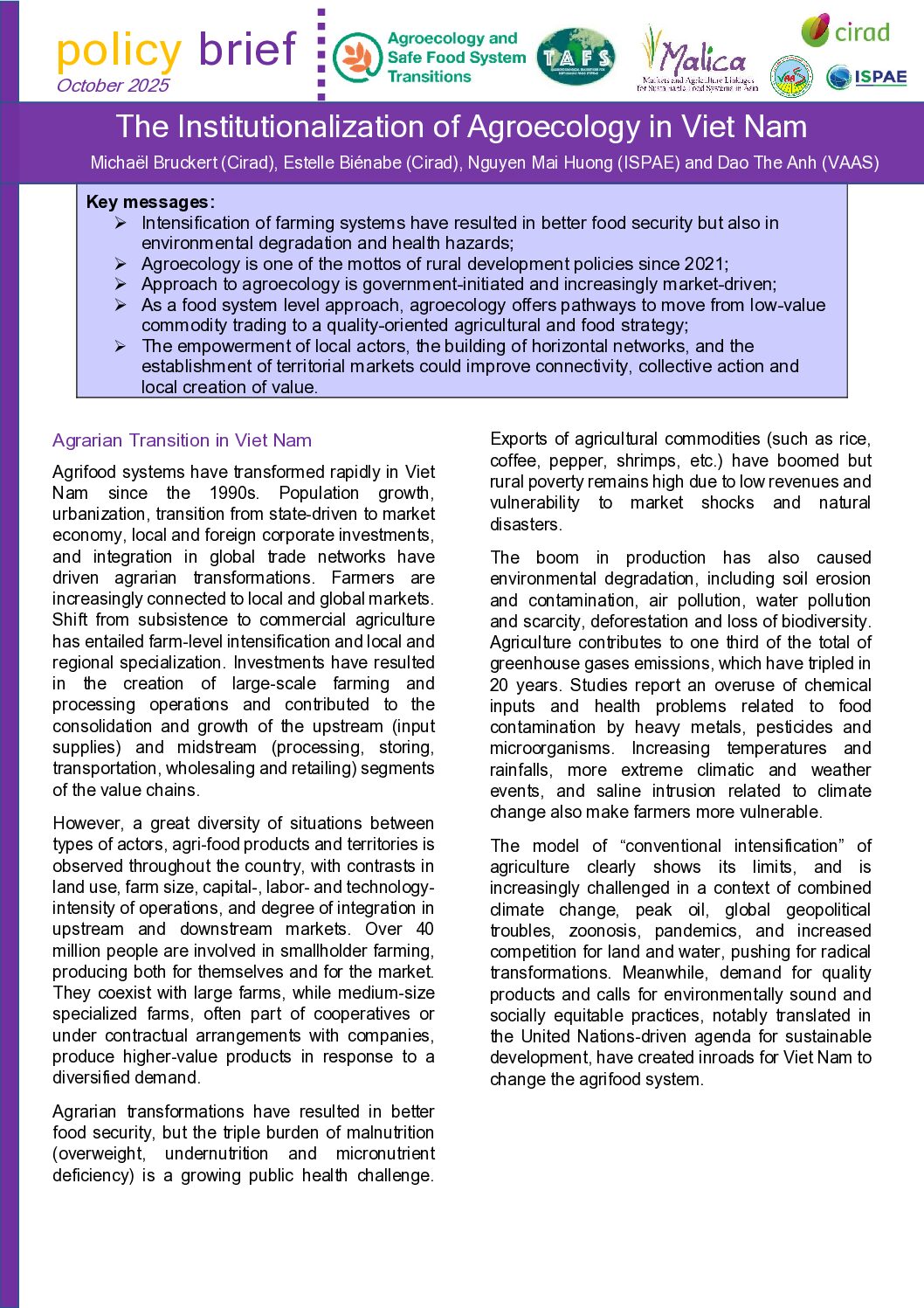
The Institutionalization of Agroecology in Viet Nam
This policy brief, after reviewing agrarian transition, agricultural public policies, actors and organisations supporting Agroecology in Vietnam, presents a rationale to develop agroecology and gives recommendations on different interventions and approaches that could be leveraged by public authorities and other stakeholders to catalyze and bring to scale a full-fledged agroecological transition in Viet Nam.
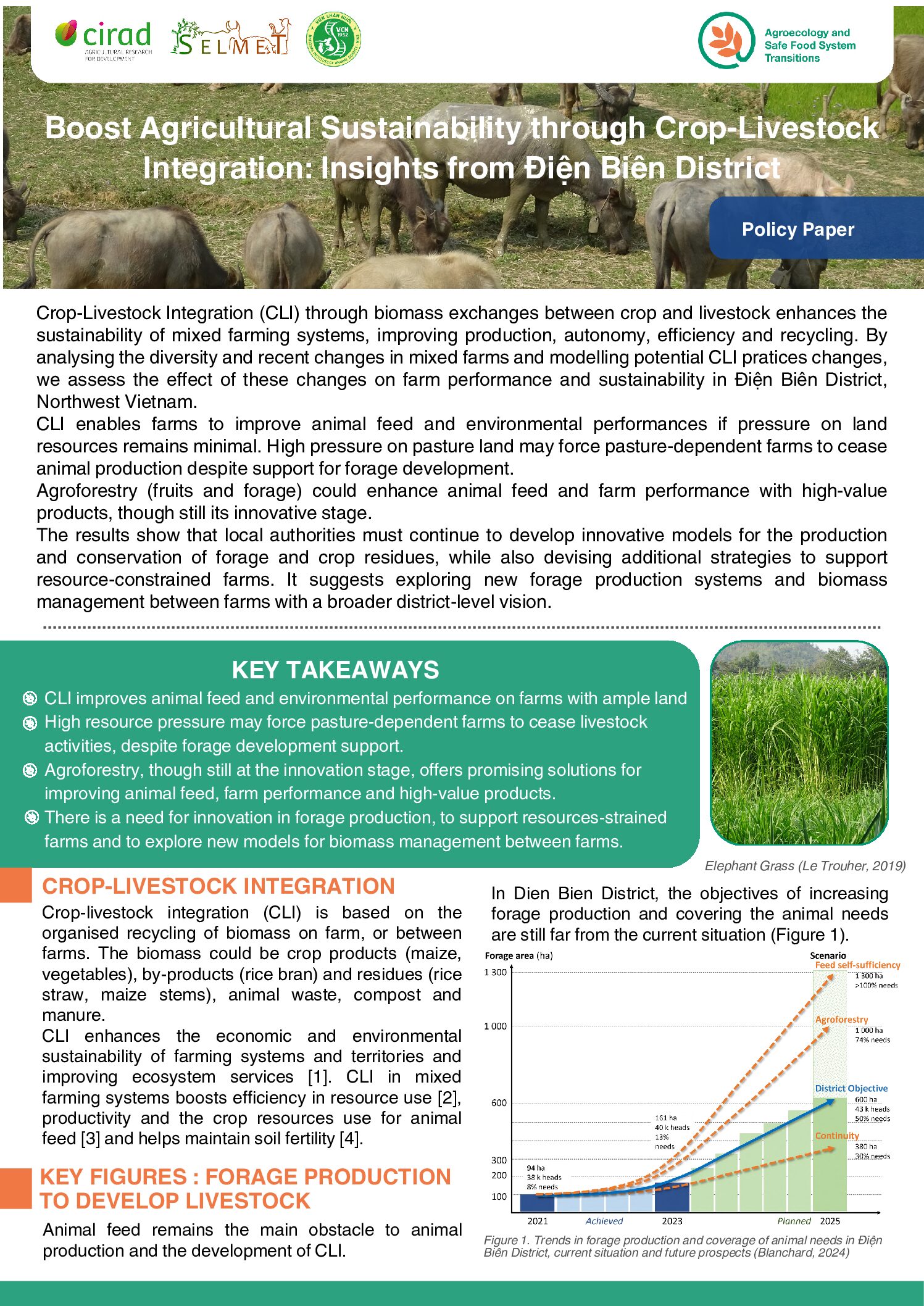
Boost Agricultural Sustainability through Crop-Livestock Integration: Insights from Điện Biên District
Crop-Livestock Integration (CLI) through biomass exchanges between crop and livestock enhances the sustainability of mixed farming systems, improving production, autonomy, efficiency and recycling. By analysing the diversity and recent changes in mixed farms and modelling potential CLI pratices changes, we assess the effect of these changes on farm performance and sustainability in Ðiện Biên District, Northwest Vietnam. CLI enables farms to improve animal feed and environmental performances if pressure on land resources remains minimal. High pressure on pasture land may force pasture-dependent farms to cease animal production despite support for forage development. Agroforestry (fruits and forage) could enhance animal feed and farm performance with high-value products, though still its innovative stage. The results show that local authorities must continue to develop innovative models for the production and conservation of forage and crop residues, while also devising additional strategies to support resource-constrained farms. It suggests exploring new forage production systems and biomass management between farms with a broader district-level vision.
Seeds of Transformation: Agroecology in Siem Reap
This film captures the transformative journey of smallholder farmers in Siem Reap, Cambodia, as they shift from conventional, chemical-dependent farming to agroecological practices that restore soil health, biodiversity, and local livelihoods. Through the story of Ms. Thai Chhengly, a woman farmer who transitioned from selling vegetables to cultivating diverse, chemical-free crops, the film highlights how knowledge-sharing, local innovation, and community networks are rebuilding both ecosystems and economies. Developed under the GRET–APICI initiative in partnership with CIRAD, the documentary showcases the collective movement of over 1,800 farmers across 54 villages adopting sustainable, low-cost, and climate-resilient farming methods. It is a story of empowerment, regeneration, and hope—demonstrating how agroecology can secure food, livelihoods, and dignity for rural communities in a changing climate.
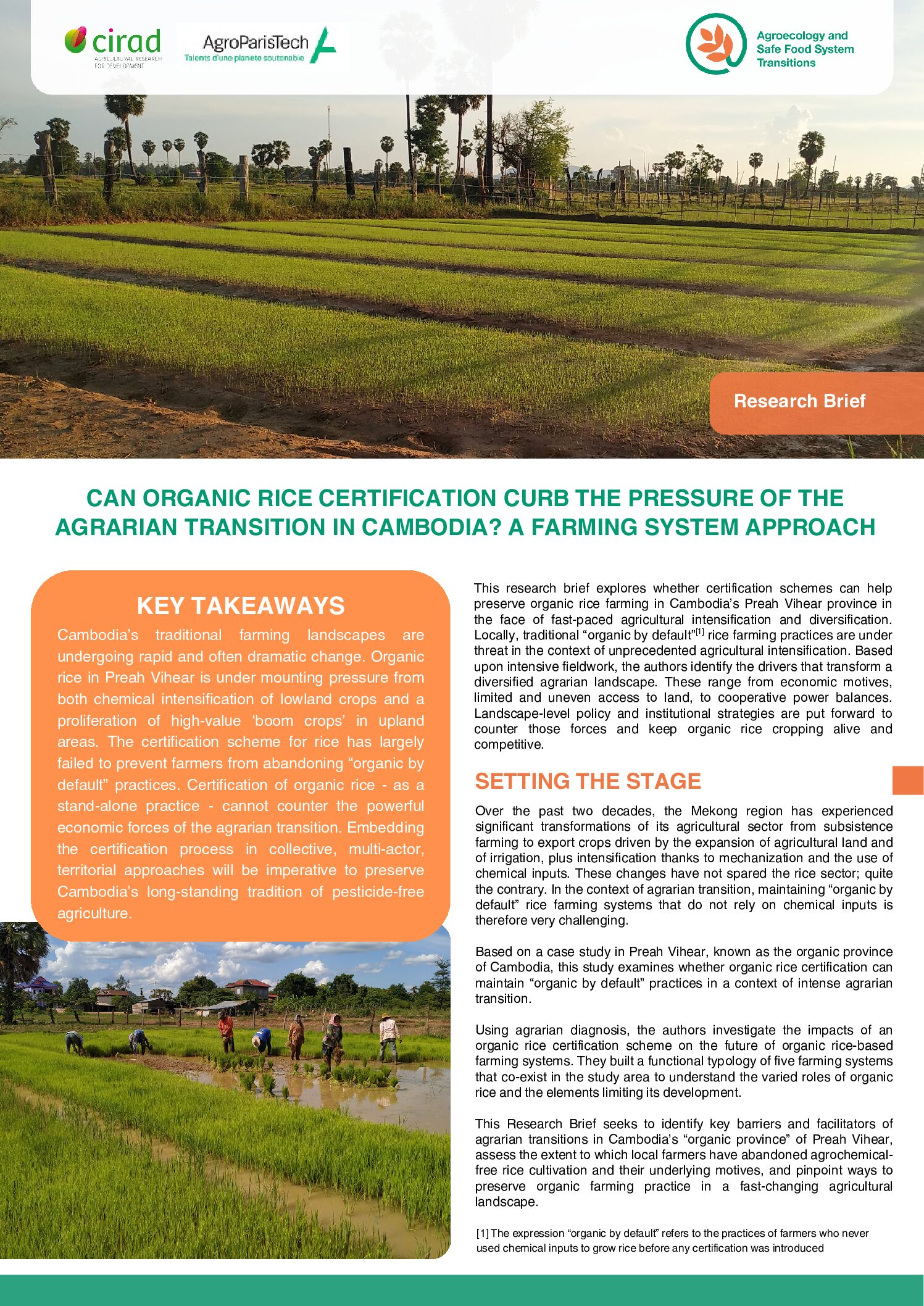
Can organic rice certification curb the pressure of the agrarian transition in Cambodia? A farming system approach
Over the past two decades, the Mekong region has experienced significant transformation of its agricultural sector from subsistence farming to export crops driven by the expansion of agricultural land and of irrigation, plus intensification thanks to mechanization and the use of chemical inputs. In the context of agrarian transition, maintaining “organic by default” rice farming systems that do not rely on chemical inputs, is challenging. Based on a case study in Preah Vihear, the organic province of Cambodia, this paper examines whether organic rice certification can maintain “organic by default” practices in a context of unprecedented agricultural intensification.