




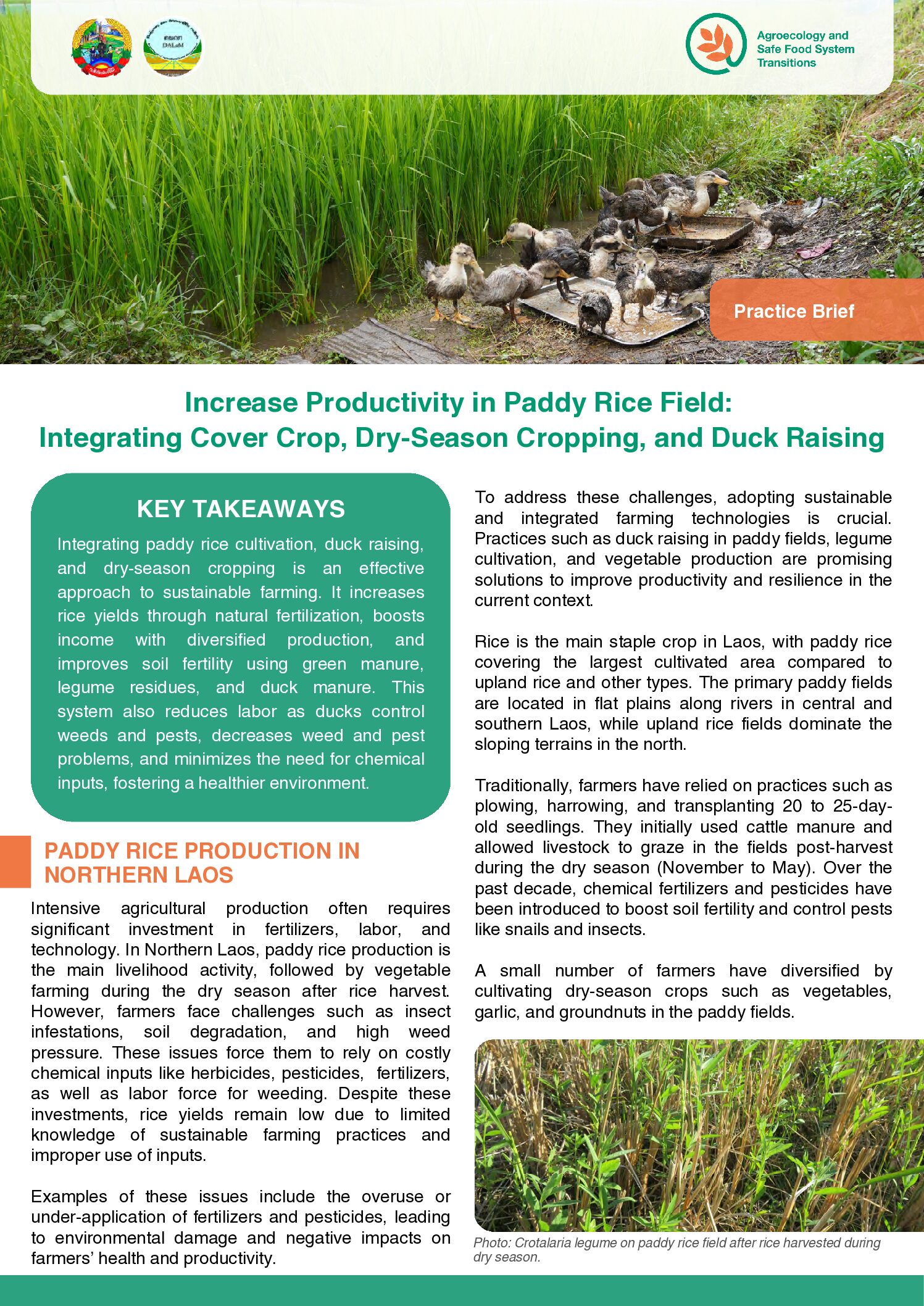
Increase Productivity in Paddy Rice Field: Integrating Cover Crop, Dry-Season Cropping, and Duck Raising
Integrating paddy rice cultivation, duck raising, and dry-season cropping is an effective approach to sustainable farming. It increases rice yields through natural fertilization, boosts income with diversified production, and improves soil fertility using green manure, legume residues, and duck manure. This system also reduces labor as ducks control weeds and pests, decreases weed and pest problems, and minimizes the need for chemical inputs, fostering a healthier environment.

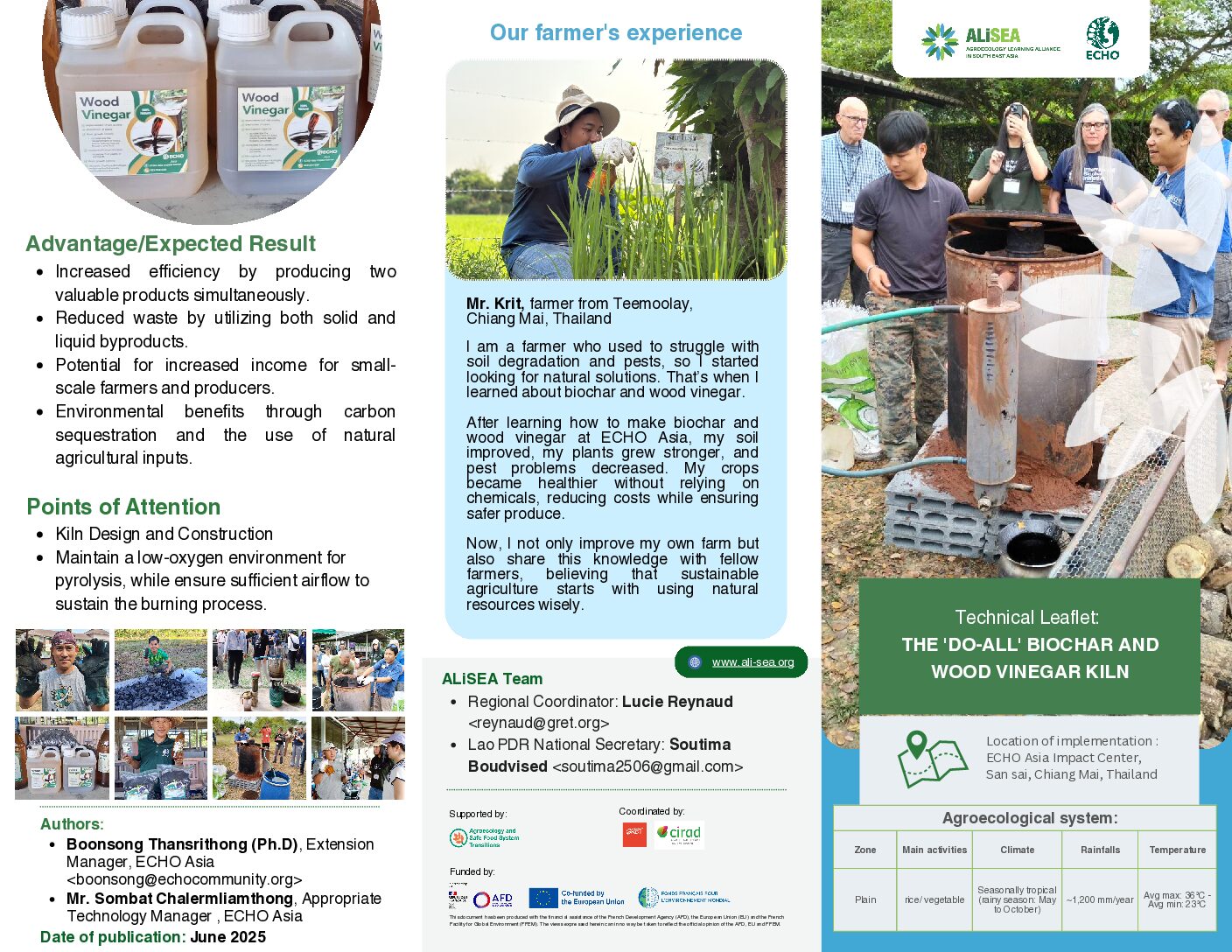
The ‘Do All’ Biochar Wood Vinegar Kiln
This dataset showcases “The ‘Do All’ Biochar Wood Vinegar Kiln”, a practical and efficient design that allows small-scale farmers to produce both biochar and wood vinegar from agricultural waste. Developed at the ECHO Asia Farm in Chiang Mai, Thailand, the kiln supports sustainable farming practices. This initiative is part of the ALiSEA Small Grant Facility 2023, which aims to strengthen biochar producer networks across the region.
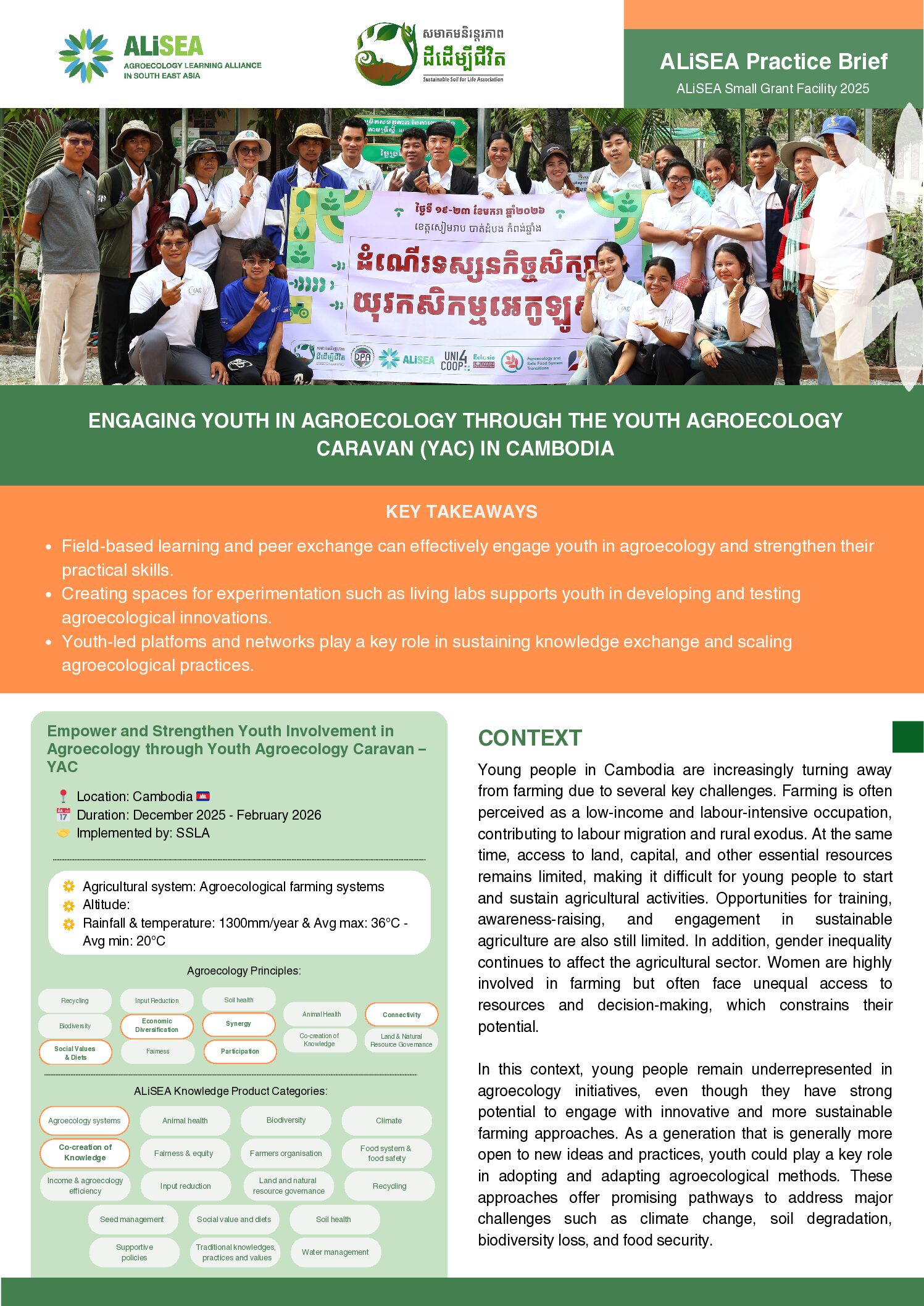
ကမ္ဘောဒီးယားနိုင်ငံရှိ Youth Agroecology Caravan (YAC) အစီအစဉ်မှတစ်ဆင့် လူငယ်များကို အဂရိုအီကိုလိုဂျီတွင် ပါဝင်စေခြင်း
ဤအတွေ့အကြုံစာတမ်းသည် Youth Agroecology Caravan (YAC) အစီအစဉ်မှတစ်ဆင့် လူငယ်များ၏ အဂရိုအီကိုလိုဂျီတွင် ပါဝင်မှုကို မည်သို့မြှင့်တင်ပေးကြောင်း ဖော်ပြထားသည်။ ကွင်းဆင်းလေ့လာရေး၊ အချင်းချင်းသင်ယူမှုနှင့် အသိပညာဖလှယ်မှုများမှတစ်ဆင့် လူငယ်လယ်သမားများ၊ ကျောင်းသားများနှင့် စိုက်ပျိုးရေးဆိုင်ရာ လုပ်ကိုင်သူများသည် လက်တွေ့ကျသော ကျွမ်းကျင်မှုများကို ဖွံ့ဖြိုးစေပြီး ပူးပေါင်းဆောင်ရွက်မှုကွန်ရက်များကို ချဲ့ထွင်ကာ ၎င်းတို့၏ အသိုင်းအဝိုင်းများတွင် အဂရိုအီကိုလိုဂျီဆိုင်ရာ ဆန်းသစ်တီထွင်မှုများကို လက်တွေ့အသုံးချနိုင်စေသည်။ ထို့အပြင် လူငယ်များအကြား ရေရှည်တည်တံ့သော စိုက်ပျိုးရေးကို မြှင့်တင်ရာတွင် အတွေ့အကြုံအခြေပြု သင်ယူမှု၏ အရေးပါမှုကိုလည်း မီးမောင်းထိုးပြထားသည်။
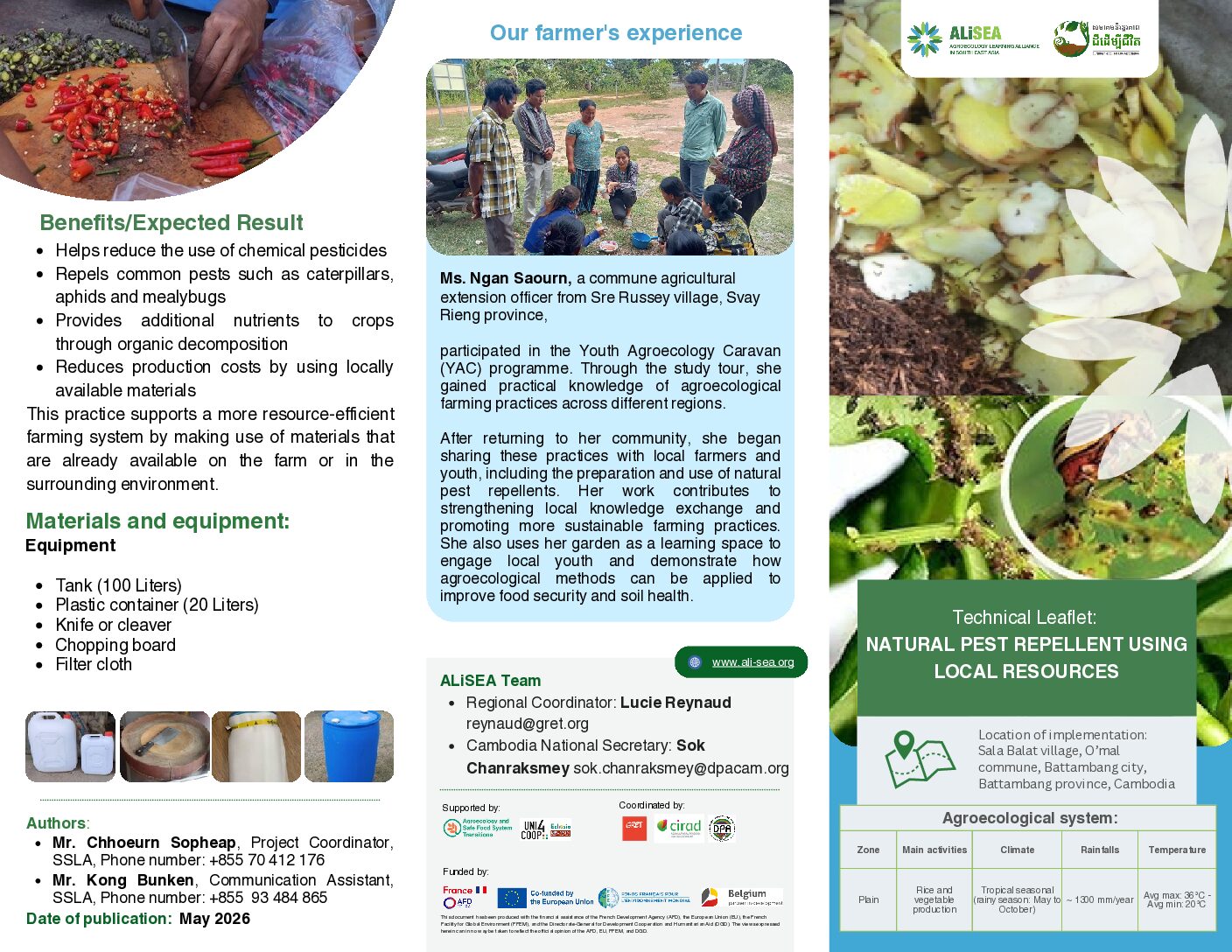
ဒေသတွင်းအရင်းအမြစ်များကို အသုံးပြုသော သဘာဝပိုးမွှားနှင်ထုတ်ဆေး
ဤနည်းပညာစာစောင်သည် ငရုတ်သီး၊ နနွင်း၊ ဂလန်ဂါနှင့် ဒေသတွင်းအပင်များကို အသုံးပြု၍ သဘာဝပိုးမွှားနှင်ထုတ်ဆေး ပြုလုပ်နည်းကို ဖော်ပြထားသည်။ ဤနည်းလမ်းသည် ဓာတုပိုးသတ်ဆေးအသုံးပြုမှုကို လျှော့ချပေးပြီး ကုန်ကျစရိတ်သက်သာစေကာ ရေရှည်တည်တံ့သော စိုက်ပျိုးရေးကို အားပေးသည်။
လူငယ် စိုက်ပျိုးရေးနิเวဒ် ကာရာဗန် အစီအစဉ် (YAC): ဓာတုအသုံးပြုမှု လျှော့ချခြင်းနှင့် စိုက်ခင်း မျိုးစုံပြုလုပ်ခြင်း – ကမ္ဘောဒီးယား
ဤဒေတာစုတွင် ကမ္ဘောဒီးယားနိုင်ငံရှိ လူငယ် စိုက်ပျိုးရေးနิเวဒ် ကာရာဗန် အစီအစဉ် (Youth Agroecology Caravan – YAC) အောက်တွင် ထုတ်လုပ်ထားသော ဗီဒီယိုတို ၂ ခု ပါဝင်သည်။ ဤအစီအစဉ်သည် လယ်ယာလေ့လာရေးခရီးများနှင့် အတွေ့အကြုံဖလှယ်မှုများမှတဆင့် လူငယ်များနှင့် လယ်သမားများအား agroecology ဆိုင်ရာ အလေ့အကျင့်များကို လေ့လာနိုင်ရန် ထောက်ပံ့ပေးသော field-based learning initiative တစ်ခုဖြစ်သည်။ ဗီဒီယိုများတွင် သင်တန်းအတွင်း ဆွေးနွေးခဲ့သော အဓိကအကြောင်းအရာများဖြစ်သည့် ဓာတု input များ လျှော့ချခြင်း၊ စိုက်ခင်းအတွင်းရှိ အရင်းအမြစ်များကို ထိရောက်စွာ အသုံးပြုခြင်းနှင့် ထုတ်လုပ်မှုစနစ် မျိုးစုံဖွဲ့စည်းခြင်းတို့ကို ဖော်ပြထားပြီး ရေရှည်တည်တံ့သော လယ်ယာစိုက်ပျိုးရေးနှင့် အသက်မွေးဝမ်းကြောင်းကို ထောက်ပံ့ရန် ရည်ရွယ်ပါသည်။
လူငယ် စိုက်ပျိုးရေးနิเวဒ် ကာရာဗန် အစီအစဉ် (YAC): ဓာတုအသုံးပြုမှု လျှော့ချခြင်းနှင့် စိုက်ခင်း မျိုးစုံပြုလုပ်ခြင်း – ကမ္ဘောဒီးယား
ဤဒေတာစုတွင် ကမ္ဘောဒီးယားနိုင်ငံရှိ လူငယ် စိုက်ပျိုးရေးနิเวဒ် ကာရာဗန် အစီအစဉ် (Youth Agroecology Caravan – YAC) အောက်တွင် ထုတ်လုပ်ထားသော ဗီဒီယိုတို ၂ ခု ပါဝင်သည်။ ဤအစီအစဉ်သည် လယ်ယာလေ့လာရေးခရီးများနှင့် အတွေ့အကြုံဖလှယ်မှုများမှတဆင့် လူငယ်များနှင့် လယ်သမားများအား agroecology ဆိုင်ရာ အလေ့အကျင့်များကို လေ့လာနိုင်ရန် ထောက်ပံ့ပေးသော field-based learning initiative တစ်ခုဖြစ်သည်။ ဗီဒီယိုများတွင် သင်တန်းအတွင်း ဆွေးနွေးခဲ့သော အဓိကအကြောင်းအရာများဖြစ်သည့် ဓာတု input များ လျှော့ချခြင်း၊ စိုက်ခင်းအတွင်းရှိ အရင်းအမြစ်များကို ထိရောက်စွာ အသုံးပြုခြင်းနှင့် ထုတ်လုပ်မှုစနစ် မျိုးစုံဖွဲ့စည်းခြင်းတို့ကို ဖော်ပြထားပြီး ရေရှည်တည်တံ့သော လယ်ယာစိုက်ပျိုးရေးနှင့် အသက်မွေးဝမ်းကြောင်းကို ထောက်ပံ့ရန် ရည်ရွယ်ပါသည်။
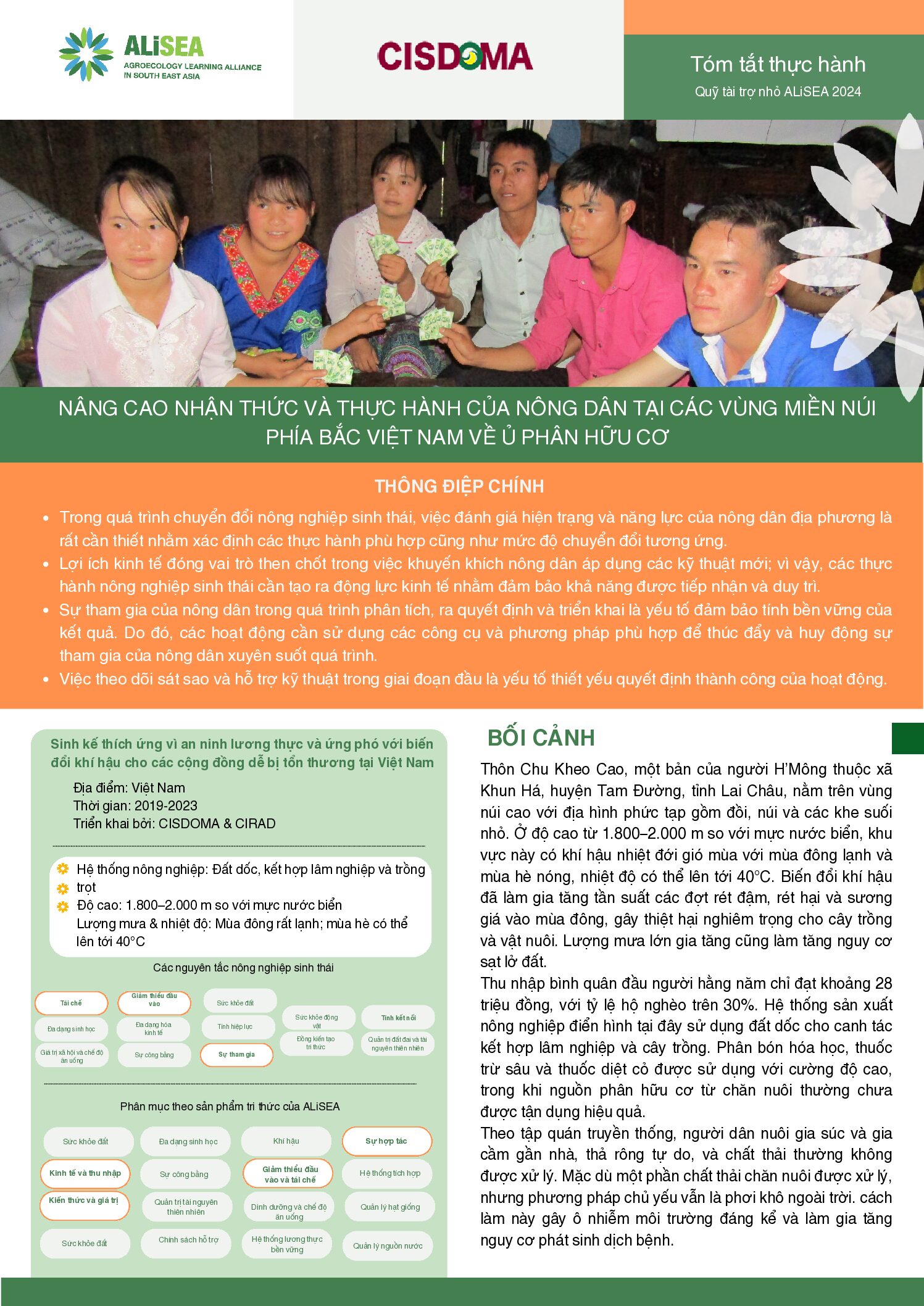
Composting: Improving the perceptions and practices of ethnic minority farmers in Northern Vietnam’s mountainous regions
This practice brief describes an approach to drive the adoption of agroecological practices, including composting, by fostering farmers’ active engagement in problem analysis, decision-making, and collective action.
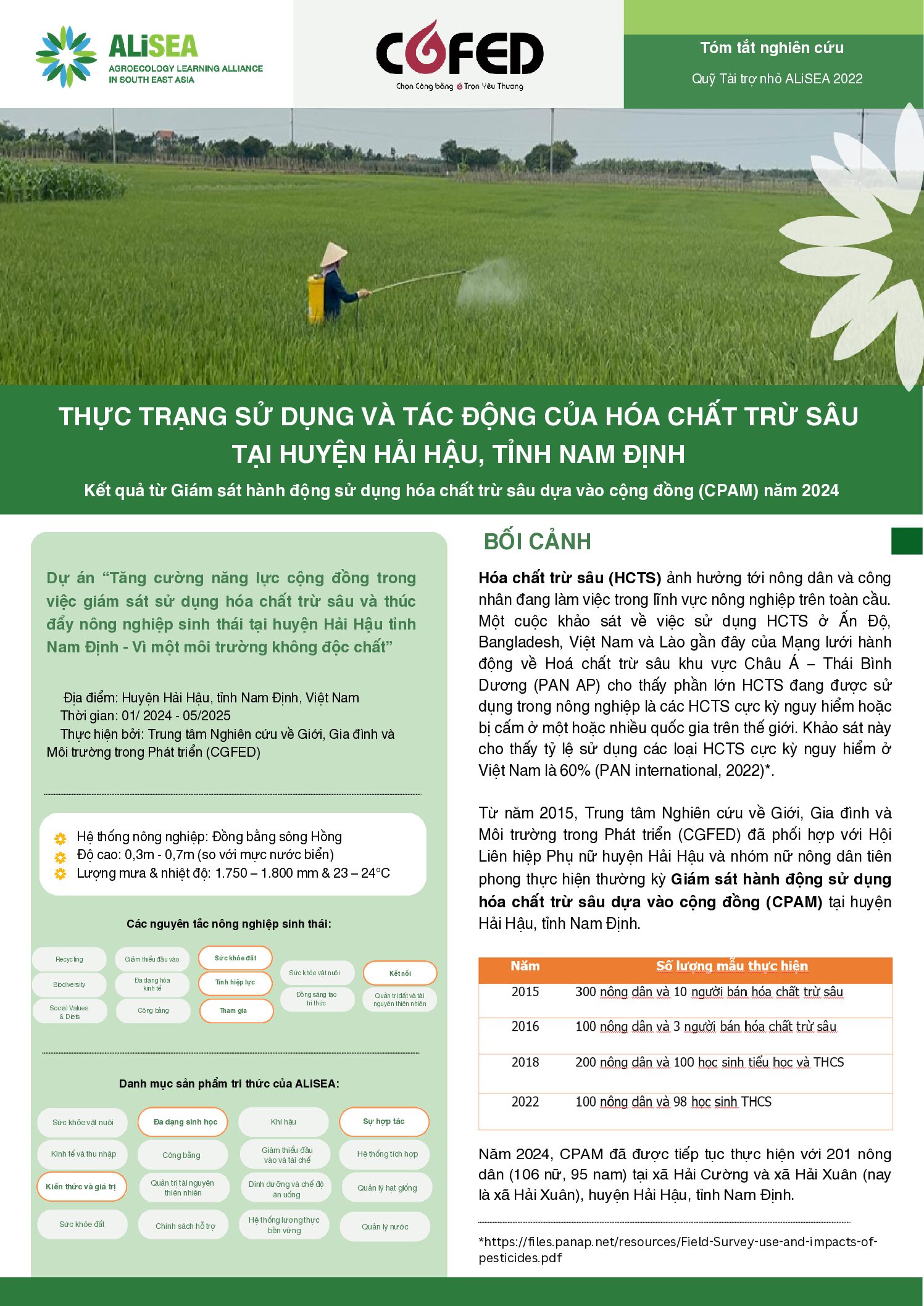
Use and impacts of pesticide in Hai Hau district, Nam Dinh province
his research brief present the results of a survey aiming at documenting the use and impacts of hazardous pesticides among farmers. This survey employed the Community-Based Pesticide Action Monitoring (CPAM) methodology developed by the Pesticide Action Network Asia Pacific (PAN AP)
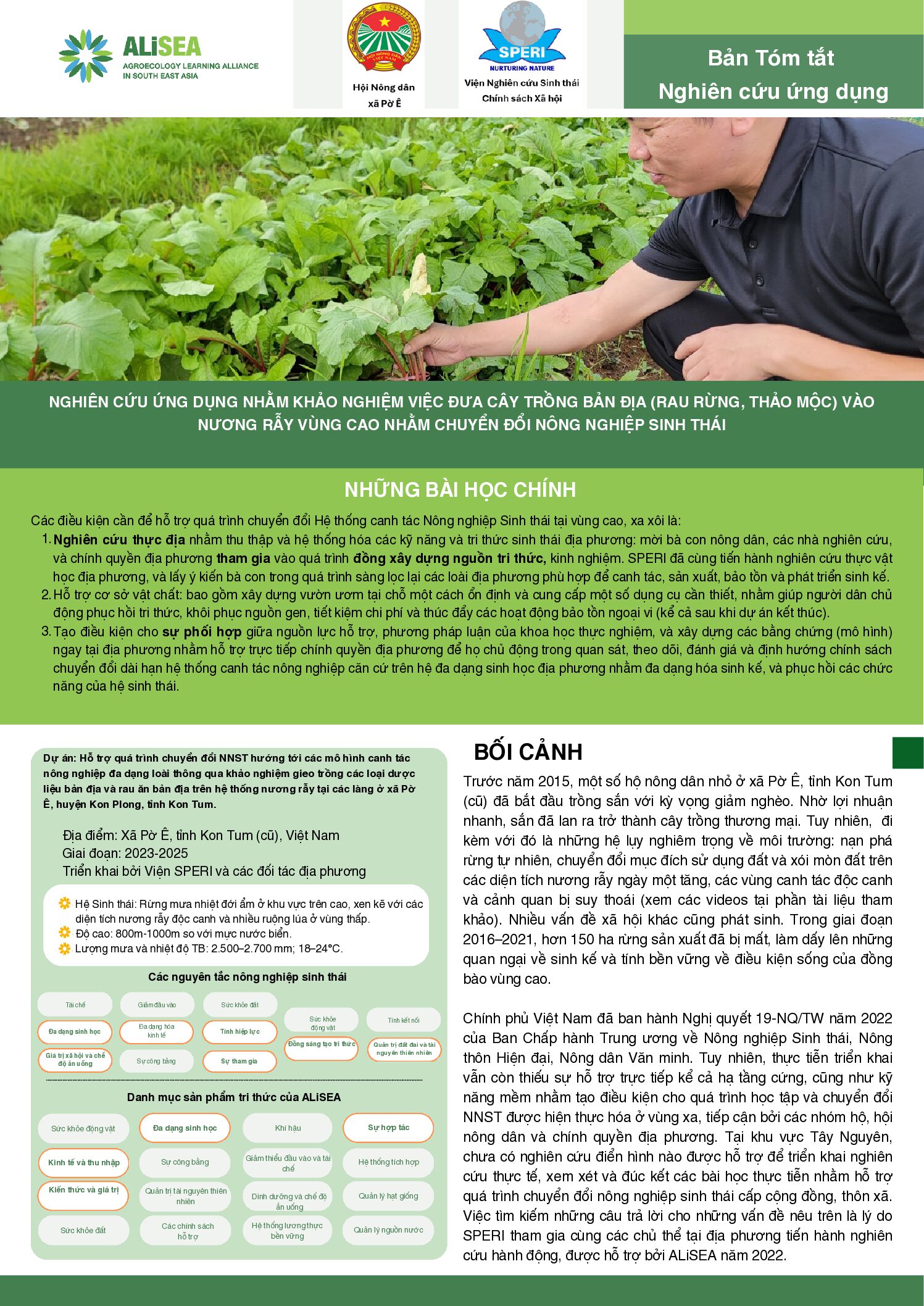
A Research Action to Integrate Native Edible Herb Cultivation into Transitioning Agroecological Farms
This July 2025 research brief by SPERI describes an action-research project in Po E commune, Vietnam, integrating native edible herbs into transitioning agroecological farms to replace cassava monocultures, restore biodiversity, and improve livelihoods. Using a social cluster approach, ethnobotanical research, nurseries, and pilot farms, it engaged farmers, tested local species, and fostered collaboration among communities, scientists, and authorities to support long-term agroecological transition.