




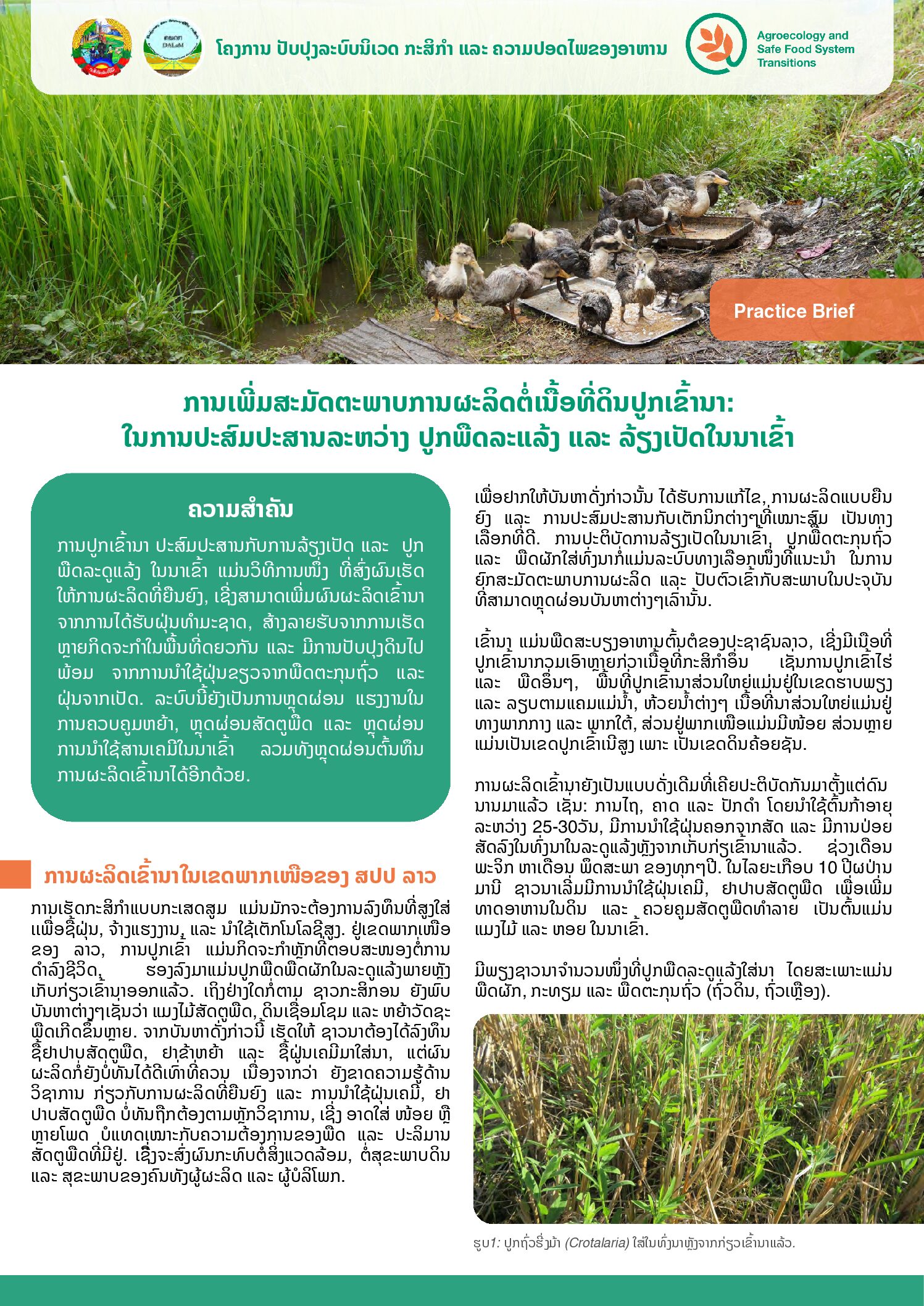
ການເພີ່ມສະມັດຕະພາບການຜະລິດຕໍ່ເນື້ອທີ່ດິນປູກເຂົ້ານາ: ໃນການປະສົມປະສານລະຫວ່າງ ປູກພືດລະແລ້ງ ແລະ ລ້ຽງເປັດໃນນາເຂົ້າ
ການປູກເຂົ້ານາ ປະສົມປະສານກັບການລ້ຽງເປັດ ແລະ ປູກ ພືດລະດູແລ້ງ ໃນນາເຂົ້າ ແມ່ນວິທີການໜຶ່ງ ທີ່ສົ່ງສົ່ ຜົນເຮັດ ໃຫ້ການຜະລິດທີ່ຍືນຍົງ, ເຊີ່ງສາມາດເພີ່ມຜົນຜະລິດເຂົ້ານາ ຈາກການໄດ້ຮັບຝຸ່ນທຳມະຊາດ, ສ້າງລາຍຮັບຈາກການເຮັດ ຫຼາຍກິດຈະກຳໃນພື້ນທີ່ດຍວກັນ ແລະ ມີການປັບປຸງດິນໄປ ພ້ອມ ຈາກການນຳໃຊ້ຝຸ່ນຂຽວຈາກພືດຕະກຸນຖົ່ວ ແລະ ຝຸ່ນຈາກເປັດ. ລະບົບນີ້ຍັງເປັນການຫຼຸດຜ່ອນ ແຮງງານໃນ ການຄວບຄູມຫຍ້າ, ຫຼຸດຜ່ອນສັດຕູພືດ ແລະ ຫຼຸດຜ່ອນ ການນຳໃຊ້ສານເຄມີໃນນາເຂົ້າ ລວມທັງຫຼຸດຜ່ອນຕົ້ນທຶນ ການຜະລິດເຂົ້ານາໄດ້ອີກດ້ວຍ.

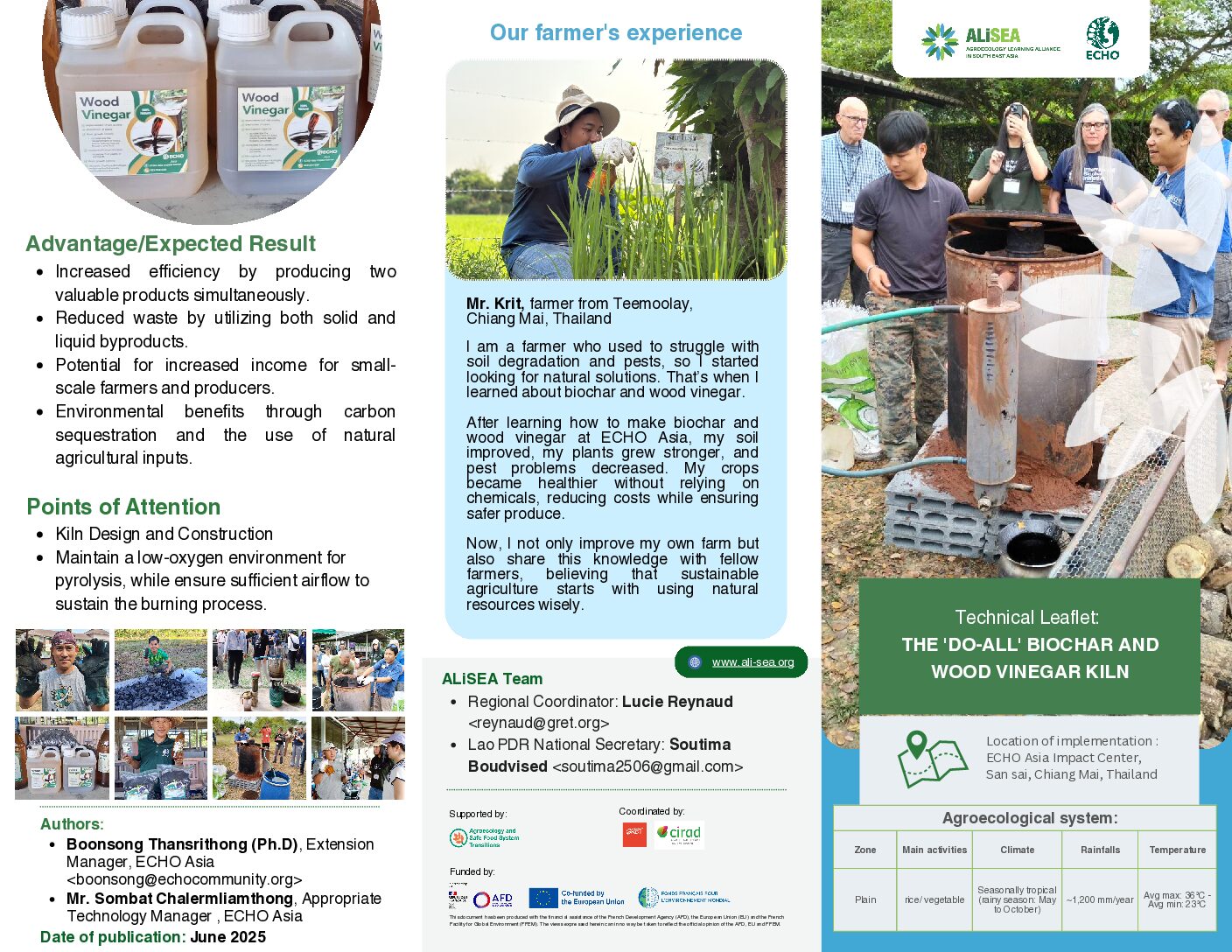
ເຕົາເຜົາອະເນກປະສົງ ຖ່ານຊີວະພາບ (Biochar) ແລະ ນ້ຳສົ້ມຄວັນໄມ້
ຊຸດຂໍ້ມູນນີ້ແມ່ນໄດ້ນຳສະເໜີ “ເຕົາເຜົາແບບອະເນກປະສົງ ຖ່ານຊີວະພາບ ແລະ ນ້ຳສົ້ມຄວັນໄມ້”, ເຊິ່ງເປັນການອອກແບບທີ່ສາມາດນຳໃຊ້ໄດ້ຈິງ ແລະ ມີປະສິດທິພາບ ທີ່ຊ່ວຍໃຫ້ກະສິກອນຂະໜາດນ້ອຍສາມາດຜະລິດທັງຖ່ານຊີວະພາບ ແລະ ນ້ຳສົ້ມຄວັນໄມ້ຈາກສິ່ງເສດເຫຼືອທາງກະສິກຳ. ໂດຍໄດ້ພັດທະນາຂຶ້ນທີ່ສູນຮຽນຮູ້ ECHO Asia ໃນຈັງຫວັດຊຽງໃໝ່, ປະເທດໄທ, ເຕົາເຜົານີ້ສາມາດສະໜັບສະໜູນການຈັດຕັ້ງປະຕິບັດກະສິກຳແບບຍືນຍົງ. ການລິເລີ່ມນີ້ເປັນສ່ວນໜຶ່ງຂອງກອງທຶນຂະໜາດນ້ອຍອາລິເຊຍ 2023, ເຊິ່ງມີຈຸດປະສົງເພື່ອເສີມສ້າງເຄືອຂ່າຍຜູ້ຜະລິດຖ່ານຊີວະພາບທົ່ວພາກພື້ນ.
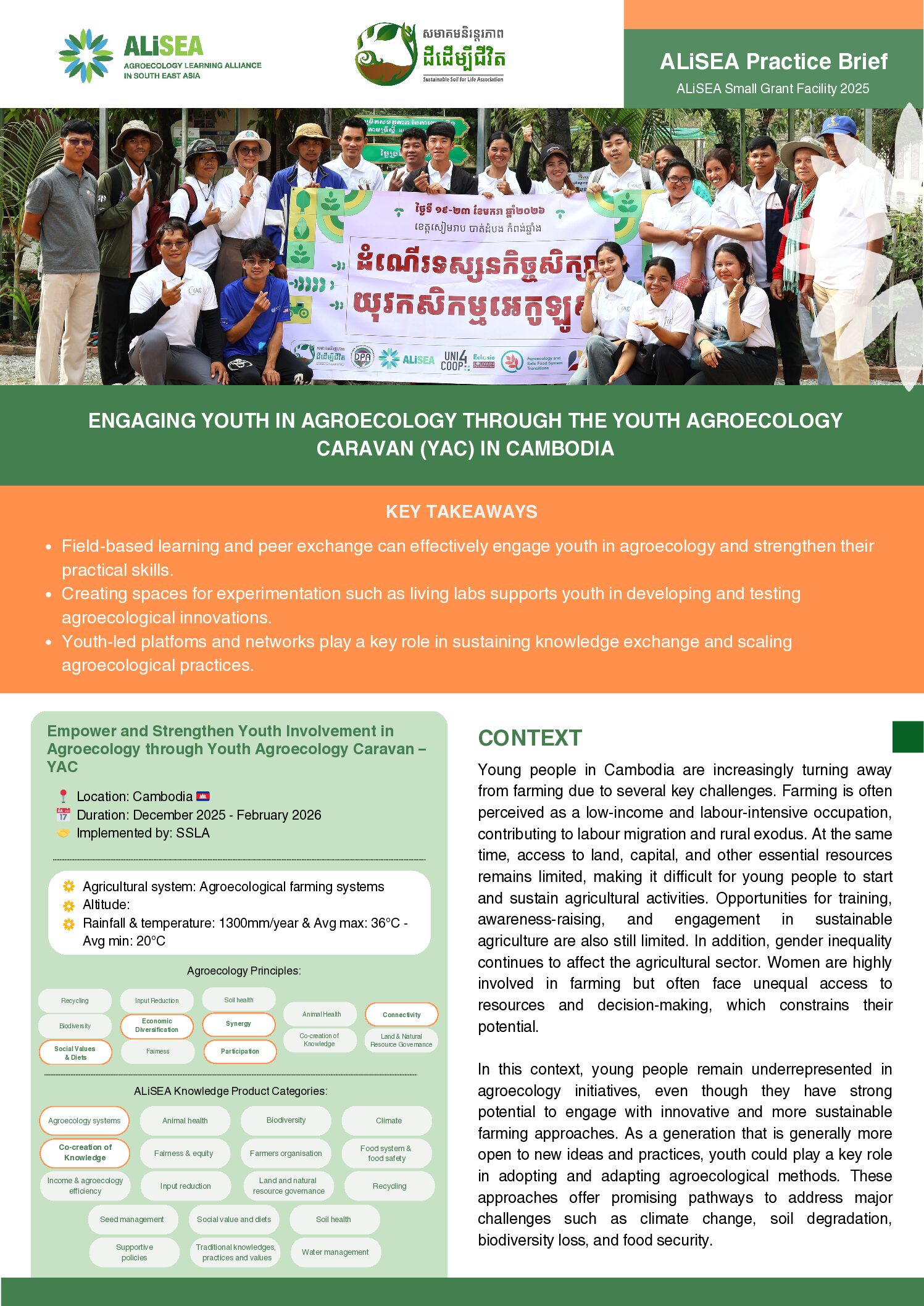
ສົ່ງເສີມການມີສ່ວນຮ່ວມຂອງຊາວໜຸ່ມໃນກະສິກຳນິເວດ ຜ່ານໂຄງການ Youth Agroecology Caravan (YAC) ໃນກຳປູເຈຍ
ເອກະສານບົດຮຽນນີ້ນຳສະເໜີວ່າໂຄງການ Youth Agroecology Caravan (YAC) ຊ່ວຍເສີມສ້າງການມີສ່ວນຮ່ວມຂອງຊາວໜຸ່ມໃນກະສິກຳນິເວດ ຜ່ານການຮຽນຮູ້ຈາກພາກສະໜາມ, ການຮຽນຮູ້ຮ່ວມກັນ ແລະ ການແລກປ່ຽນຄວາມຮູ້. ໂຄງການນີ້ຊ່ວຍໃຫ້ຊາວກະສິກອນຫນຸ່ມ, ນັກສຶກສາ ແລະ ຜູ້ປະກອບວຽກດ້ານກະສິກຳ ພັດທະນາທັກສະປະຕິບັດ, ຂະຫຍາຍເຄືອຂ່າຍຄວາມຮ່ວມມື ແລະ ນຳໃຊ້ນະວັດຕະກຳດ້ານກະສິກຳນິເວດໃນຊຸມຊົນຂອງຕົນ. ບົດຮຽນນີ້ຍັງສະທ້ອນໃຫ້ເຫັນຄວາມສຳຄັນຂອງການຮຽນຮູ້ຜ່ານປະສົບການໃນການສົ່ງເສີມກະສິກຳທີ່ຍືນຍົງສຳລັບຄົນຮຸ່ນໃໝ່.
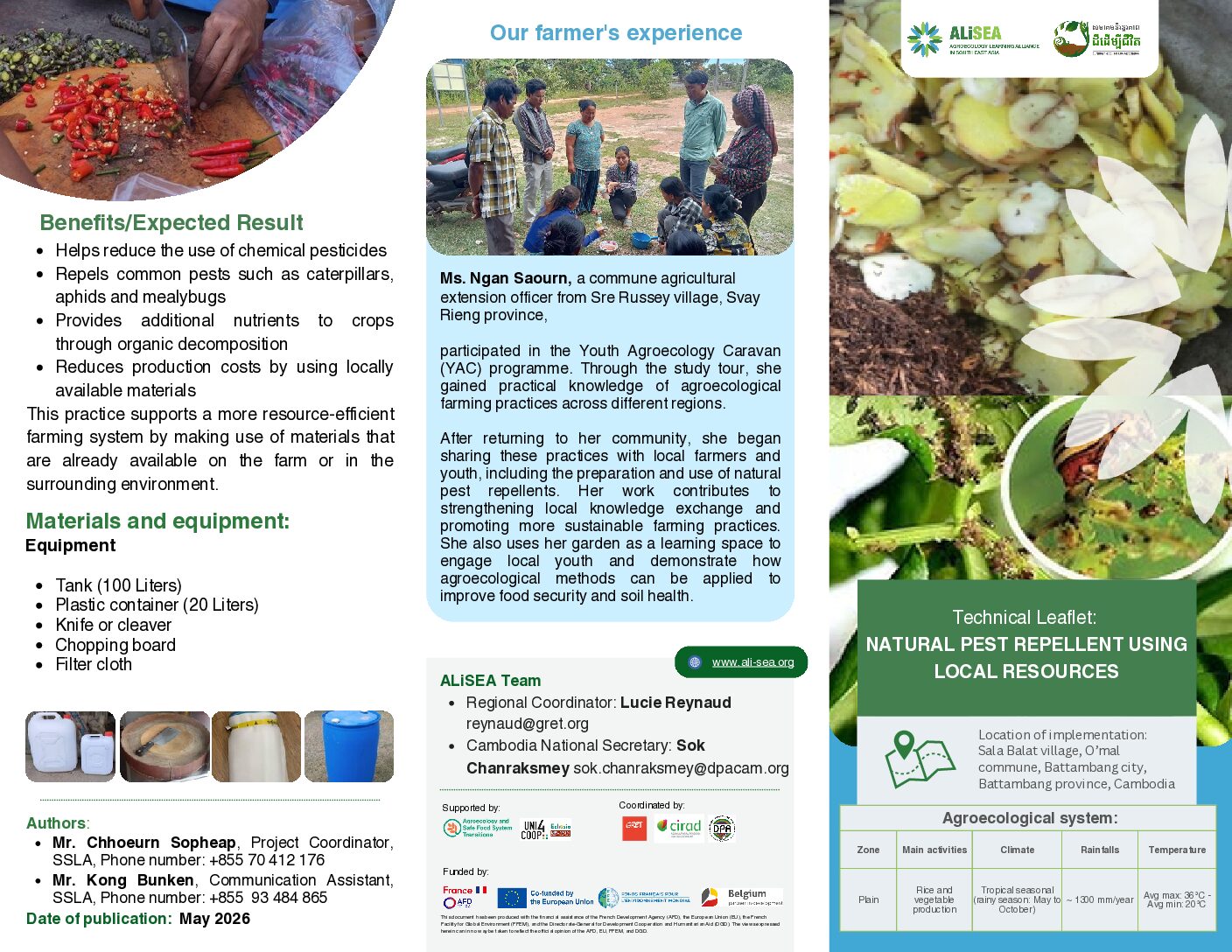
ໂຄງການຄາຣາວານກະສິນິເວດສຳລັບເຢົາວະຊົນ (YAC): ການຫຼຸດຜ່ອນການໃຊ້ສານເຄມີ ແລະ ການເພີ່ມຄວາມຫຼາກຫຼາຍໃນຟາມ ຢູ່ກຳປູເຈຍ
ຊຸດຂໍ້ມູນນີ້ປະກອບດ້ວຍວິດີໂອສັ້ນ 2 ລາຍການ ທີ່ຈັດເຮັດຂຶ້ນພາຍໃຕ້ ໂຄງການຄາຣາວານກະສິນິເວດສຳລັບເຢົາວະຊົນ (Youth Agroecology Caravan – YAC) ໃນກຳປູເຈຍ ເຊິ່ງເປັນການຮຽນຮູ້ແບບພາກສະໜາມ ເພື່ອສະໜັບສະໜູນເຢົາວະຊົນ ແລະ ຊາວກະສິກອນໃຫ້ເຂົ້າໃຈແນວທາງກະສິນິເວດ ຜ່ານການເຂົ້າຢ້ຽມຊົມຟາມ ແລະ ການແລກປ່ຽນປະສົບການ ວິດີໂອເຫຼົ່ານີ້ກ່ຽວຂ້ອງກັບຫົວຂໍ້ສຳຄັນໃນການຝຶກອົບຮົມ ເຊັ່ນ ການຫຼຸດຜ່ອນການໃຊ້ສານເຄມີ ການນຳໃຊ້ຊັບພະຍາກອນໃນຟາມ ແລະ ການເພີ່ມຄວາມຫຼາກຫຼາຍໃນລະບົບການຜະລິດ ເພື່ອສະໜັບສະໜູນການກະສິກຳ ແລະ ຊີວິດຄວາມເປັນຢູ່ທີ່ຍືນຍົງ
ໂຄງການຄາຣາວານກະສິນິເວດສຳລັບເຢົາວະຊົນ (YAC): ການຫຼຸດຜ່ອນການໃຊ້ສານເຄມີ ແລະ ການເພີ່ມຄວາມຫຼາກຫຼາຍໃນຟາມ ຢູ່ກຳປູເຈຍ
ຊຸດຂໍ້ມູນນີ້ປະກອບດ້ວຍວິດີໂອສັ້ນ 2 ລາຍການ ທີ່ຈັດເຮັດຂຶ້ນພາຍໃຕ້ ໂຄງການຄາຣາວານກະສິນິເວດສຳລັບເຢົາວະຊົນ (Youth Agroecology Caravan – YAC) ໃນກຳປູເຈຍ ເຊິ່ງເປັນການຮຽນຮູ້ແບບພາກສະໜາມ ເພື່ອສະໜັບສະໜູນເຢົາວະຊົນ ແລະ ຊາວກະສິກອນໃຫ້ເຂົ້າໃຈແນວທາງກະສິນິເວດ ຜ່ານການເຂົ້າຢ້ຽມຊົມຟາມ ແລະ ການແລກປ່ຽນປະສົບການ ວິດີໂອເຫຼົ່ານີ້ກ່ຽວຂ້ອງກັບຫົວຂໍ້ສຳຄັນໃນການຝຶກອົບຮົມ ເຊັ່ນ ການຫຼຸດຜ່ອນການໃຊ້ສານເຄມີ ການນຳໃຊ້ຊັບພະຍາກອນໃນຟາມ ແລະ ການເພີ່ມຄວາມຫຼາກຫຼາຍໃນລະບົບການຜະລິດ ເພື່ອສະໜັບສະໜູນການກະສິກຳ ແລະ ຊີວິດຄວາມເປັນຢູ່ທີ່ຍືນຍົງ
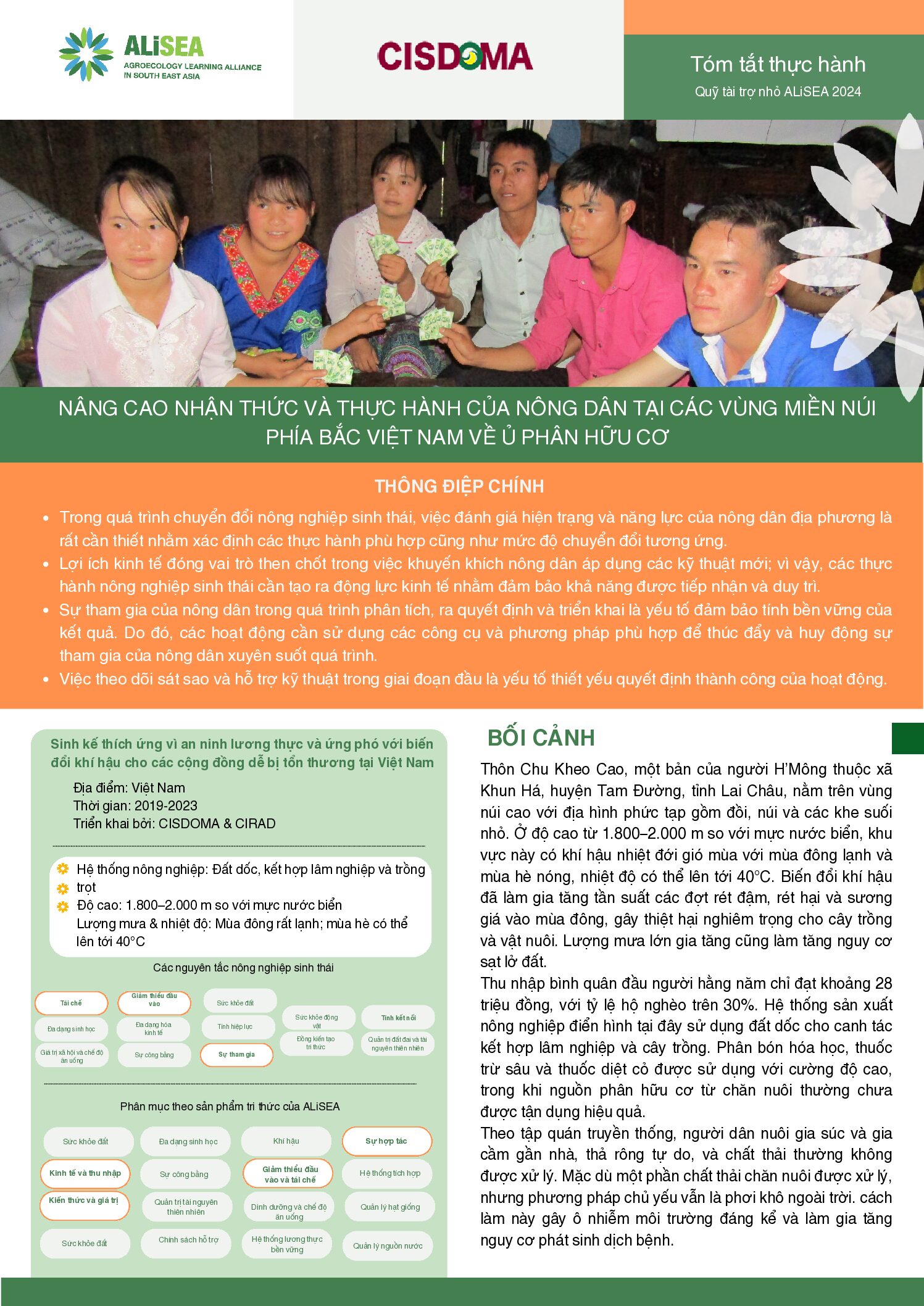
Composting: Improving the perceptions and practices of ethnic minority farmers in Northern Vietnam’s mountainous regions
This practice brief describes an approach to drive the adoption of agroecological practices, including composting, by fostering farmers’ active engagement in problem analysis, decision-making, and collective action.
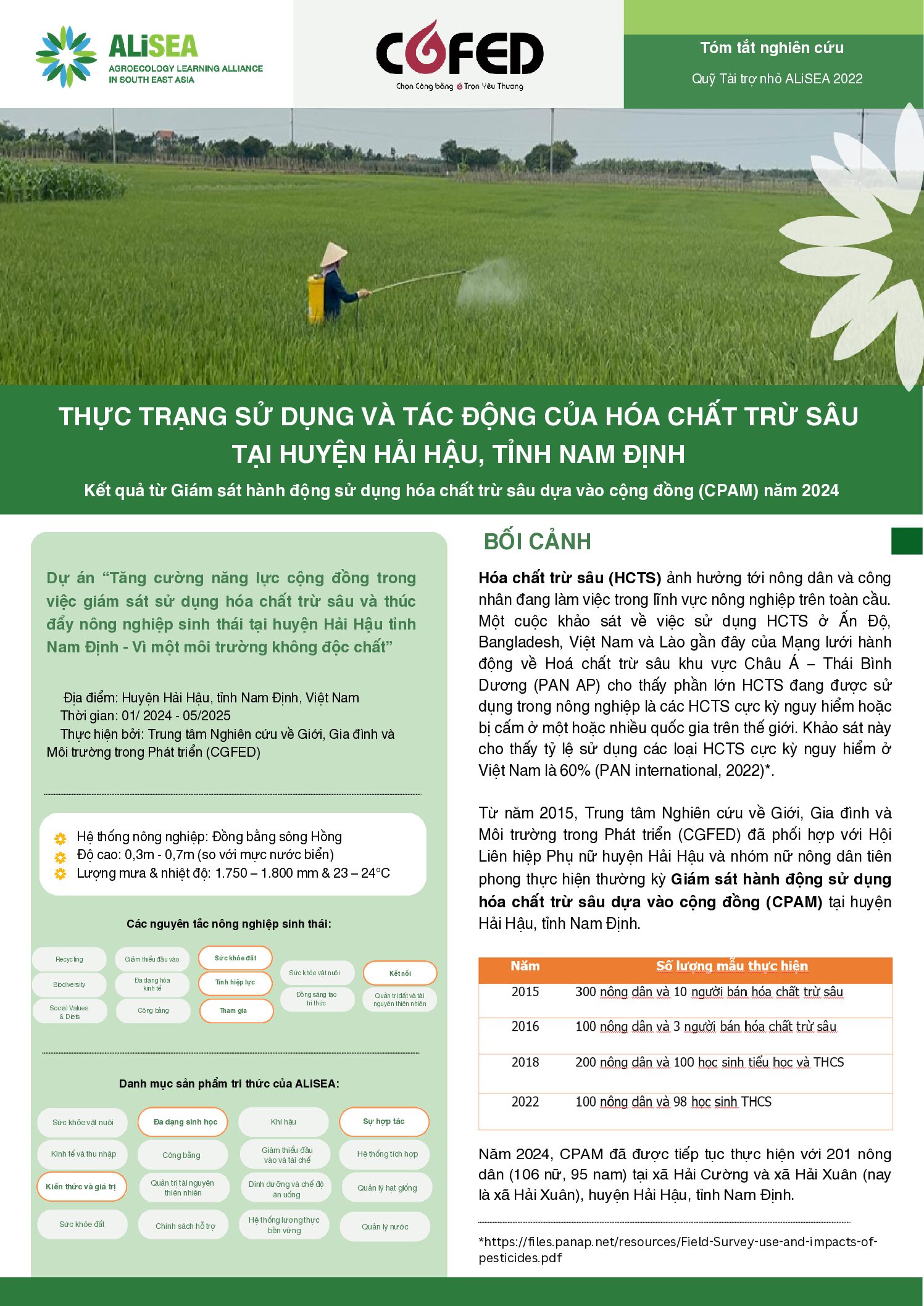
Use and impacts of pesticide in Hai Hau district, Nam Dinh province
his research brief present the results of a survey aiming at documenting the use and impacts of hazardous pesticides among farmers. This survey employed the Community-Based Pesticide Action Monitoring (CPAM) methodology developed by the Pesticide Action Network Asia Pacific (PAN AP)
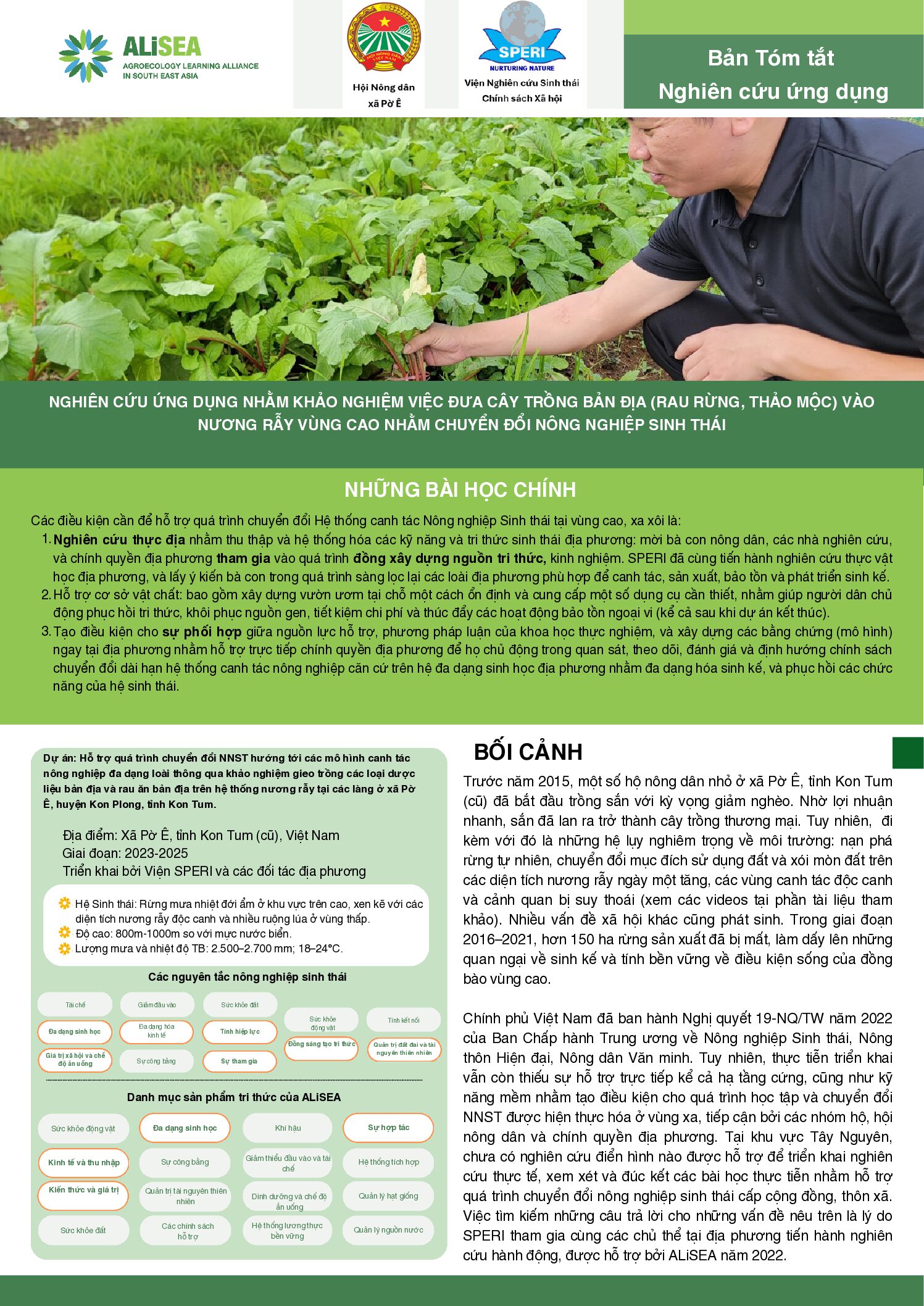
A Research Action to Integrate Native Edible Herb Cultivation into Transitioning Agroecological Farms
This July 2025 research brief by SPERI describes an action-research project in Po E commune, Vietnam, integrating native edible herbs into transitioning agroecological farms to replace cassava monocultures, restore biodiversity, and improve livelihoods. Using a social cluster approach, ethnobotanical research, nurseries, and pilot farms, it engaged farmers, tested local species, and fostered collaboration among communities, scientists, and authorities to support long-term agroecological transition.