




Buffalo Benefits in Rice Cultivation
This video shows how buffalo help maintain soil nutrients and support aquatic biodiversity within the rice farming system. Using the example of Phonevieng Village, Vang Vieng District, Vientiane Province, it explains how the buffalo’s behavior creates benefits and synergies for rice cultivation, especially through their use of ponds.

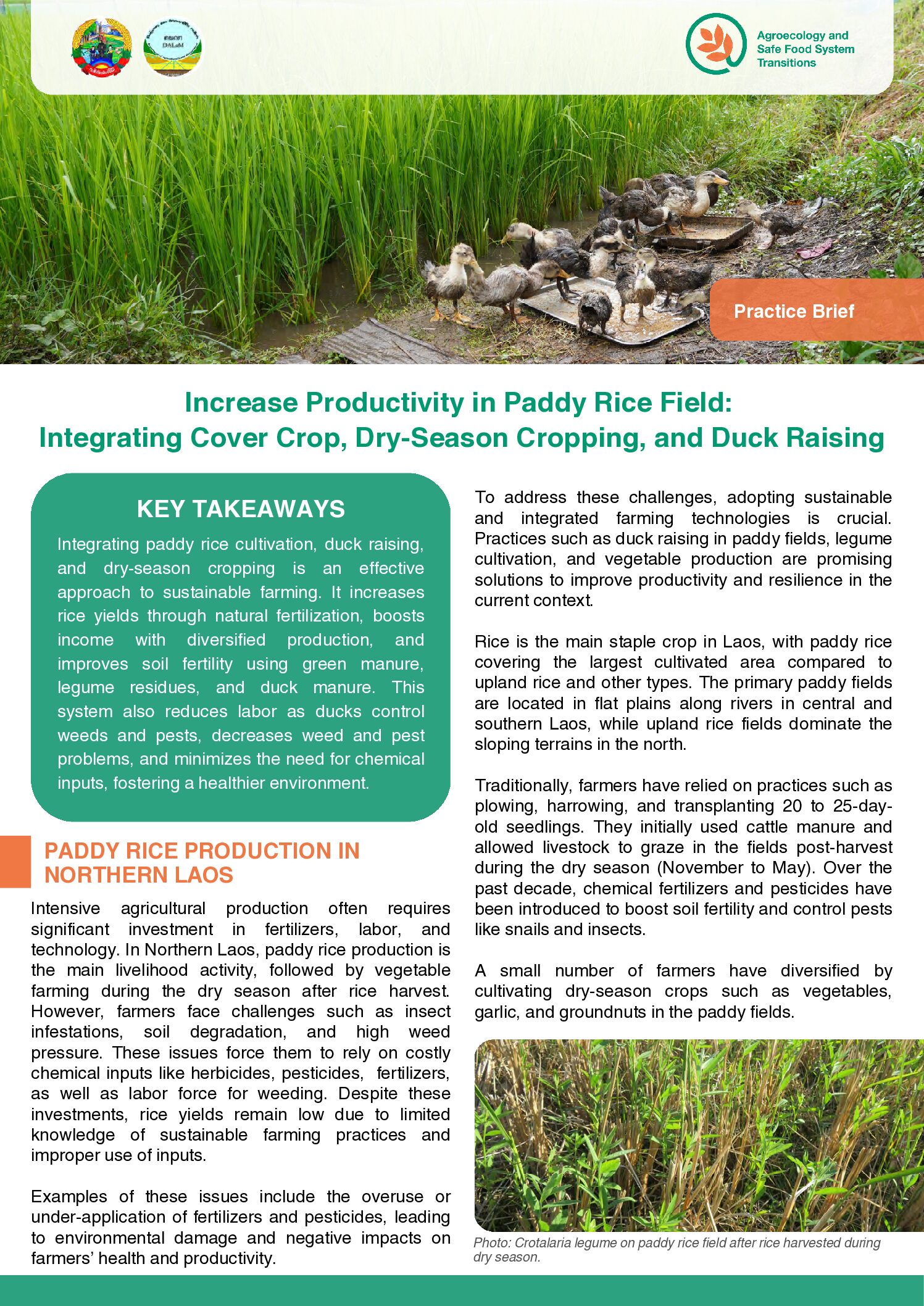
Increase Productivity in Paddy Rice Field: Integrating Cover Crop, Dry-Season Cropping, and Duck Raising
Integrating paddy rice cultivation, duck raising, and dry-season cropping is an effective approach to sustainable farming. It increases rice yields through natural fertilization, boosts income with diversified production, and improves soil fertility using green manure, legume residues, and duck manure. This system also reduces labor as ducks control weeds and pests, decreases weed and pest problems, and minimizes the need for chemical inputs, fostering a healthier environment.
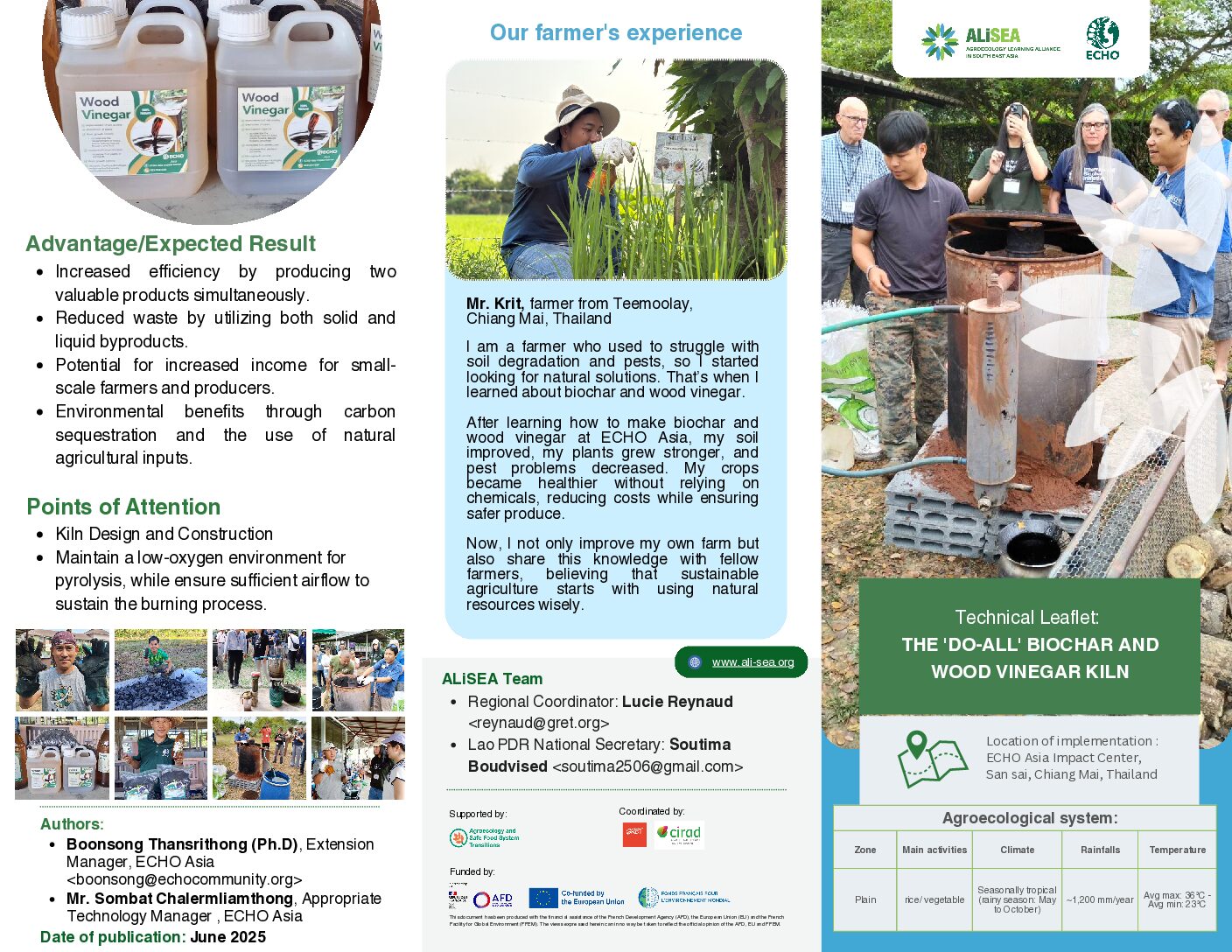
Sản xuất than sinh học và giấm gỗ đa năng
Tài liệu hướng dẫn kỹ thuật sản xuất đồng thời than sinh học và giấm gỗ từ sinh khối thông qua quá trình nhiệt phân trong điều kiện ít oxy. Cách tiếp cận này giúp tận dụng phụ phẩm nông nghiệp, giảm chất thải và tạo ra các đầu vào tự nhiên cho canh tác. Đồng thời, mô hình góp phần cải thiện đất, giảm chi phí sản xuất và tăng thu nhập cho nông dân.
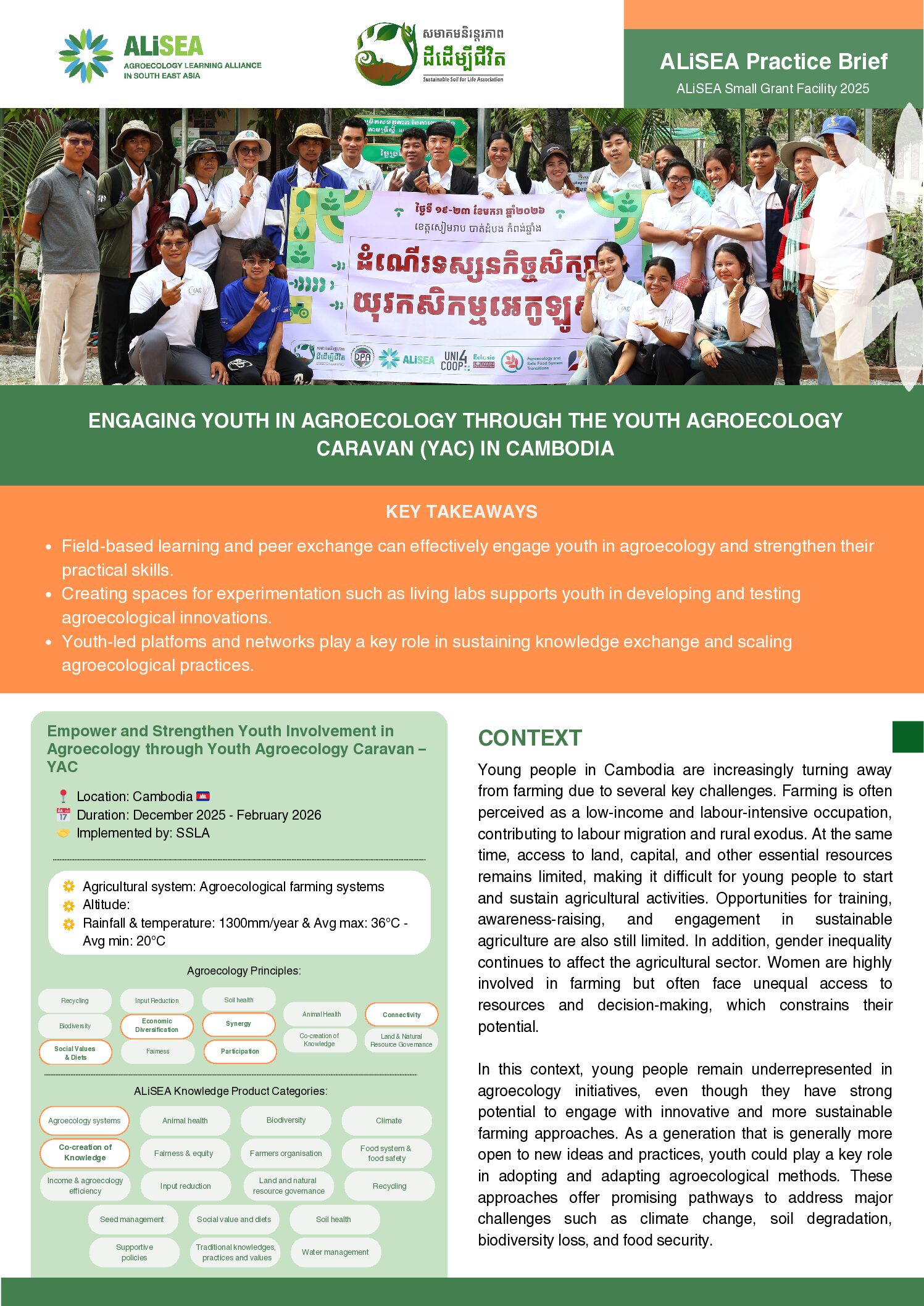
Thu hút thanh niên tham gia nông nghiệp sinh thái thông qua chương trình Youth Agroecology Caravan (YAC) tại Campuchia
Tài liệu thực hành này giới thiệu cách chương trình Youth Agroecology Caravan (YAC) tăng cường sự tham gia của thanh niên trong nông nghiệp sinh thái thông qua các chuyến học tập thực địa, học hỏi đồng đẳng và trao đổi kiến thức. Sáng kiến này giúp nông dân trẻ, sinh viên và những người làm nông nghiệp phát triển kỹ năng thực hành, mở rộng mạng lưới kết nối và áp dụng các đổi mới trong nông nghiệp sinh thái tại cộng đồng của mình. Tài liệu cũng cho thấy vai trò quan trọng của học tập trải nghiệm trong việc thúc đẩy nông nghiệp bền vững cho thế hệ trẻ.
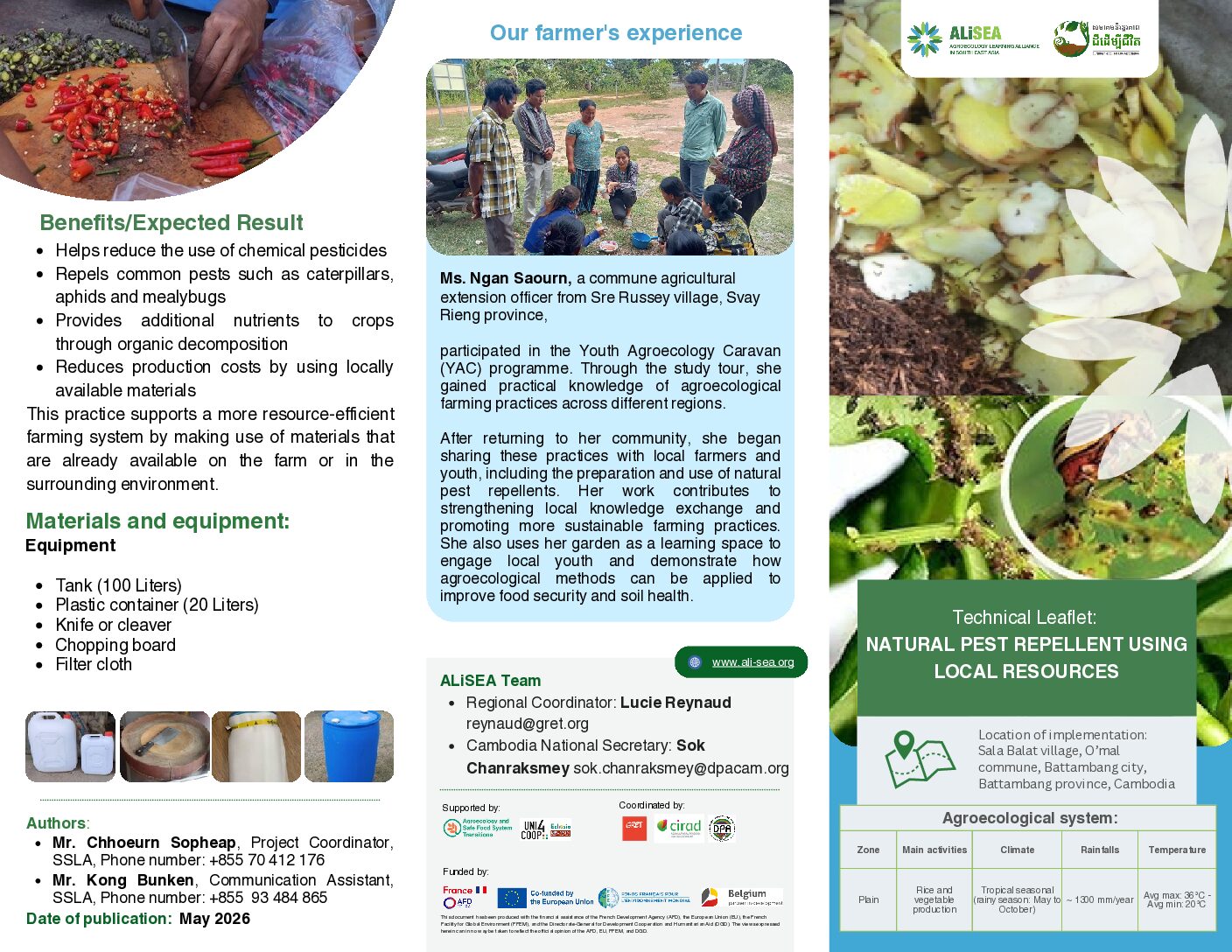
Xua đuổi sâu hại tự nhiên từ nguồn nguyên liệu địa phương
Tài liệu kỹ thuật này giới thiệu phương pháp đơn giản để sản xuất thuốc xua đuổi sâu hại tự nhiên từ các nguyên liệu sẵn có tại địa phương như ớt, riềng, nghệ, EM và lá cây. Giải pháp giúp giảm sử dụng thuốc bảo vệ thực vật hóa học, giảm chi phí sản xuất và thúc đẩy canh tác nông nghiệp sinh thái bền vững.
Chương trình Hành trình Nông nghiệp Sinh thái Thanh niên (YAC): Giảm sử dụng đầu vào hóa học và tăng cường đa dạng nông trại tại Campuchia
Bộ dữ liệu này bao gồm hai video ngắn được thực hiện trong khuôn khổ Chương trình Hành trình Nông nghiệp Sinh thái Thanh niên (Youth Agroecology Caravan – YAC) tại Campuchia, một sáng kiến học tập thực địa nhằm hỗ trợ thanh niên và nông dân tiếp cận các thực hành nông nghiệp sinh thái thông qua tham quan mô hình và trao đổi kinh nghiệm. Các video liên quan đến một số nội dung chính trong chương trình đào tạo, bao gồm giảm sử dụng đầu vào hóa học, tận dụng nguồn lực trong nông trại và đa dạng hóa hệ thống sản xuất nhằm hướng tới các thực hành canh tác và sinh kế bền vững hơn.
Chương trình Hành trình Nông nghiệp Sinh thái Thanh niên (YAC): Giảm sử dụng đầu vào hóa học và tăng cường đa dạng nông trại tại Campuchia
Bộ dữ liệu này bao gồm hai video ngắn được thực hiện trong khuôn khổ Chương trình Hành trình Nông nghiệp Sinh thái Thanh niên (Youth Agroecology Caravan – YAC) tại Campuchia, một sáng kiến học tập thực địa nhằm hỗ trợ thanh niên và nông dân tiếp cận các thực hành nông nghiệp sinh thái thông qua tham quan mô hình và trao đổi kinh nghiệm. Các video liên quan đến một số nội dung chính trong chương trình đào tạo, bao gồm giảm sử dụng đầu vào hóa học, tận dụng nguồn lực trong nông trại và đa dạng hóa hệ thống sản xuất nhằm hướng tới các thực hành canh tác và sinh kế bền vững hơn.
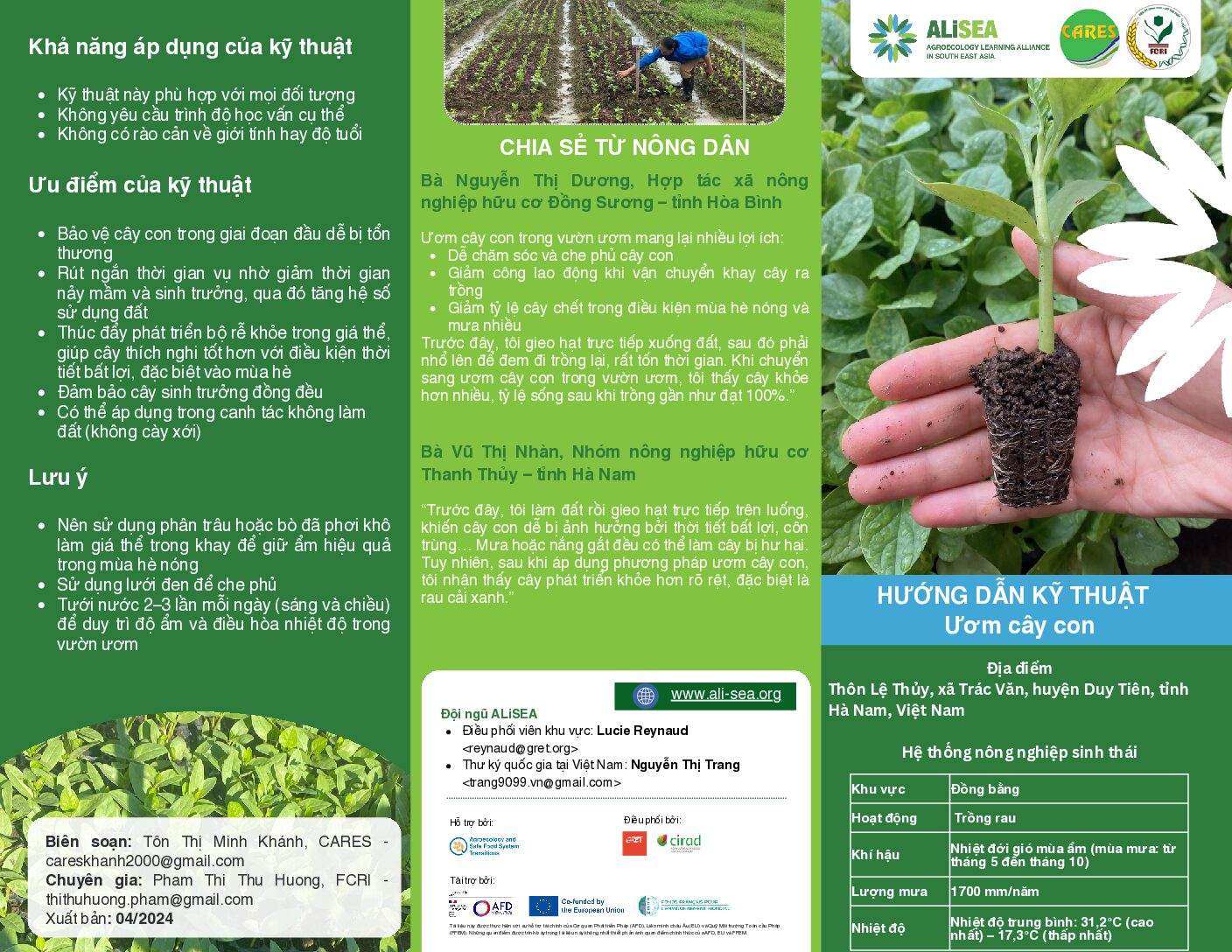
Hướng dẫn kỹ thuật ươm cây con
Tài liệu giới thiệu kỹ thuật ươm cây con trong vườn ươm nhằm nâng cao tỷ lệ sống và chất lượng cây trồng trong điều kiện thời tiết bất lợi. Phương pháp này giúp bảo vệ cây ở giai đoạn đầu, rút ngắn thời gian sinh trưởng và giảm chi phí sản xuất. Đồng thời, tài liệu cung cấp các bước thực hành cụ thể và lưu ý kỹ thuật để nông dân dễ áp dụng trong canh tác.
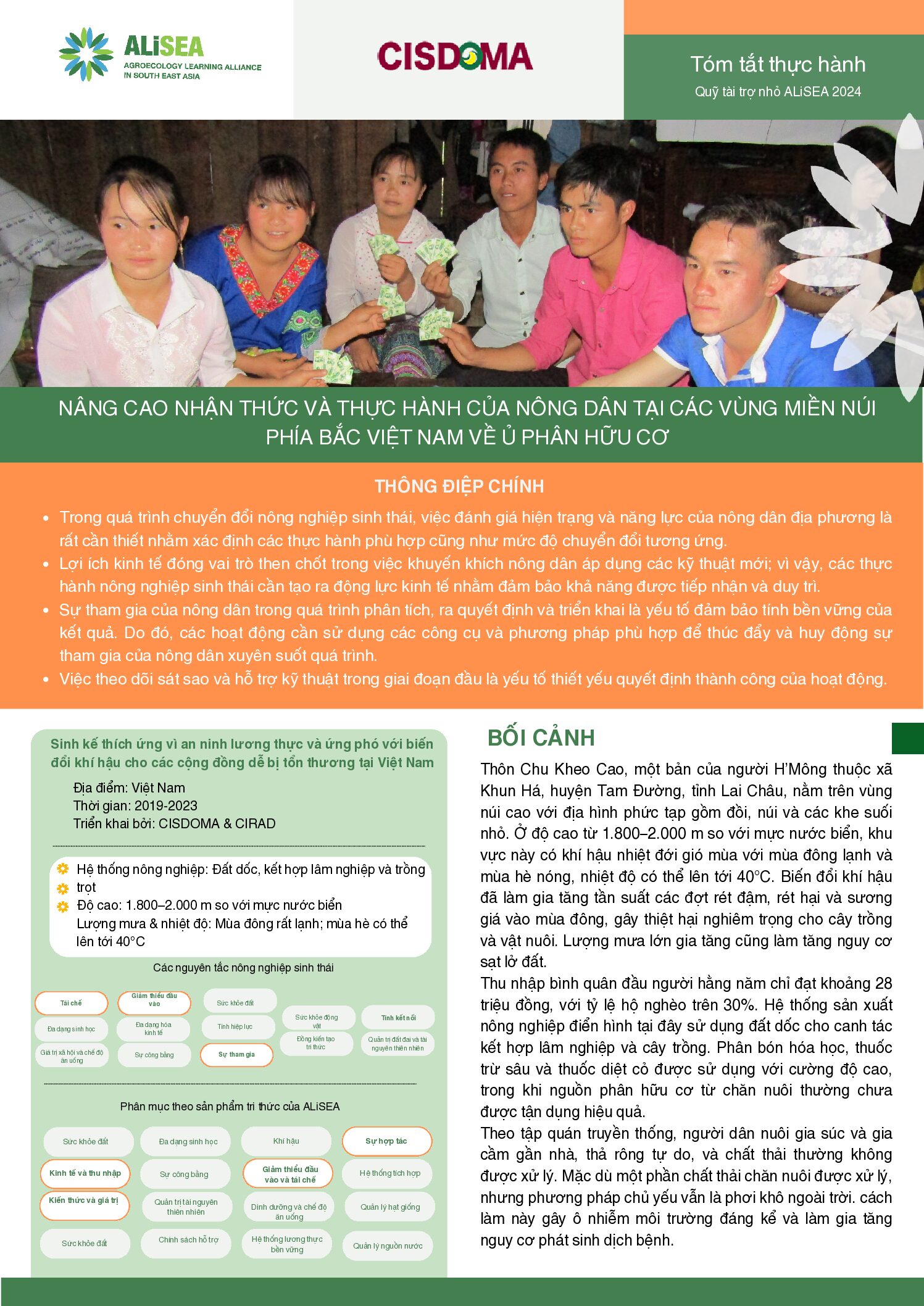
Nâng cao nhận thức và thực hành của nông dân tại các vùng miền núi phía Bắc Việt Nam về ủ phân hữu cơ
Tài liệu tóm lược kinh nghiệm thúc đẩy nông dân miền núi áp dụng ủ phân hữu cơ thông qua các phương pháp có sự tham gia như PVCA, công cụ mô phỏng và lớp học đồng ruộng. Cách tiếp cận này giúp cải thiện môi trường, tăng năng suất, giảm phụ thuộc vào đầu vào hóa học và tạo thêm thu nhập cho cộng đồng. Đồng thời, tài liệu rút ra các bài học về vai trò của động lực kinh tế, sự tham gia của nông dân và hỗ trợ kỹ thuật trong chuyển đổi nông nghiệp sinh thái.
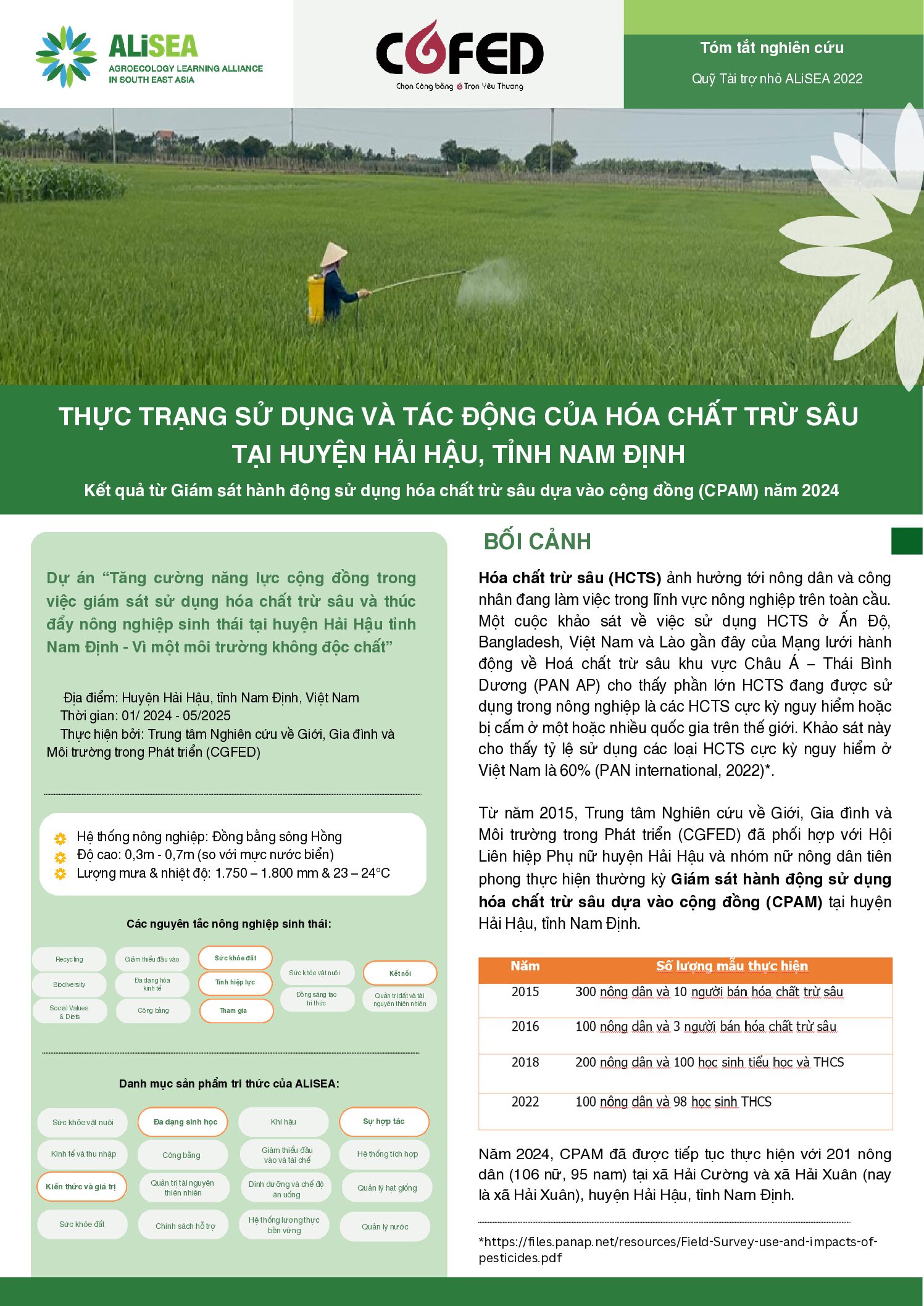
Thực trạng sử dụng và tác động của hóa chất trừ sâu tại huyện Hải Hậu, tỉnh Nam Định
Tài liệu tóm lược kết quả giám sát cộng đồng về việc sử dụng hóa chất trừ sâu tại huyện Hải Hậu, tỉnh Nam Định, qua phương pháp CPAM. Nghiên cứu chỉ ra mức độ sử dụng phổ biến, các rủi ro đối với sức khỏe và môi trường, đồng thời phân tích nhận thức và thực hành của nông dân. Trên cơ sở đó, tài liệu đưa ra các khuyến nghị nhằm giảm thiểu tác hại và thúc đẩy chuyển đổi sang nông nghiệp bền vững.