




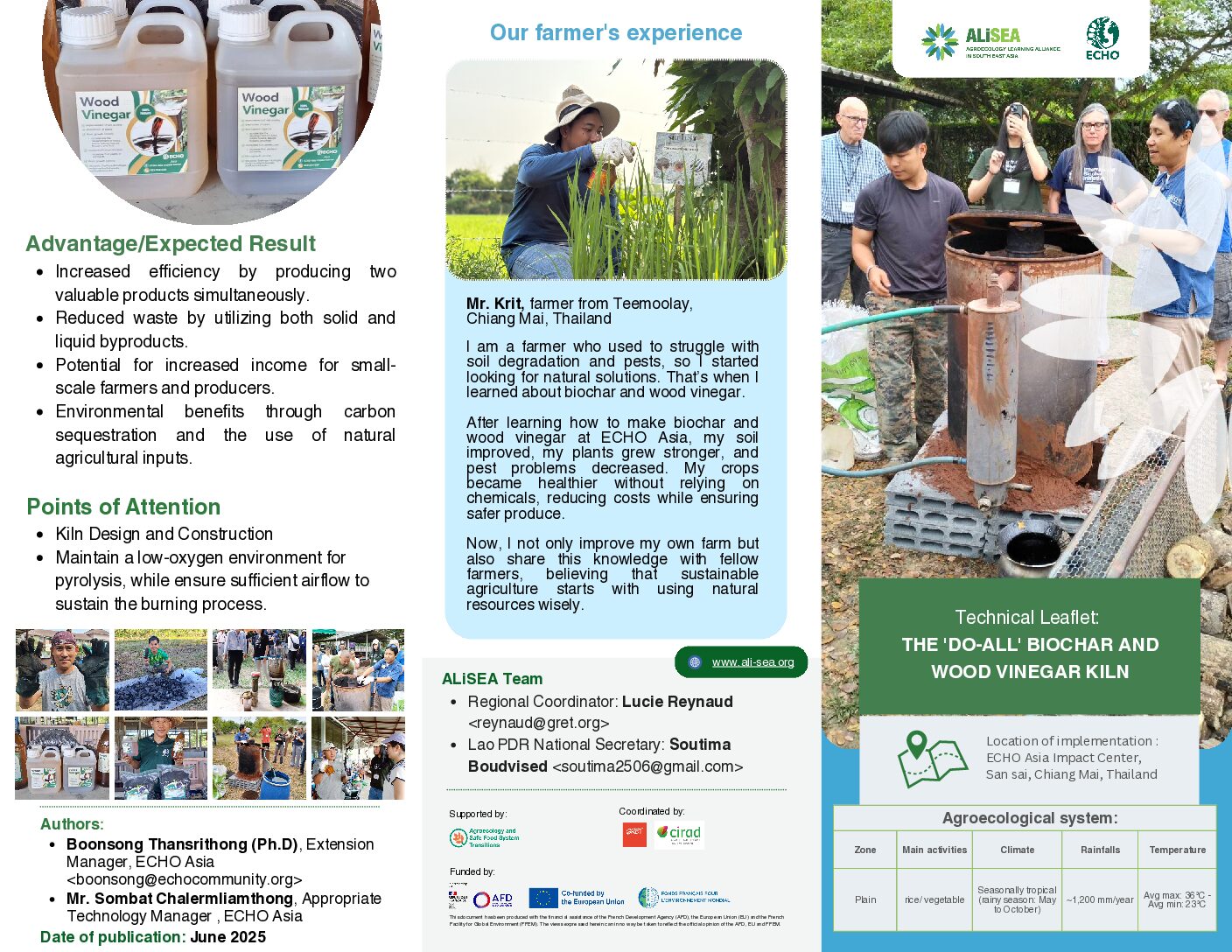
The ‘Do All’ Biochar Wood Vinegar Kiln
This dataset showcases “The ‘Do All’ Biochar Wood Vinegar Kiln”, a practical and efficient design that allows small-scale farmers to produce both biochar and wood vinegar from agricultural waste. Developed at the ECHO Asia Farm in Chiang Mai, Thailand, the kiln supports sustainable farming practices. This initiative is part of the ALiSEA Small Grant Facility 2023, which aims to strengthen biochar producer networks across the region.

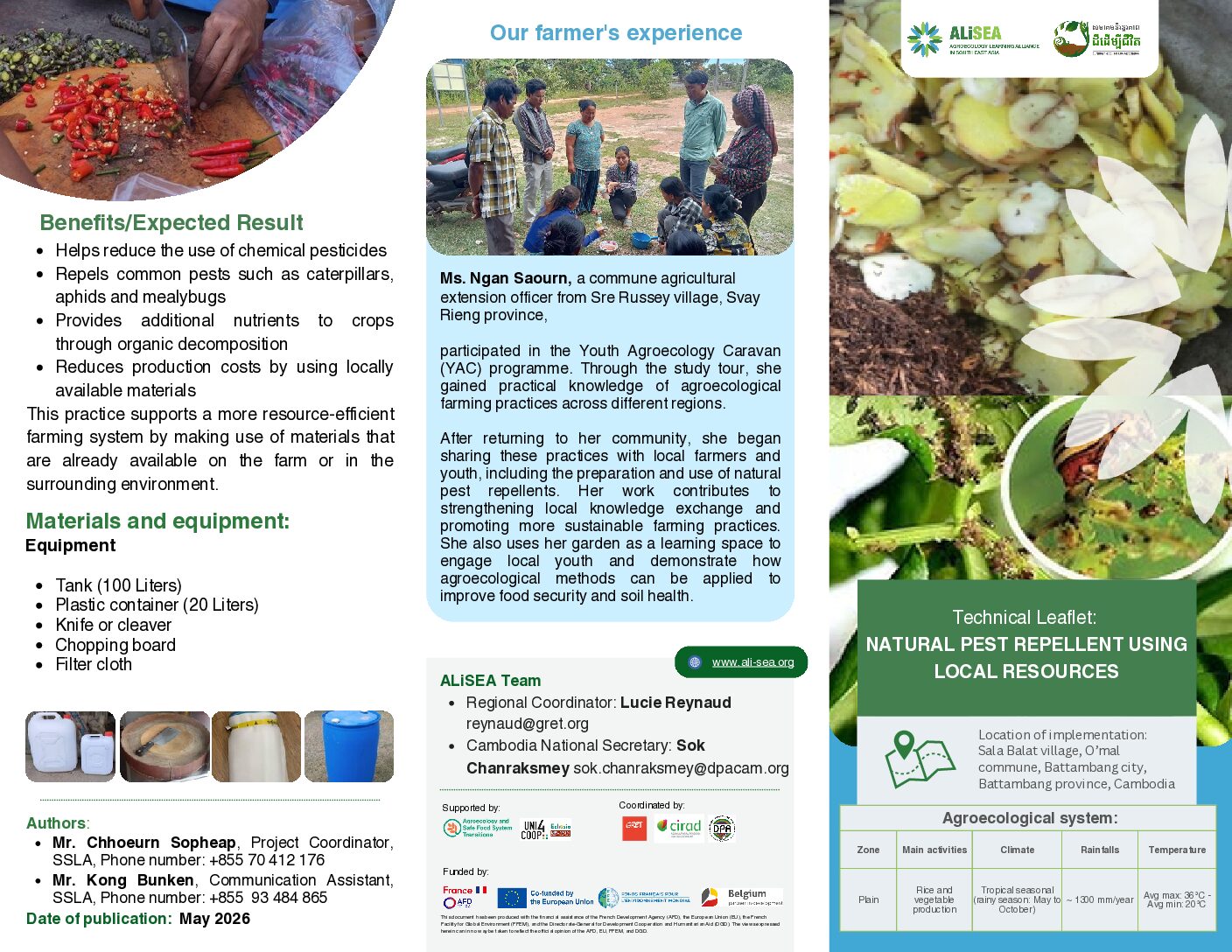
Natural Pest Repellent Using Local Resources
This technical leaflet presents a simple method for producing natural pest repellent using locally available materials such as chili, galanga, turmeric, EM and plant leaves. The practice helps reduce chemical pesticide use, lowers production costs, and promotes sustainable agroecological farming.
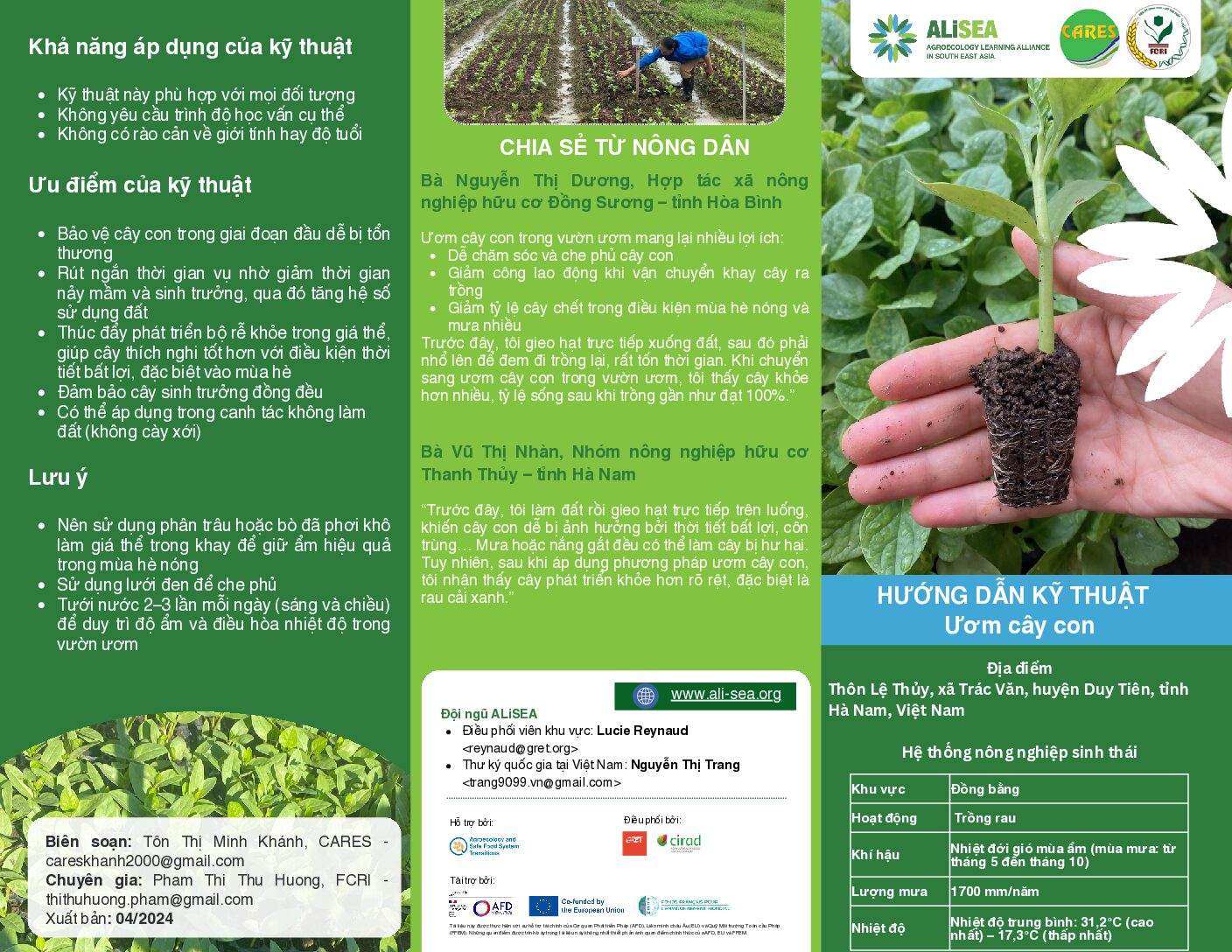
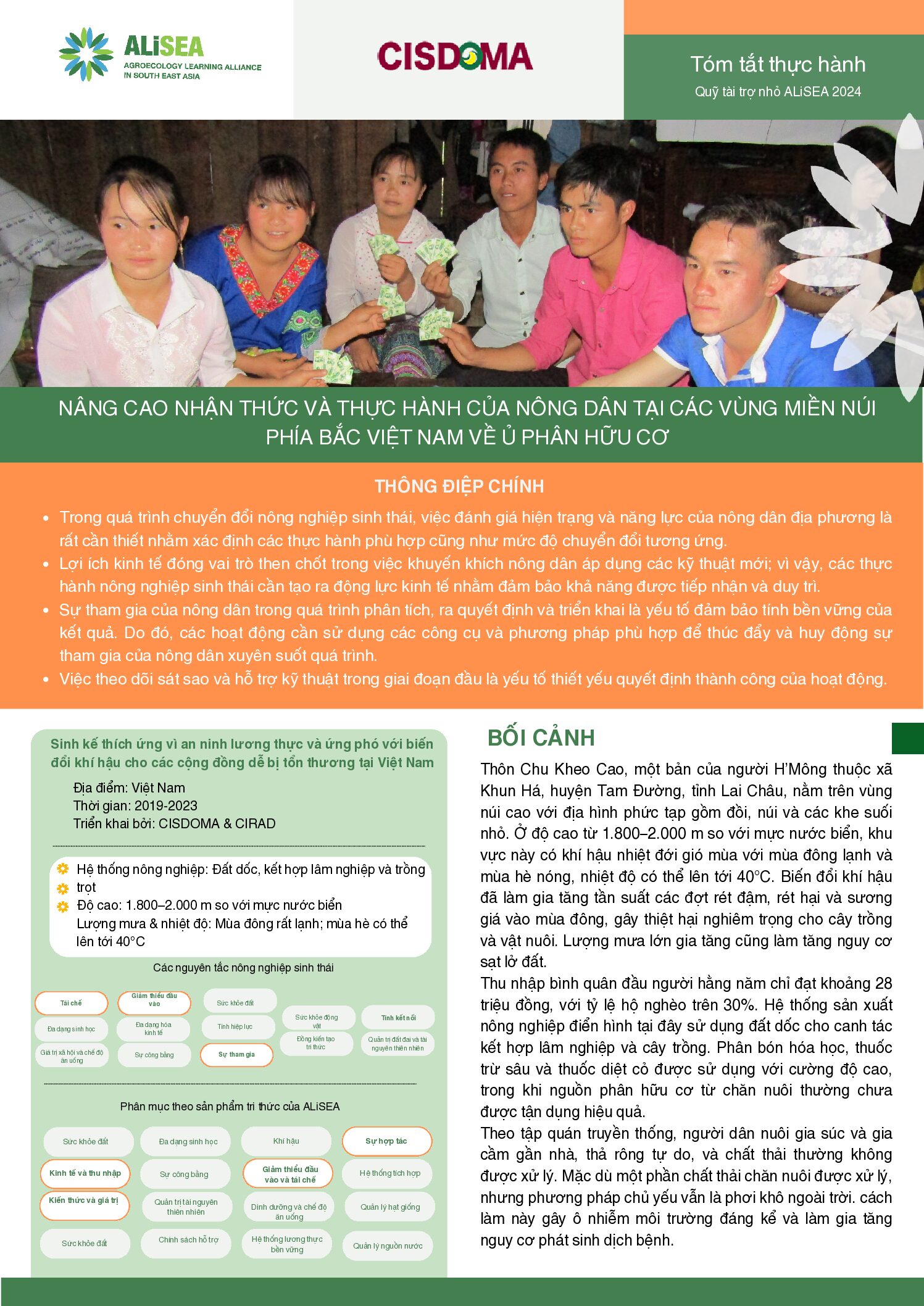
Composting: Improving the perceptions and practices of ethnic minority farmers in Northern Vietnam’s mountainous regions
This practice brief describes an approach to drive the adoption of agroecological practices, including composting, by fostering farmers’ active engagement in problem analysis, decision-making, and collective action.
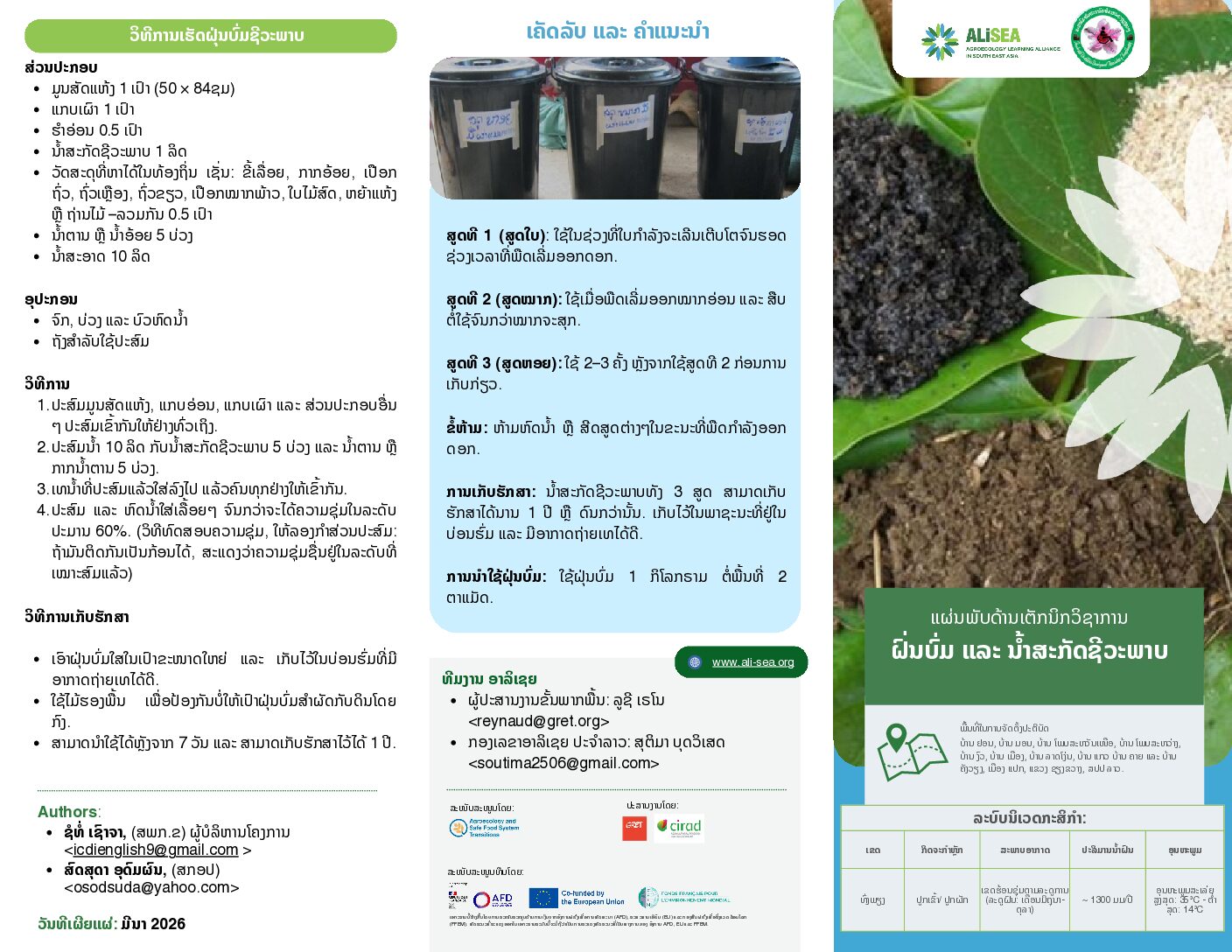
Bio-extracted Liquid Fertilizer
This leaflet provides simple instructions for producing and using bio-extracted liquid fertilizers made from leaves, fruits, and snails, as well as organic compost. It explains the ingredients, preparation steps, fermentation time, storage, and application for different crop growth stages to promote eco-friendly and chemical-free farming practices.
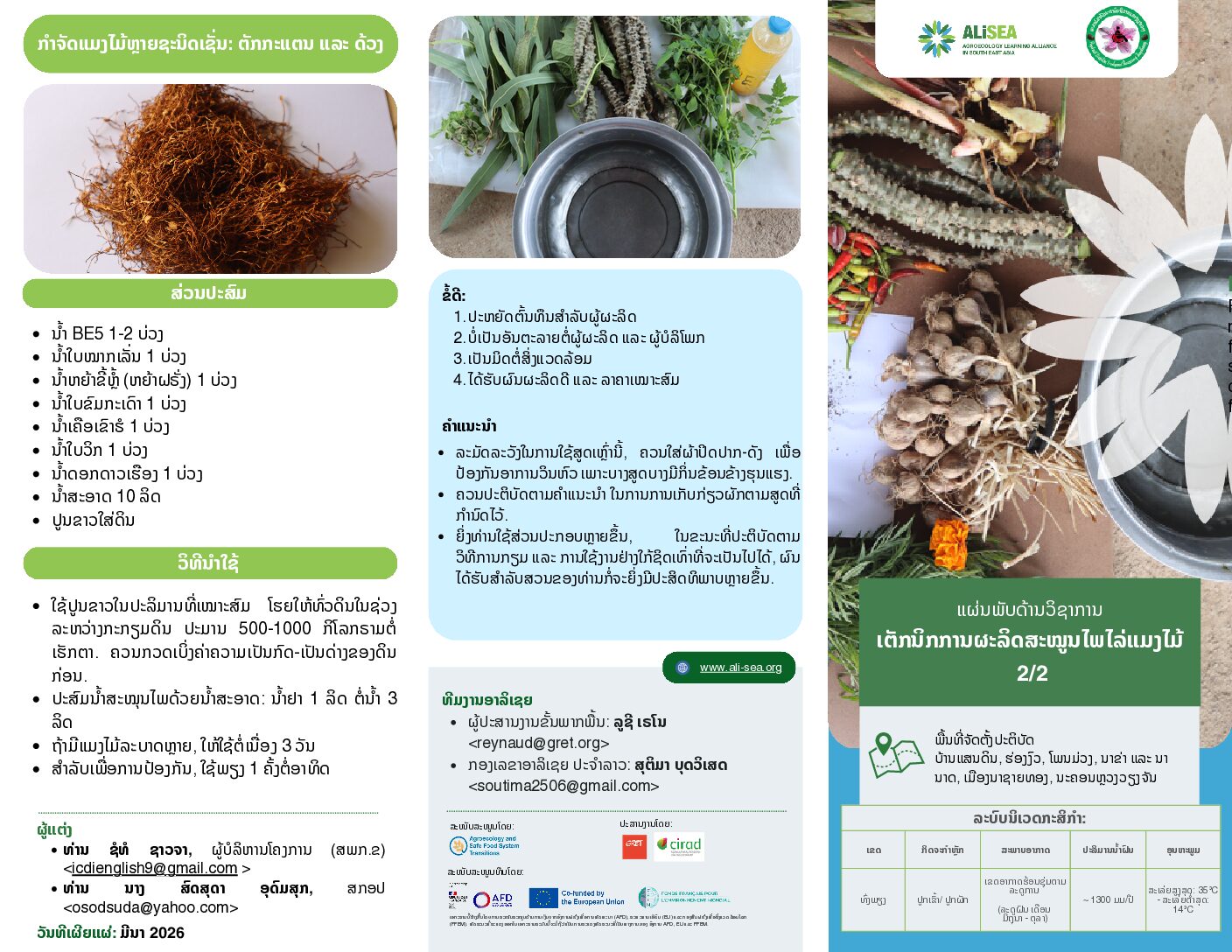
Techniques for Producing Insect Repellents
These leaflets explain simple techniques for producing natural insect repellents from local plants and household ingredients. It provides several herbal formulas, preparation steps, and application methods for different types of pests. The guide promotes safe, low-cost, and eco-friendly alternatives to chemical pesticides for sustainable farming.
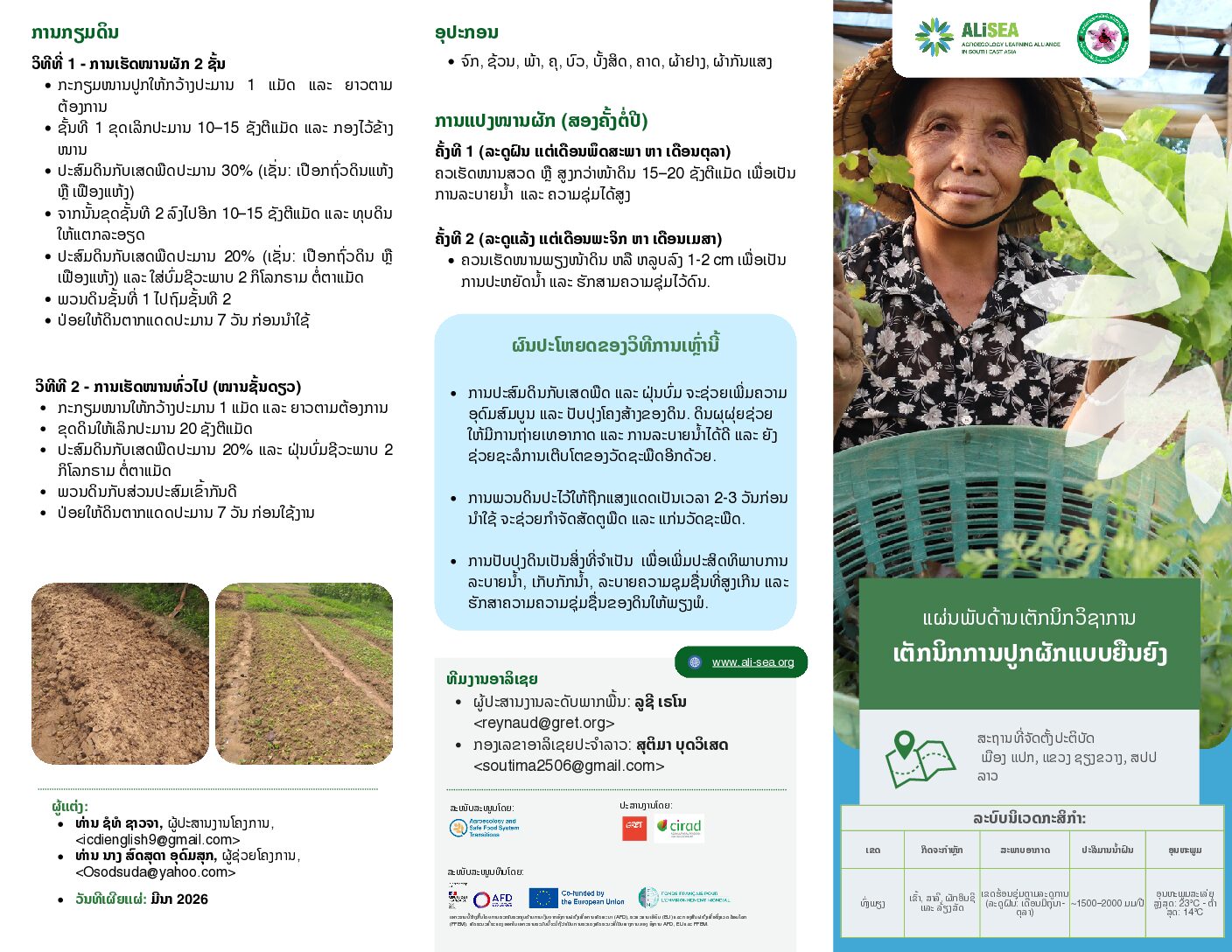
Organic Vegetable Growing Techniques
The leaflet provides practical guidance on organic vegetable cultivation in Pek District, Xiangkhouang Province, Laos. It describes the local subtropical highland climate and outlines methods for improving soil fertility and structure through compost and plant residues, managing pests with sun exposure, and ensuring proper drainage and moisture. It explains two bed preparation techniques, seasonal land improvements, mulching for weed suppression and moisture retention, and watering schedules adapted to seasonal conditions. The guide also covers organic fertilization, crop rotation to reduce pests and diseases, sowing and transplanting methods, integrated cropping for sustainability, and best practices for harvesting to maintain vegetable freshness.

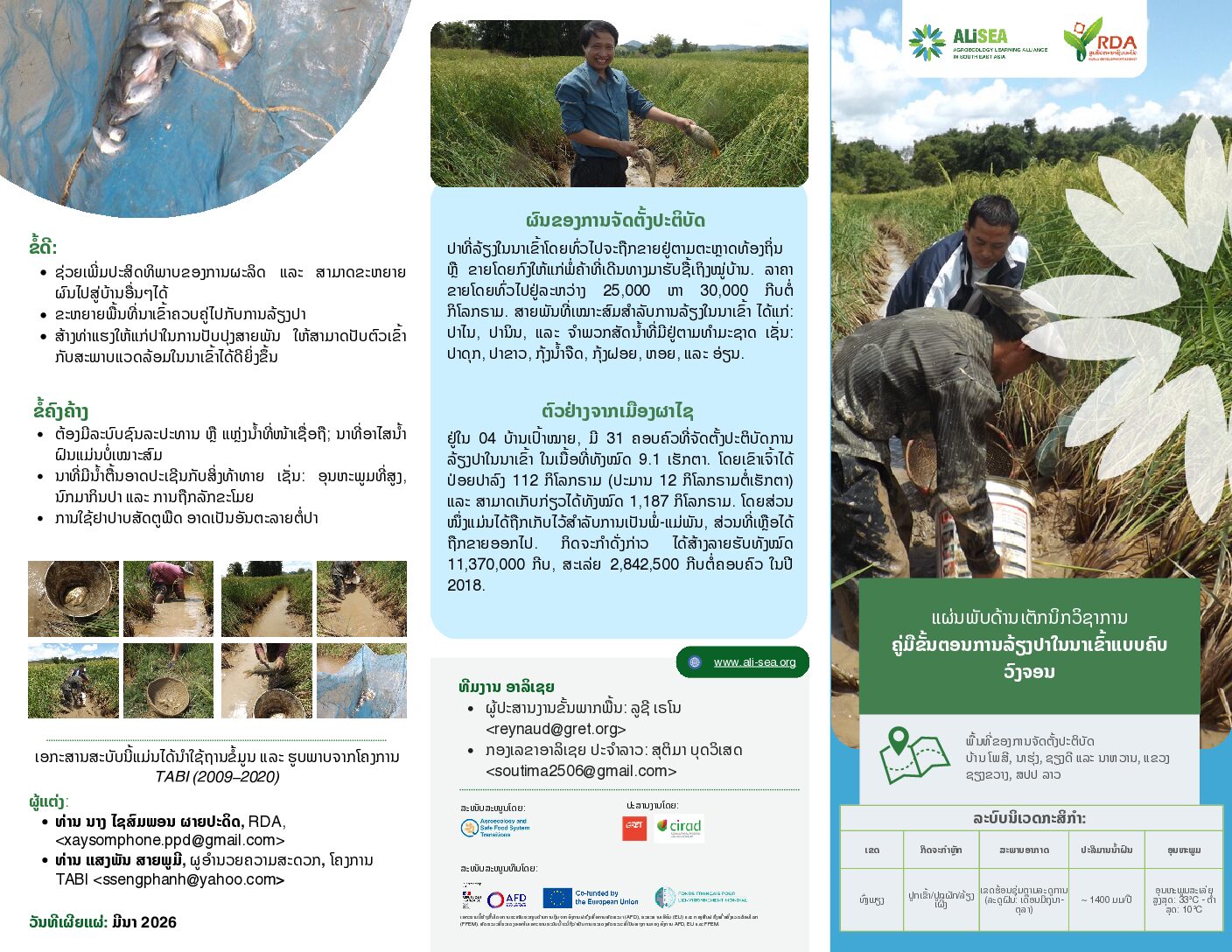
Integrated Rice and Fish Farming, Step-by-Step Guide
This June 2025 technical leaflet from Rural Development Association (RDA) in Laos is a step-by-step guide to integrated rice–fish farming, explaining how to prepare fields, choose suitable rice and fish species, manage stocking, feeding, and maintenance, and outlining benefits, challenges, and field results from pilot villages.
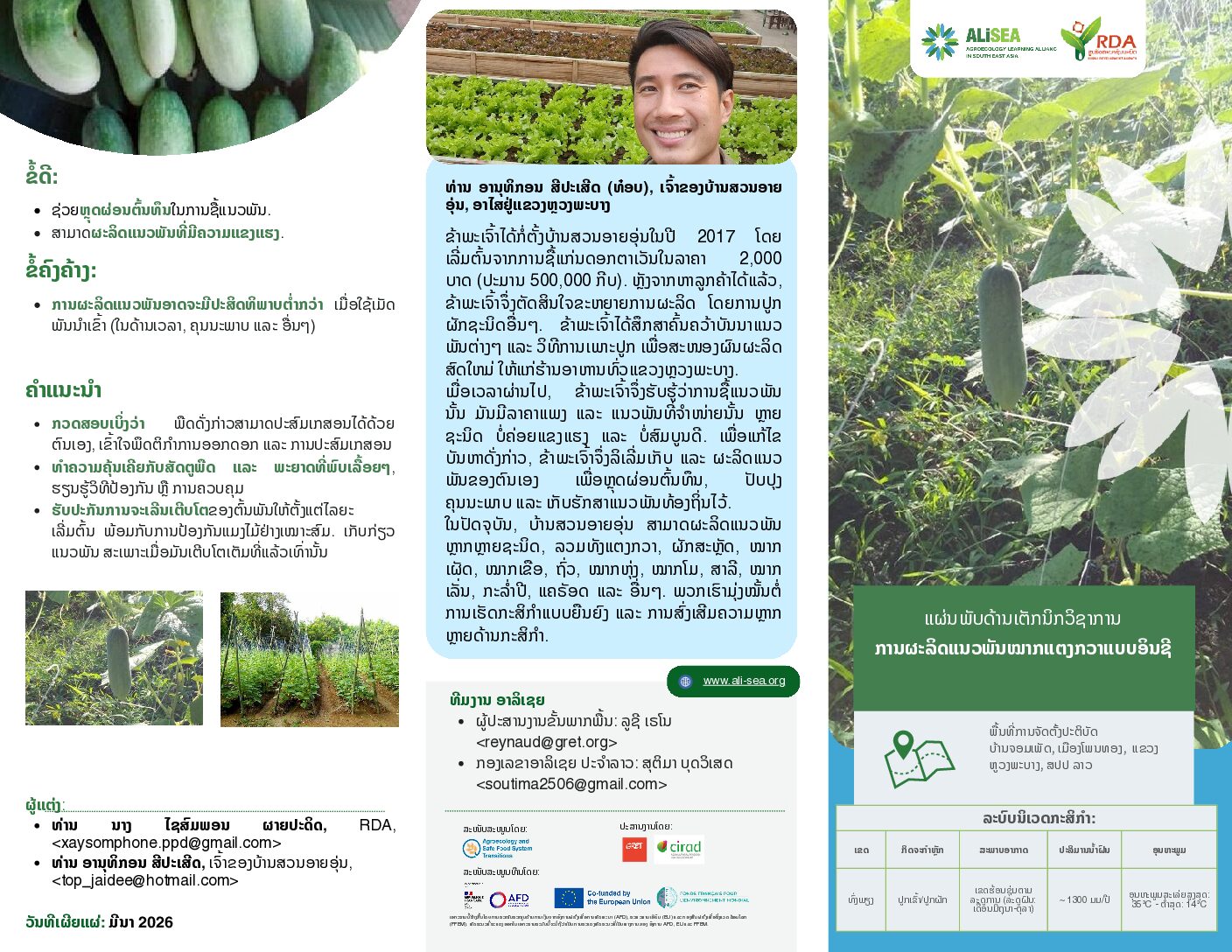
Producing Cucumber Seeds
This June 2025 technical leaflet presents BanSuaneAiOun Organic Farm’s method for producing organic cucumber seeds. It explains how on-farm seed production reduces costs, preserves traditional varieties, and improves quality. The guide details optimal growing conditions, land preparation, planting, watering, pest management, and seed collection, yielding 100–150 seeds per fruit. It emphasizes using organic fertilizers, protecting against pests, harvesting fully mature cucumbers, and storing seeds properly to ensure sustainability and local seed diversity.