




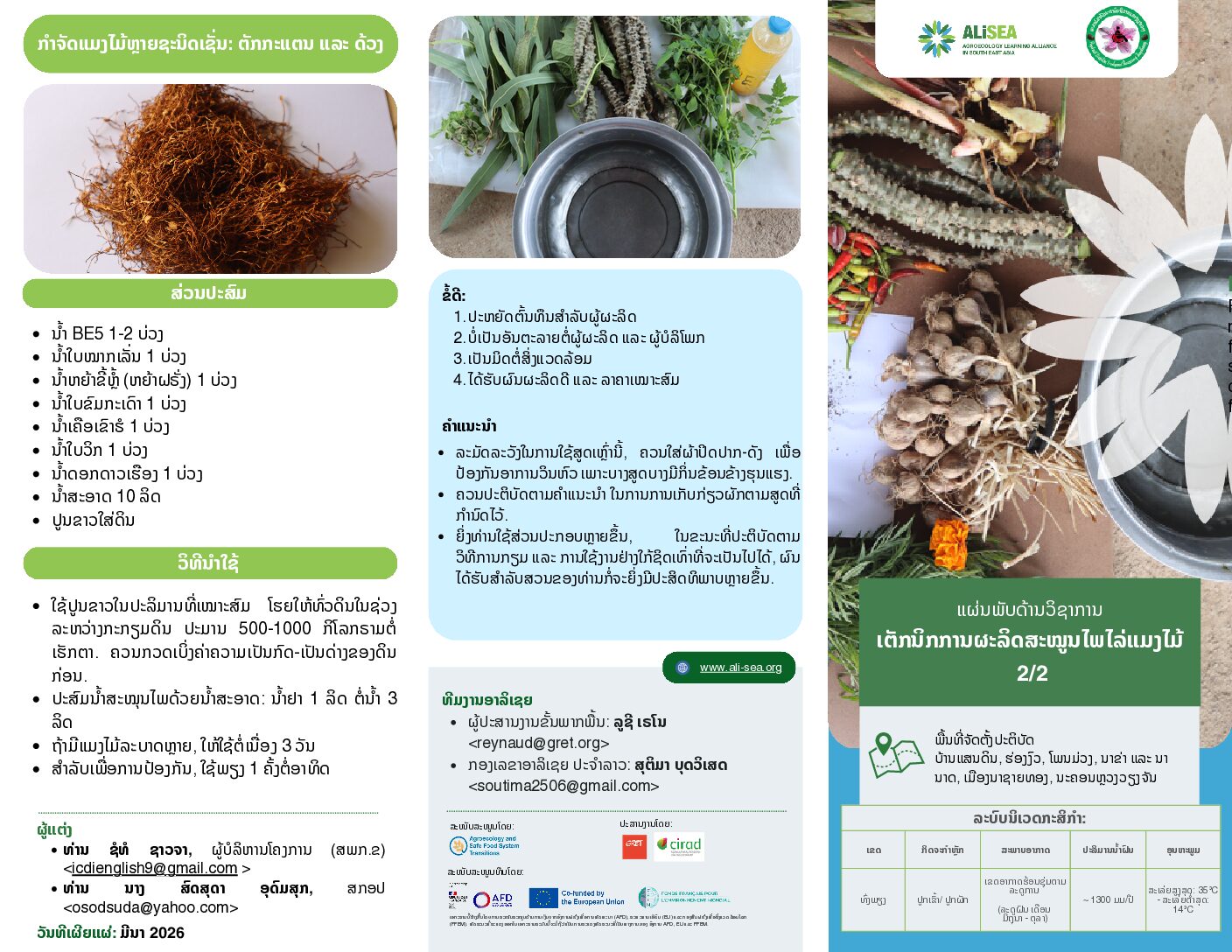
Techniques for Producing Insect Repellents
These leaflets explain simple techniques for producing natural insect repellents from local plants and household ingredients. It provides several herbal formulas, preparation steps, and application methods for different types of pests. The guide promotes safe, low-cost, and eco-friendly alternatives to chemical pesticides for sustainable farming.

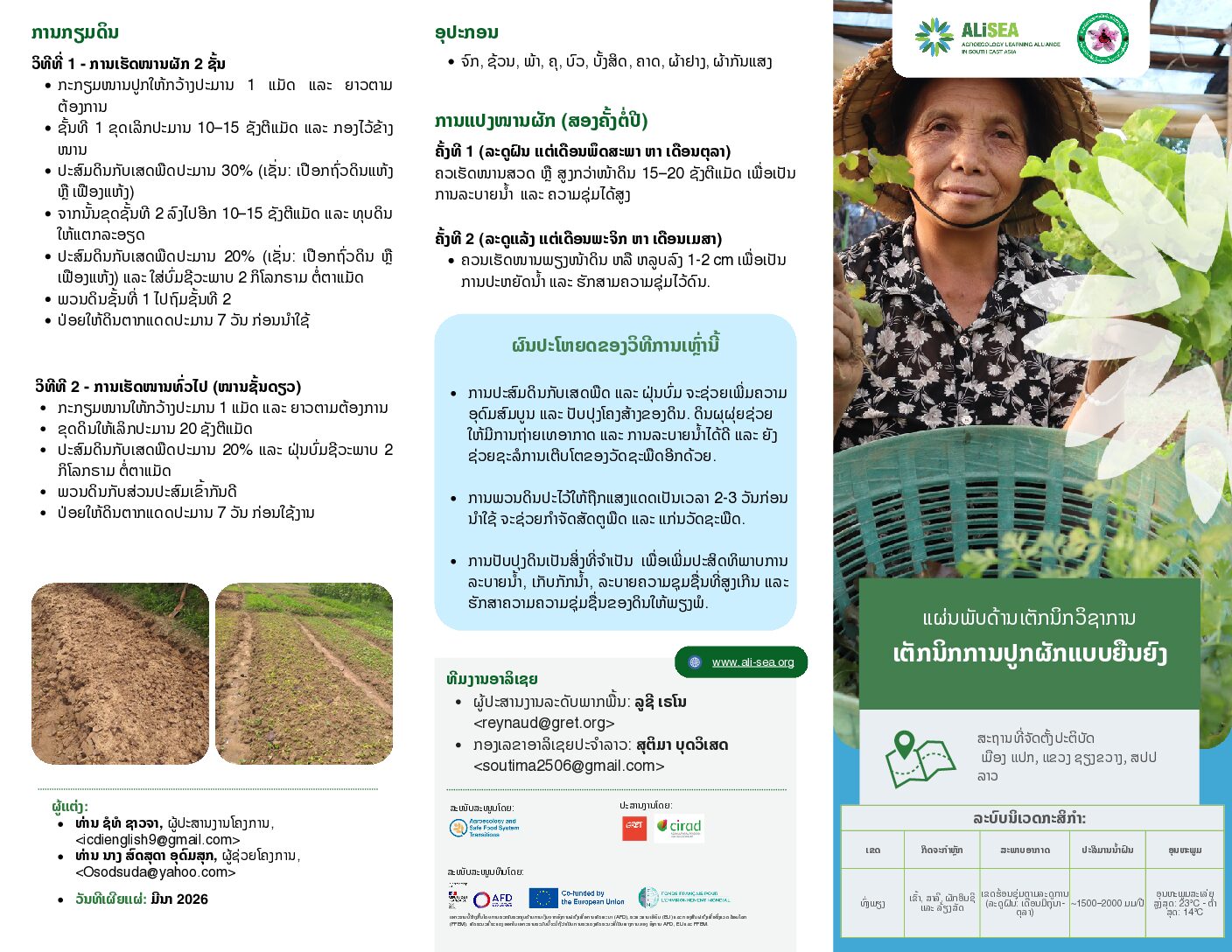
Organic Vegetable Growing Techniques
The leaflet provides practical guidance on organic vegetable cultivation in Pek District, Xiangkhouang Province, Laos. It describes the local subtropical highland climate and outlines methods for improving soil fertility and structure through compost and plant residues, managing pests with sun exposure, and ensuring proper drainage and moisture. It explains two bed preparation techniques, seasonal land improvements, mulching for weed suppression and moisture retention, and watering schedules adapted to seasonal conditions. The guide also covers organic fertilization, crop rotation to reduce pests and diseases, sowing and transplanting methods, integrated cropping for sustainability, and best practices for harvesting to maintain vegetable freshness.
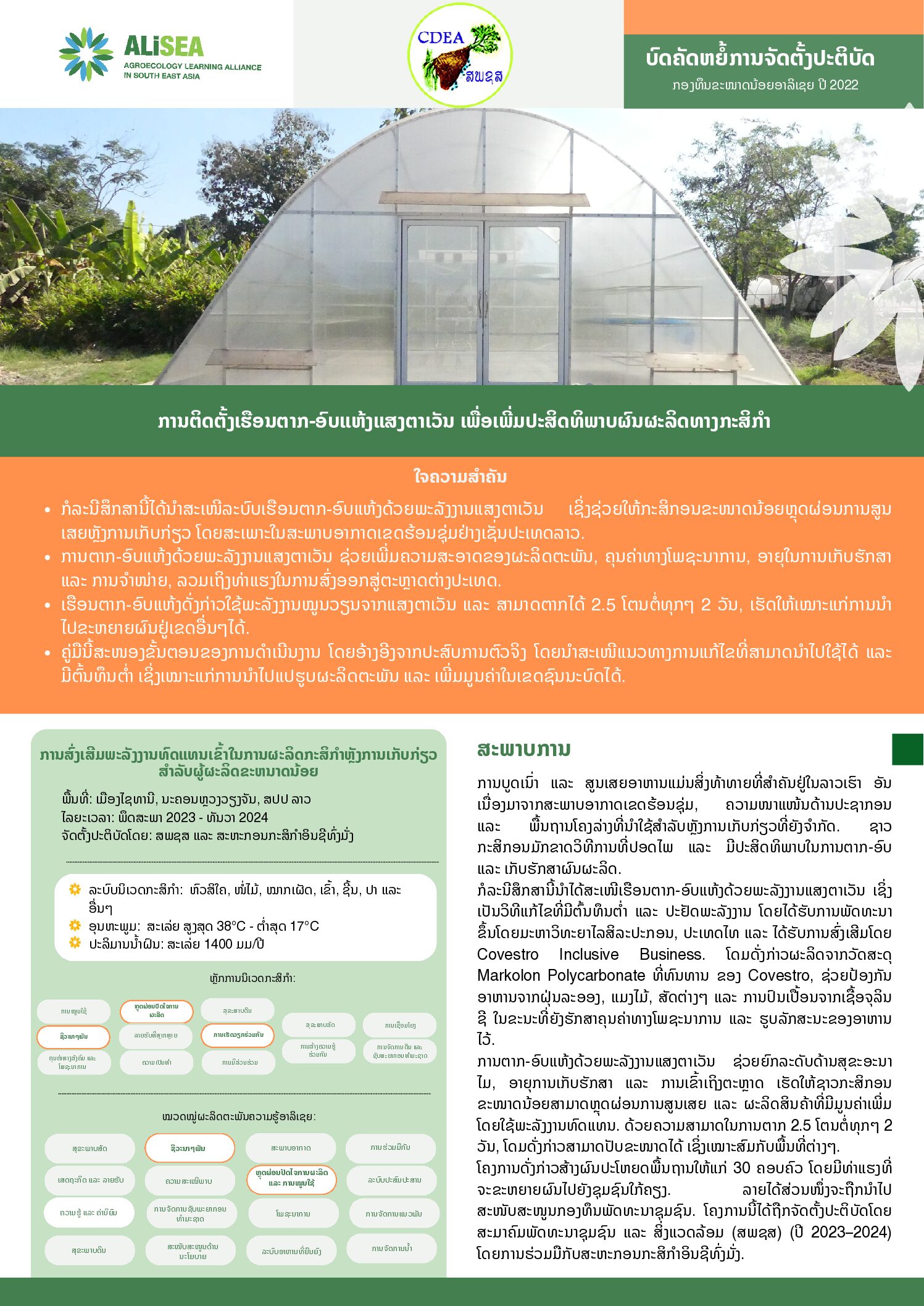
Installation of a solar drying dome for agricultural post harvest
This case study presents a solar drying dome, a low-cost, energy-efficient solution originally developed by Silpakorn University in Thailand . Made from durable polycarbonate, the dome protects food from dust, insects, animals, and microbial contamination, while preserving its nutritional quality and appearance.

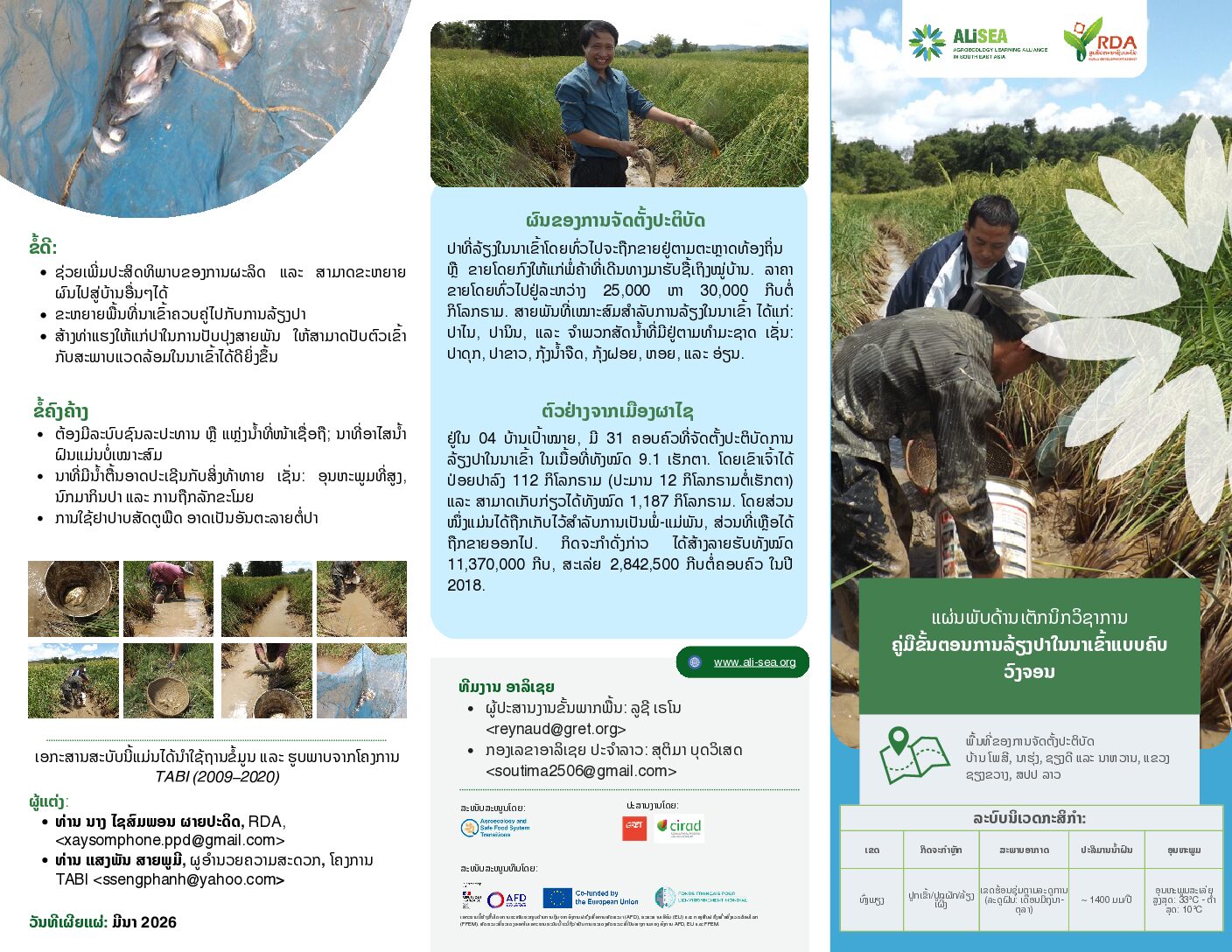
Integrated Rice and Fish Farming, Step-by-Step Guide
This June 2025 technical leaflet from Rural Development Association (RDA) in Laos is a step-by-step guide to integrated rice–fish farming, explaining how to prepare fields, choose suitable rice and fish species, manage stocking, feeding, and maintenance, and outlining benefits, challenges, and field results from pilot villages.
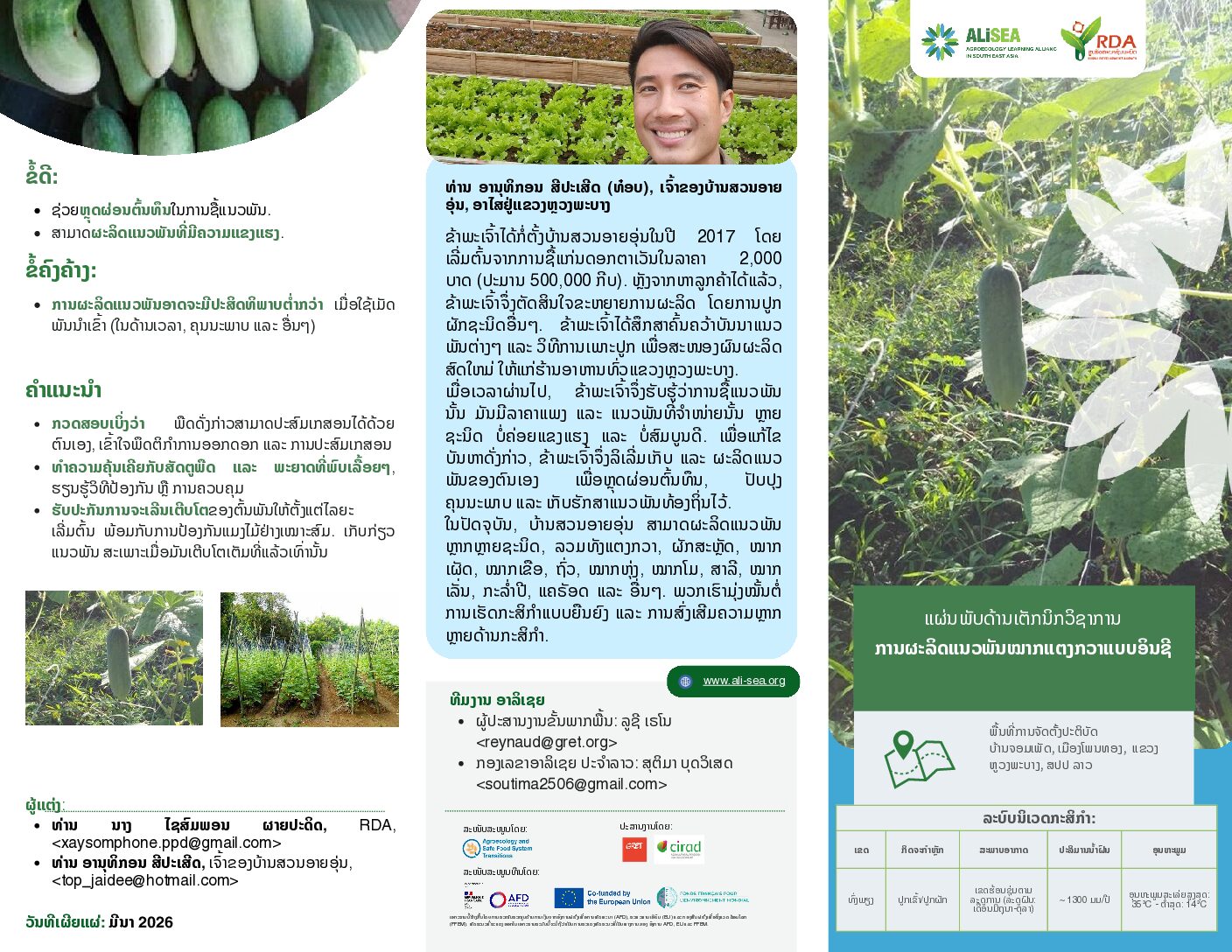
Producing Cucumber Seeds
This June 2025 technical leaflet presents BanSuaneAiOun Organic Farm’s method for producing organic cucumber seeds. It explains how on-farm seed production reduces costs, preserves traditional varieties, and improves quality. The guide details optimal growing conditions, land preparation, planting, watering, pest management, and seed collection, yielding 100–150 seeds per fruit. It emphasizes using organic fertilizers, protecting against pests, harvesting fully mature cucumbers, and storing seeds properly to ensure sustainability and local seed diversity.
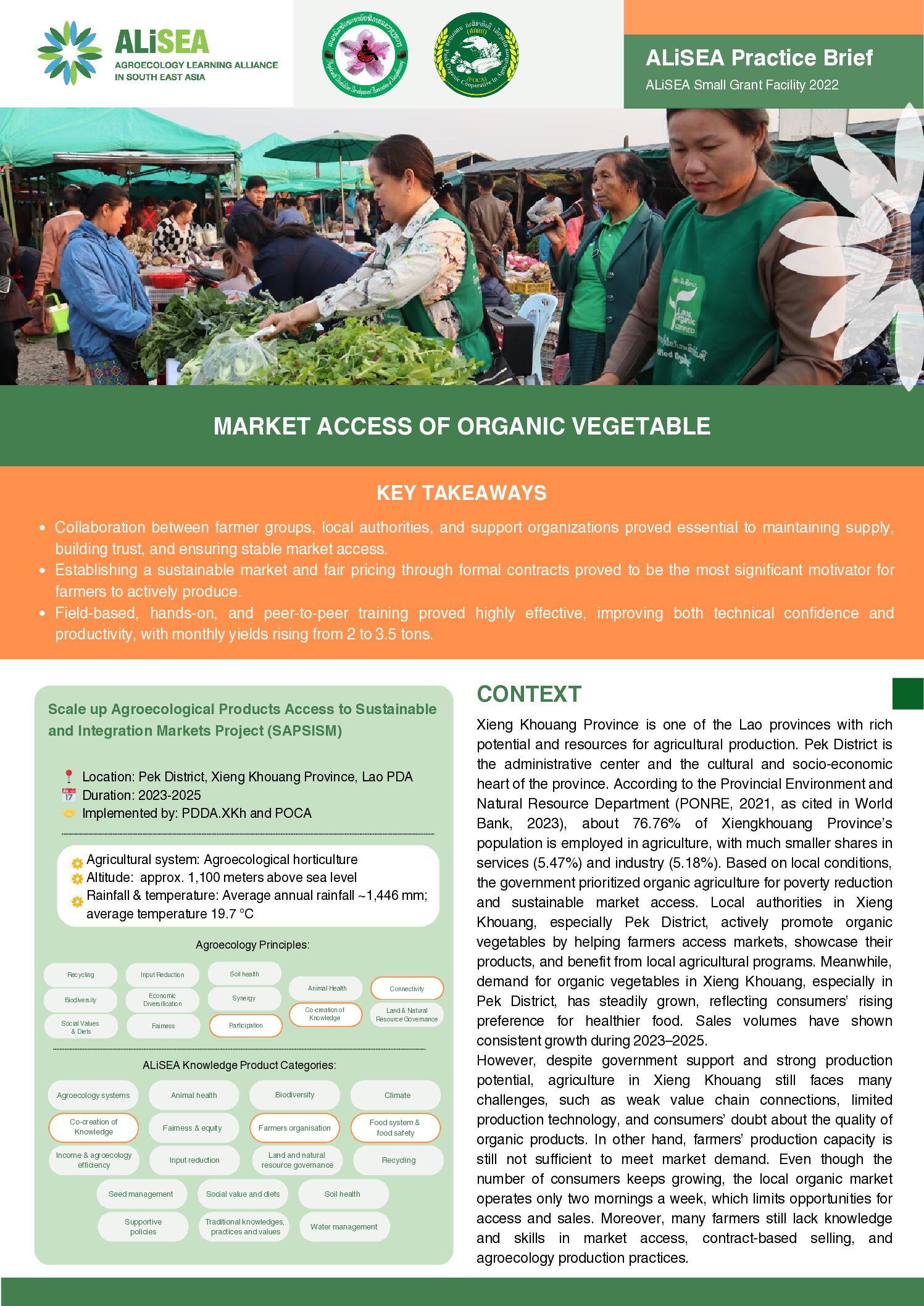
Improving Market Access for Organic Vegetable Farmers in Pek District, Xiengkhouang Province
This practice focuses on strengthening market access for organic vegetable farmers in Pek District, Xiengkhouang Province, Lao PDR. Through collaboration between PDDA and POCA, agroecological capacity building was combined with structured buyer engagement to better align production with market demand. The experience highlights how improved market linkages can enhance income stability while supporting the continued development of organic farming systems.
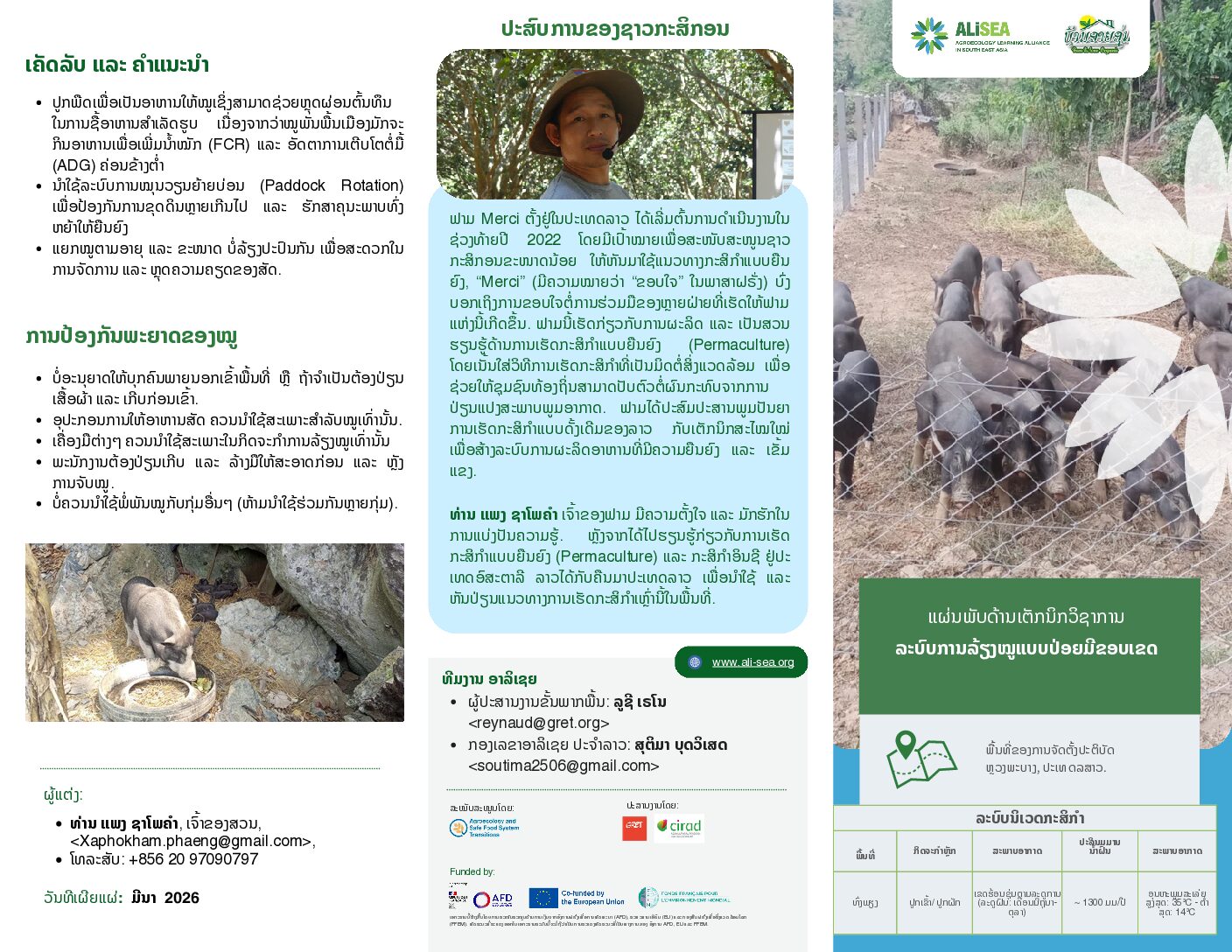
Semi-intensive Local Pig Raising System
This technical leaflet provides practical guidelines and practices for establishing and managing a semi-intensive local pig raising system. It covers aspects such as housing setup, paddock fencing, feeding strategies, and crop production to support pig nutrition. Emphasizing agroecological principles, this guide promotes environmentally friendly practices that maintain soil health, biodiversity, and resource efficiency. Designed for small to medium-scale farmers, the leaflet aims to optimize animal welfare, improve feed efficiency, and enhance farm productivity through cost effective and well-planned methods.
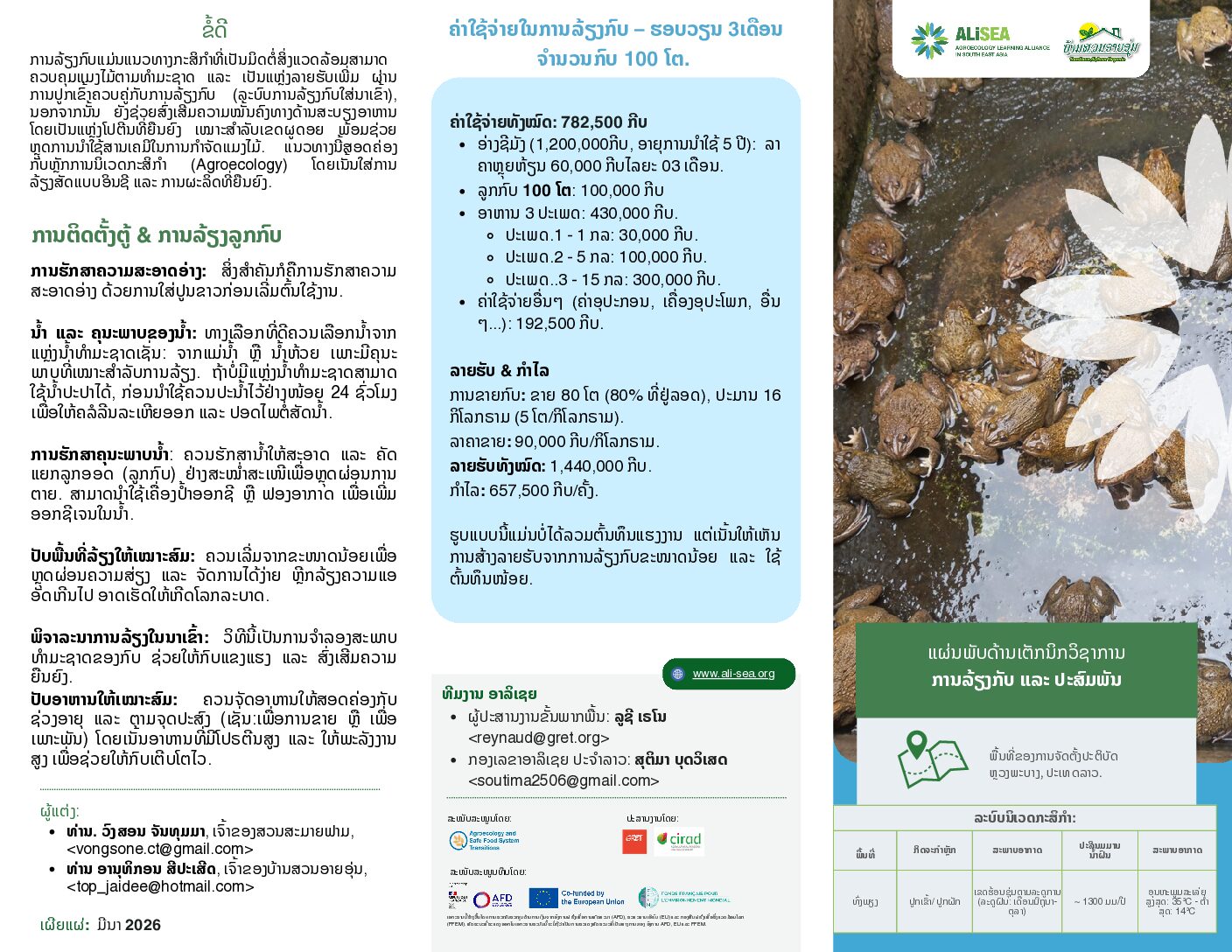
Technical Leaflet: Frog Breading and Rearing
This ALiSEA leaflet provides essential information on the breeding, rearing, and feeding of frogs in both commercial and breeding environments. It covers key aspects such as selecting breeding frogs, managing water quality, feeding practices, and ensuring healthy growth. By following these guidelines, you can ensure optimal conditions for frog development and production.
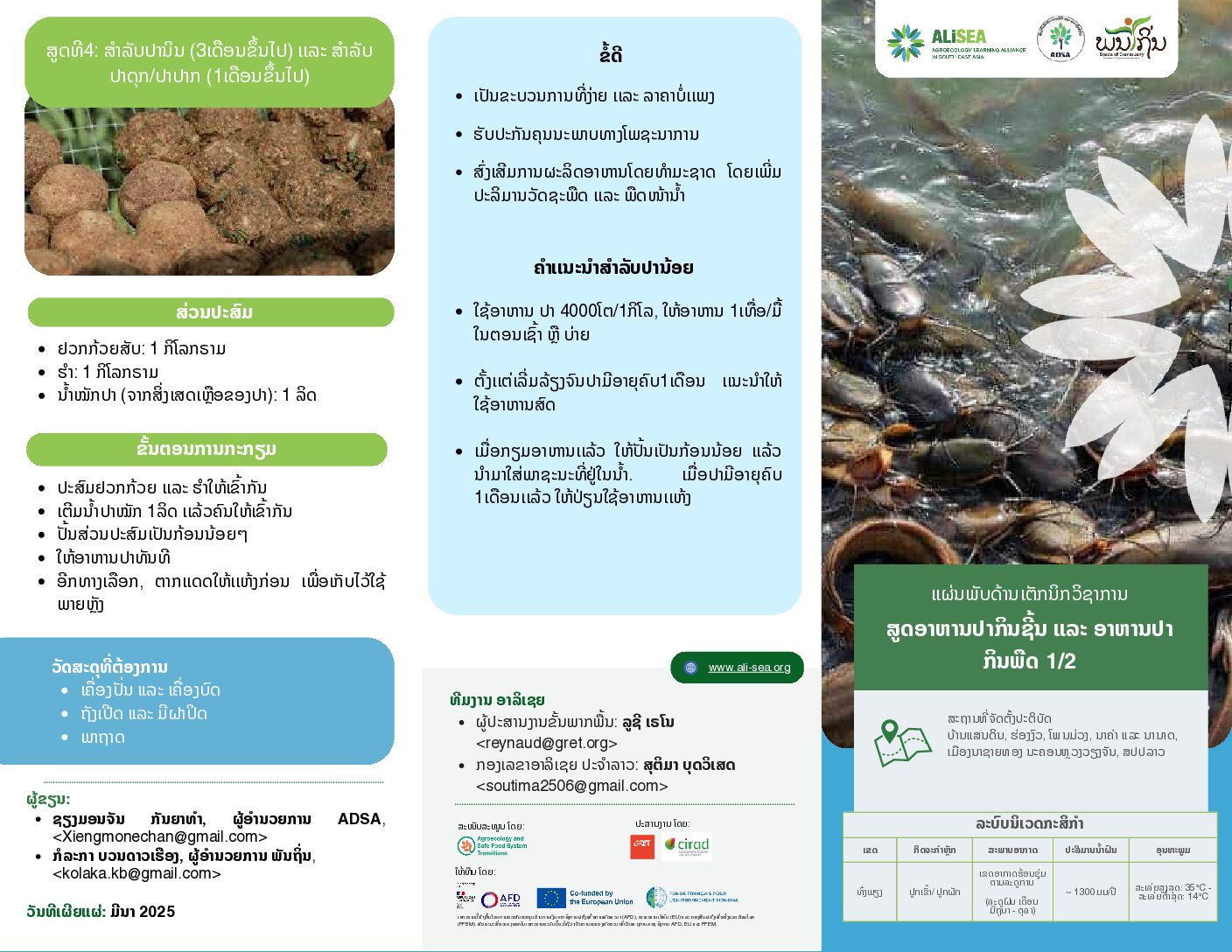
Recipe for Carnivorous / Herbivorous Fish Feed
As we are well aware, the cost of fish feed in current fish farming is relatively high, while the selling price of fish is often low. This has led many farmers to produce their own fish feed using locally available raw materials. Not only is this process not complicated, but it also ensures high nutritional quality.