




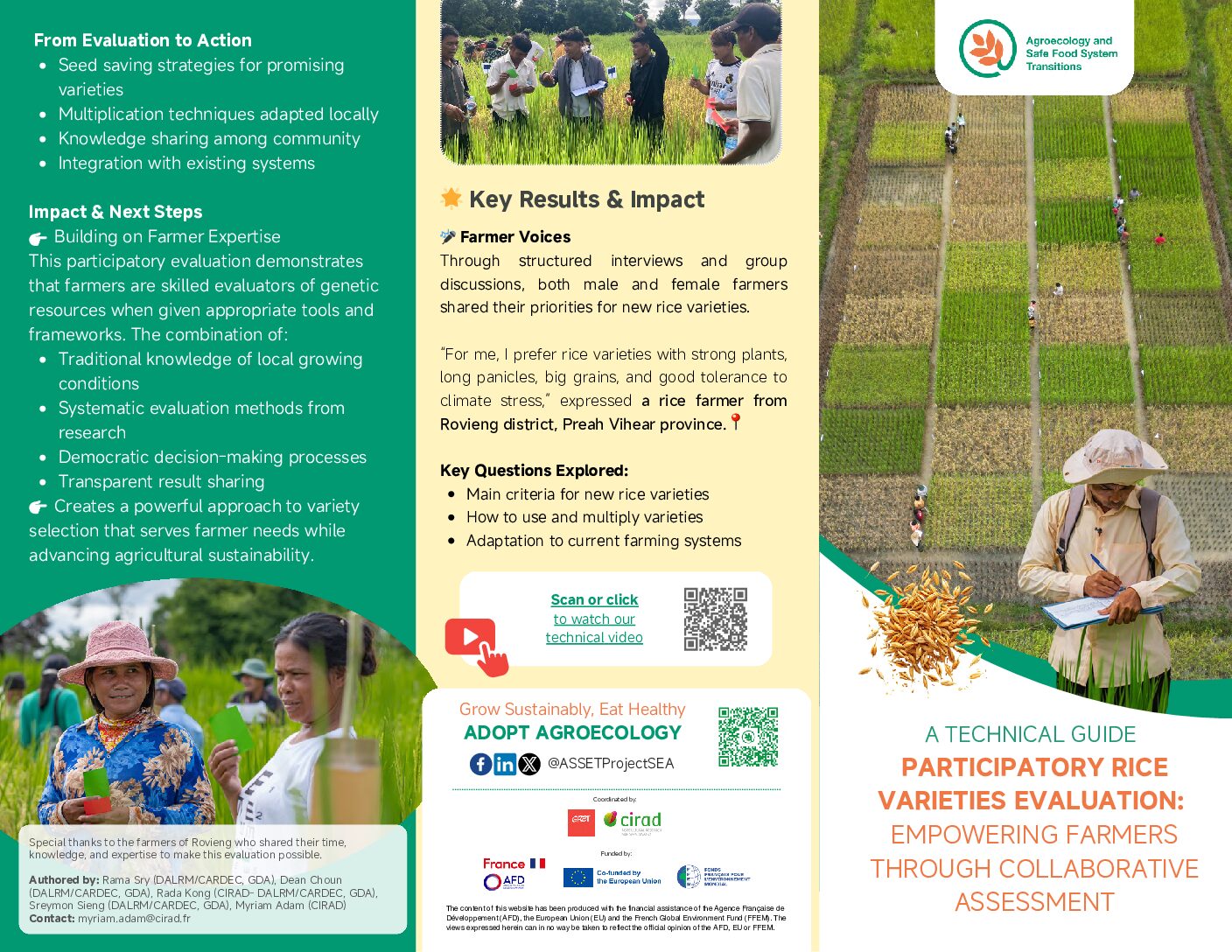
Participatory Rice Varieties Evaluation: Empowering Farmers Through Collaborative Assessment
How do Cambodian farmers choose the best rice for their local conditions and market needs? This video follows a participatory rice variety evaluation conducted in Preah Vihear province as part of an agroecology-based farming initiative. Together with farmers, researchers, and local stakeholders, the ASSET project tested 33 rice varieties to find those most suitable for rainfed and irrigated organic systems. Discover how farmers assessed yield, taste, pest resistance, and climate resilience through an inclusive six-step method. Learn which varieties stood out—and how this approach empowers farmers to lead in sustainable seed selection.

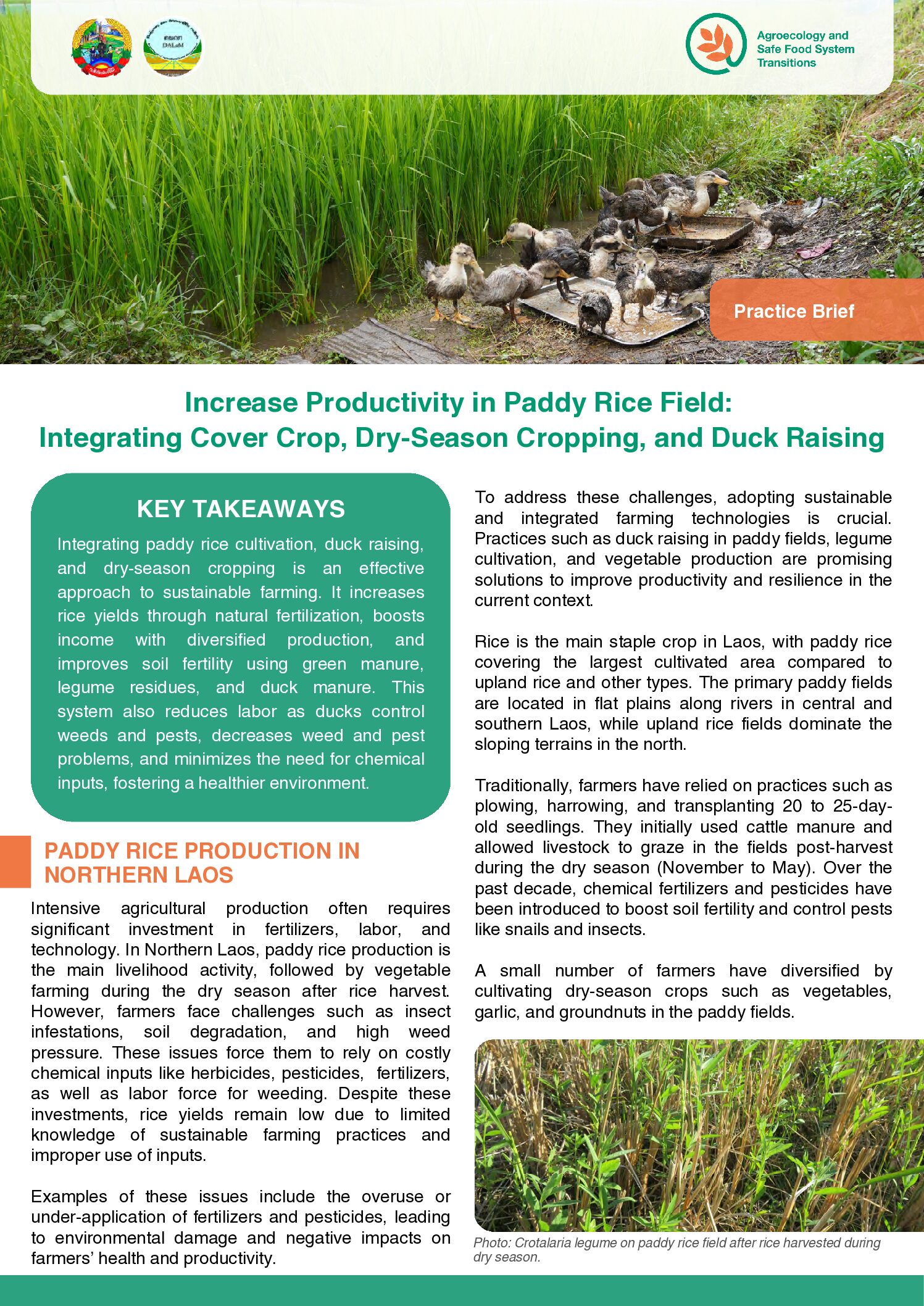
Increase Productivity in Paddy Rice Field: Integrating Cover Crop, Dry-Season Cropping, and Duck Raising
Integrating paddy rice cultivation, duck raising, and dry-season cropping is an effective approach to sustainable farming. It increases rice yields through natural fertilization, boosts income with diversified production, and improves soil fertility using green manure, legume residues, and duck manure. This system also reduces labor as ducks control weeds and pests, decreases weed and pest problems, and minimizes the need for chemical inputs, fostering a healthier environment.
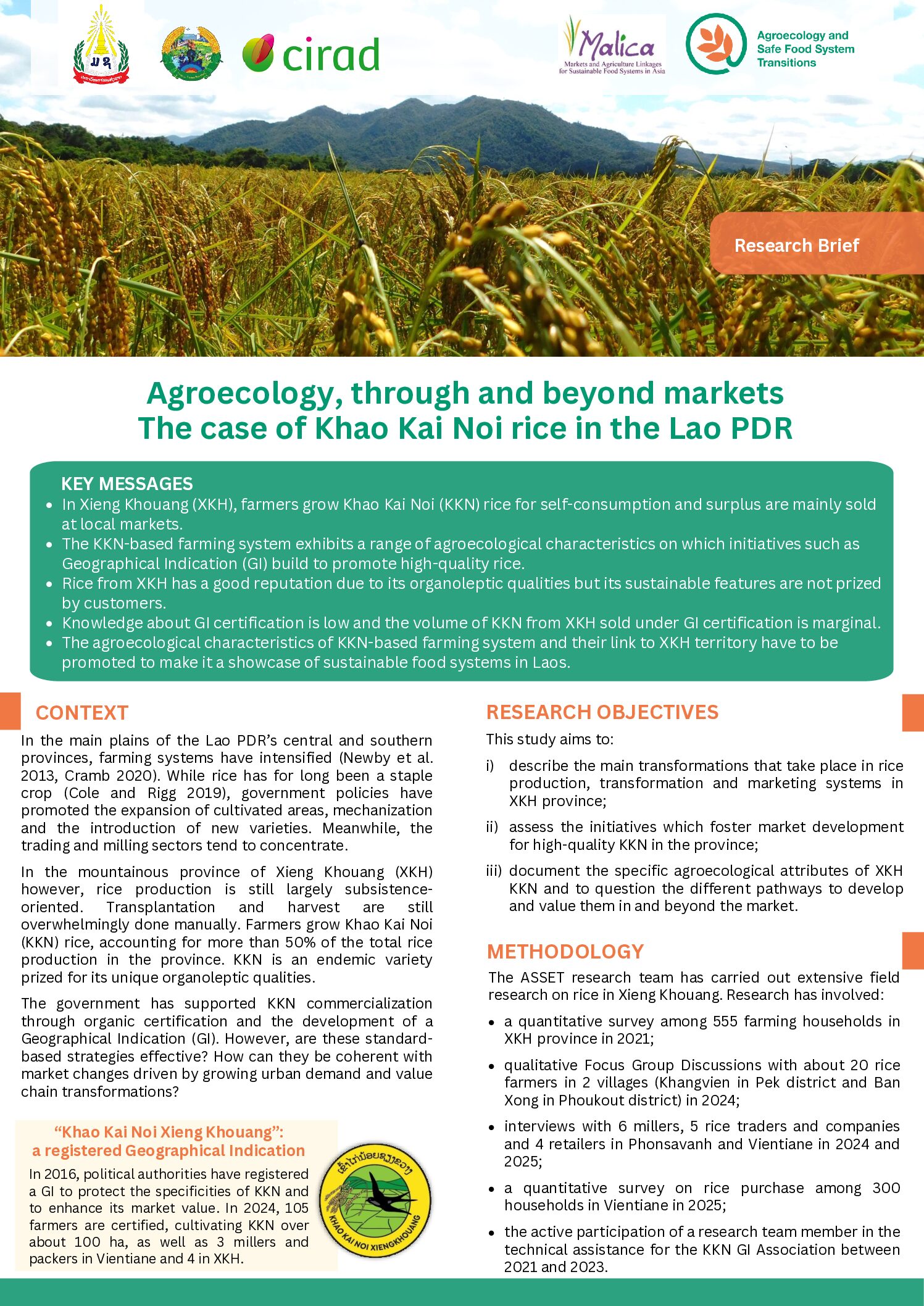
Agroecology, through and beyond markets : The case of Khao Kai Noi rice in the Lao PDR
• In Xieng Khouang (XKH), farmers grow Khao Kai Noi (KKN) rice for self-consumption and surplus are mainly sold at local markets. • The KKN-based farming system exhibits a range of agroecological characteristics on which initiatives such as Geographical Indication (GI) build to promote high-quality rice. • Rice from XKH has a good reputation due to its organoleptic qualities but its sustainable features are not prized by customers. • Knowledge about GI certification is low and the volume of KKN from XKH sold under GI certification is marginal. • The agroecological characteristics of KKN-based farming system and their link to XKH territory have to be promoted to make it a showcase of sustainable food systems in Laos.
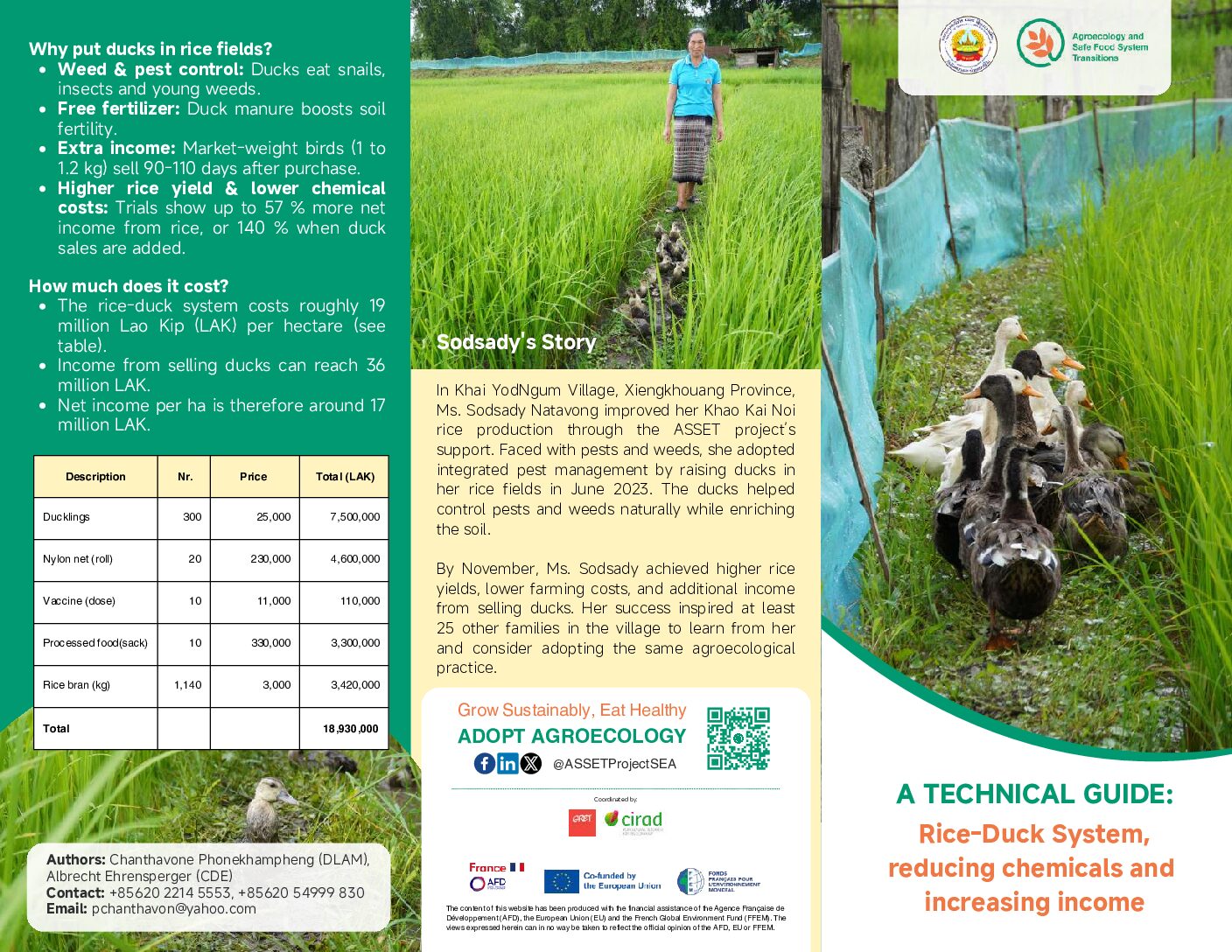
Rice-Duck System, reducing chemicals and increasing income
The technical leaflet introduces the rice–duck system, an agroecological practice that reduces chemical use by allowing ducks to control pests and weeds while naturally fertilizing the soil. It outlines the system’s economic benefits, showing how farmers can increase rice yields and earn additional income from duck sales. The leaflet also provides practical guidance, timelines, and cost estimates to support successful adoption.
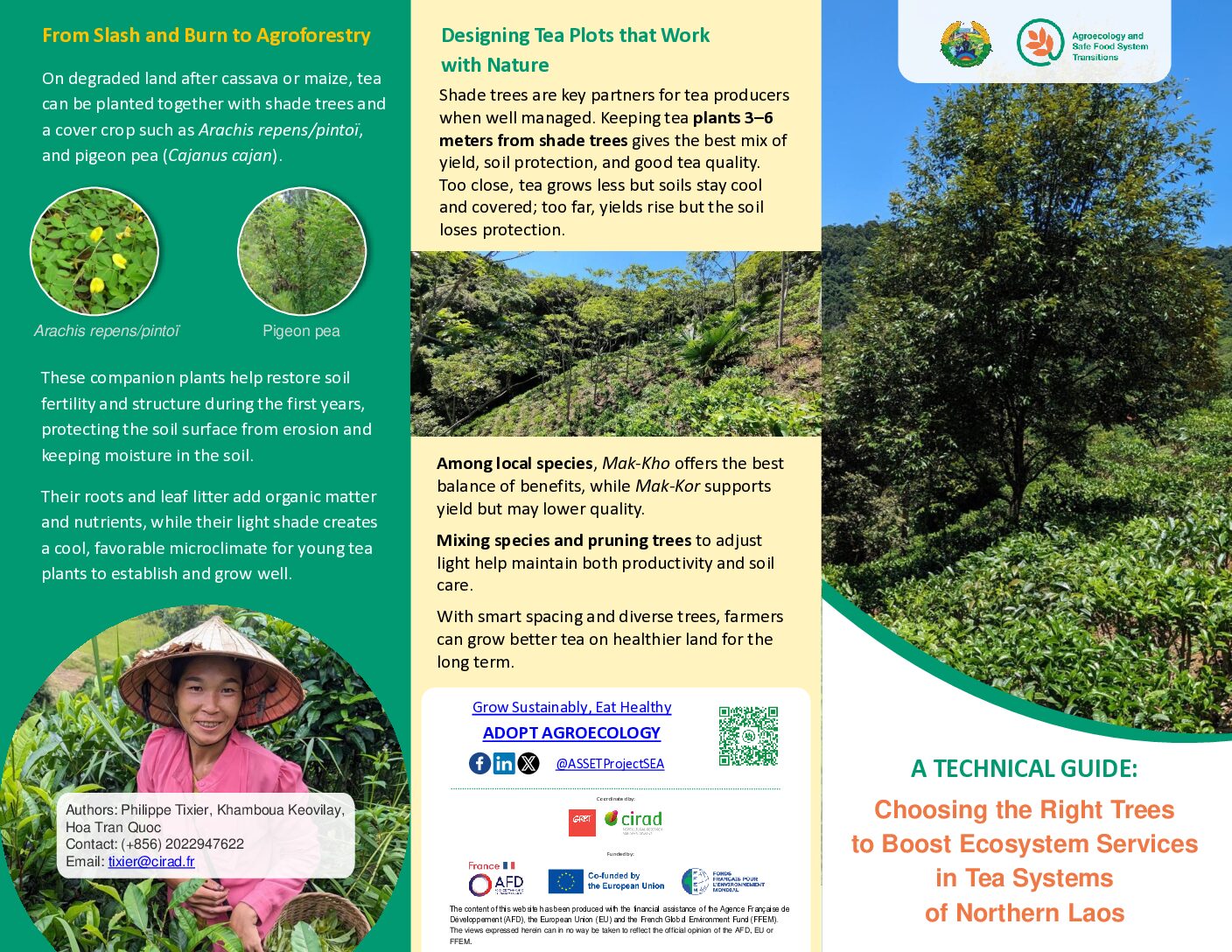
A Technical Guide : Choosing the Right Trees to Boost Ecosystem Services in Tea Systems of Northern Laos
Shade trees are key partners for tea producers when well managed. Keeping tea plants 3–6 meters from shade trees gives the best mix of yield, soil protection, and good tea quality. Too close, tea grows less but soils stay cool and covered; too far, yields rise but the soil loses protection.
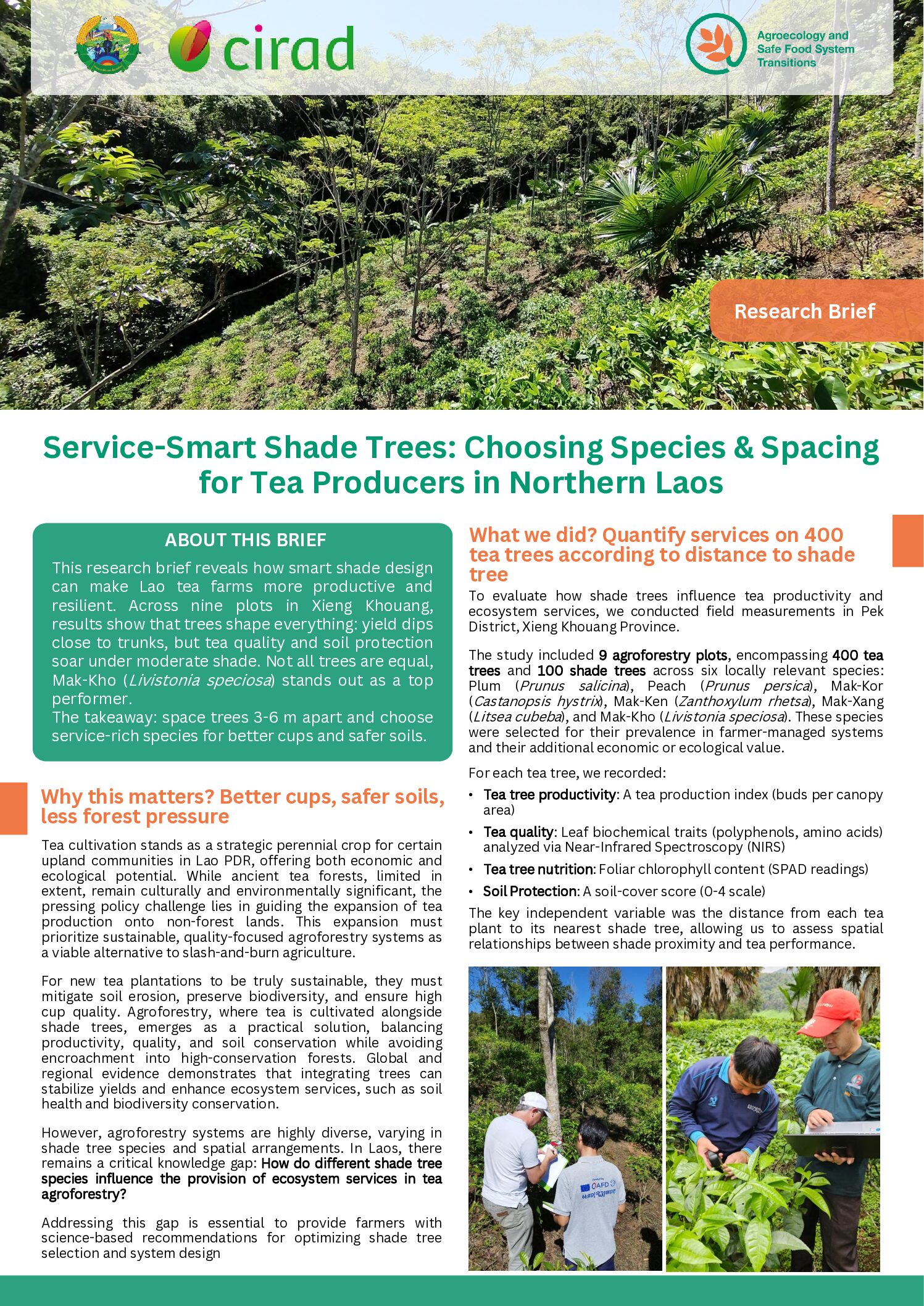
Service-Smart Shade Trees: Choosing Species & Spacing for Tea Producers in Northern Laos
This research brief reveals how smart shade design can make Lao tea farms more productive and resilient. Across nine plots in Xieng Khouang, results show that trees shape everything: yield dips close to trunks, but tea quality and soil protection soar under moderate shade. Not all trees are equal, Mak-Kho (Livistonia speciosa) stands out as a top performer. The takeaway: space trees 3-6 m apart and choose service-rich species for better cups and safer soils.
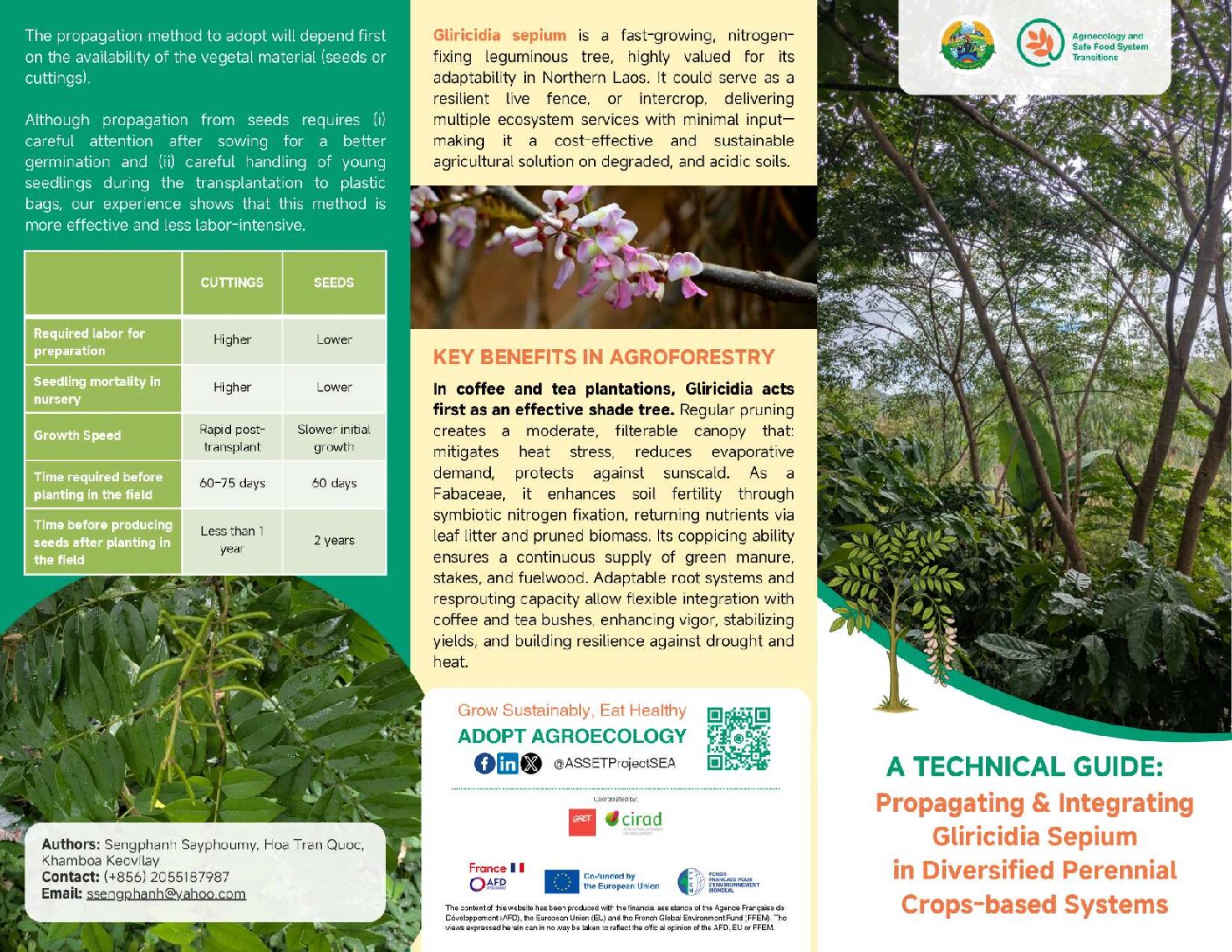
A Technical Guide : Propagating & Integrating Gliricidia Sepium in Diversified Perennial Crops-based Systems
Gliricidia sepium is a fast-growing, nitrogenfixing leguminous tree, highly valued for its adaptability in Northern Laos. It could serve as a resilient live fence, or intercrop, delivering multiple ecosystem services with minimal inputmaking it a cost-effective and sustainable agricultural solution on degraded, and acidic soils.
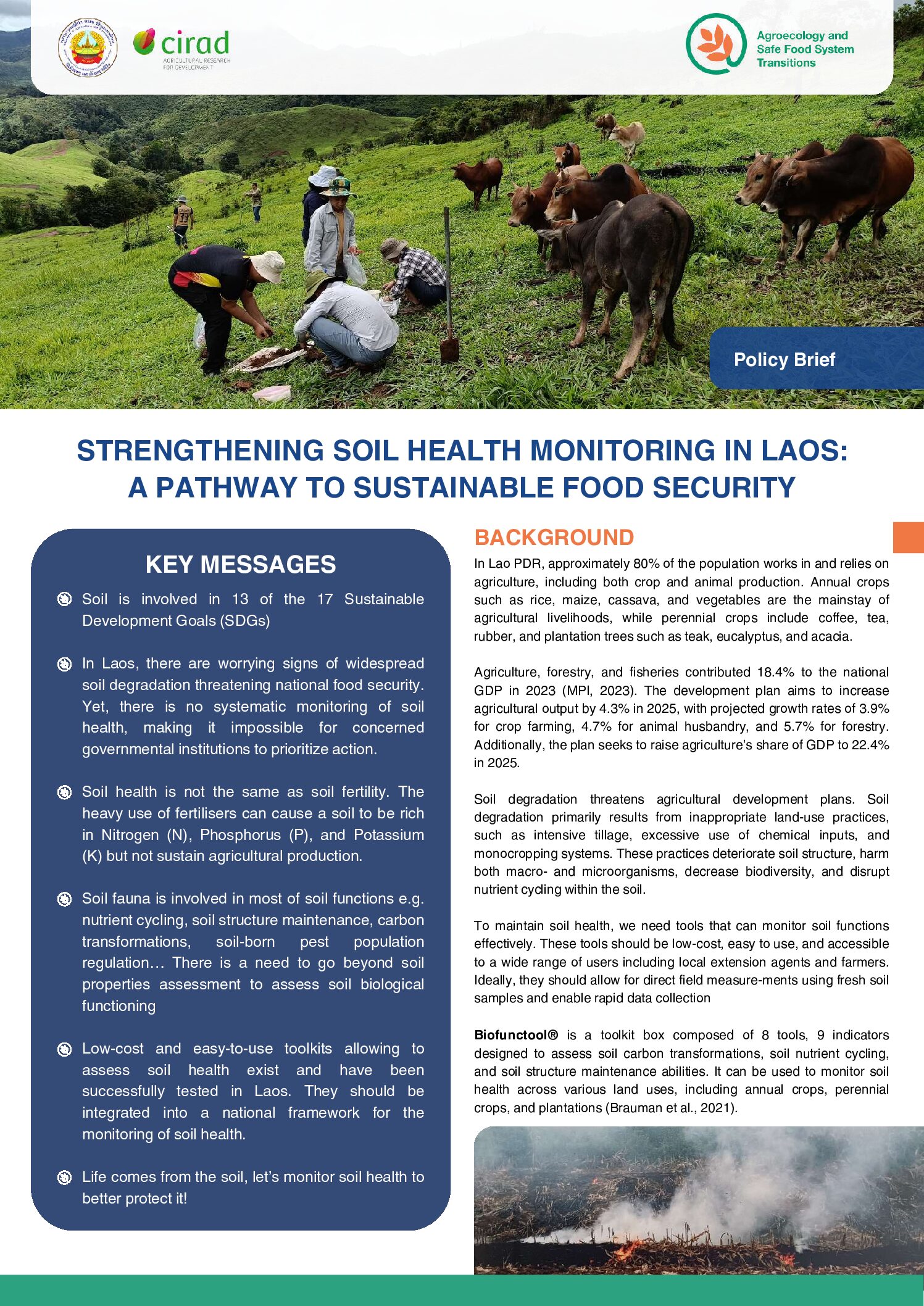
Strengthening Soil Health Monitoring in Laos: A Pathway to Sustainable Food Security
– Soil is involved in 13 of the 17 Sustainable Development Goals (SDGs) – In Laos, there are worrying signs of widespread soil degradation threatening national food security. – Yet, there is no systematic monitoring of soil health, making it impossible for concerned governmental institutions to prioritize action. – Soil health is not the same as soil fertility. The heavy use of fertilisers can cause a soil to be rich in Nitrogen (N), Phosphorus (P), and Potassium (K) but not sustain agricultural production. – Soil fauna is involved in most of soil functions e.g. nutrient cycling, soil structure maintenance, carbon transformations, soil-born pest population regulation… There is a need to go beyond soil properties assessment to assess soil biological functioning – Low-cost and easy-to-use toolkits allowing to assess soil health exist and have been successfully tested in Laos. They should be integrated into a national framework for the monitoring of soil health. – Life comes from the soil, let’s monitor soil health to better protect it!