




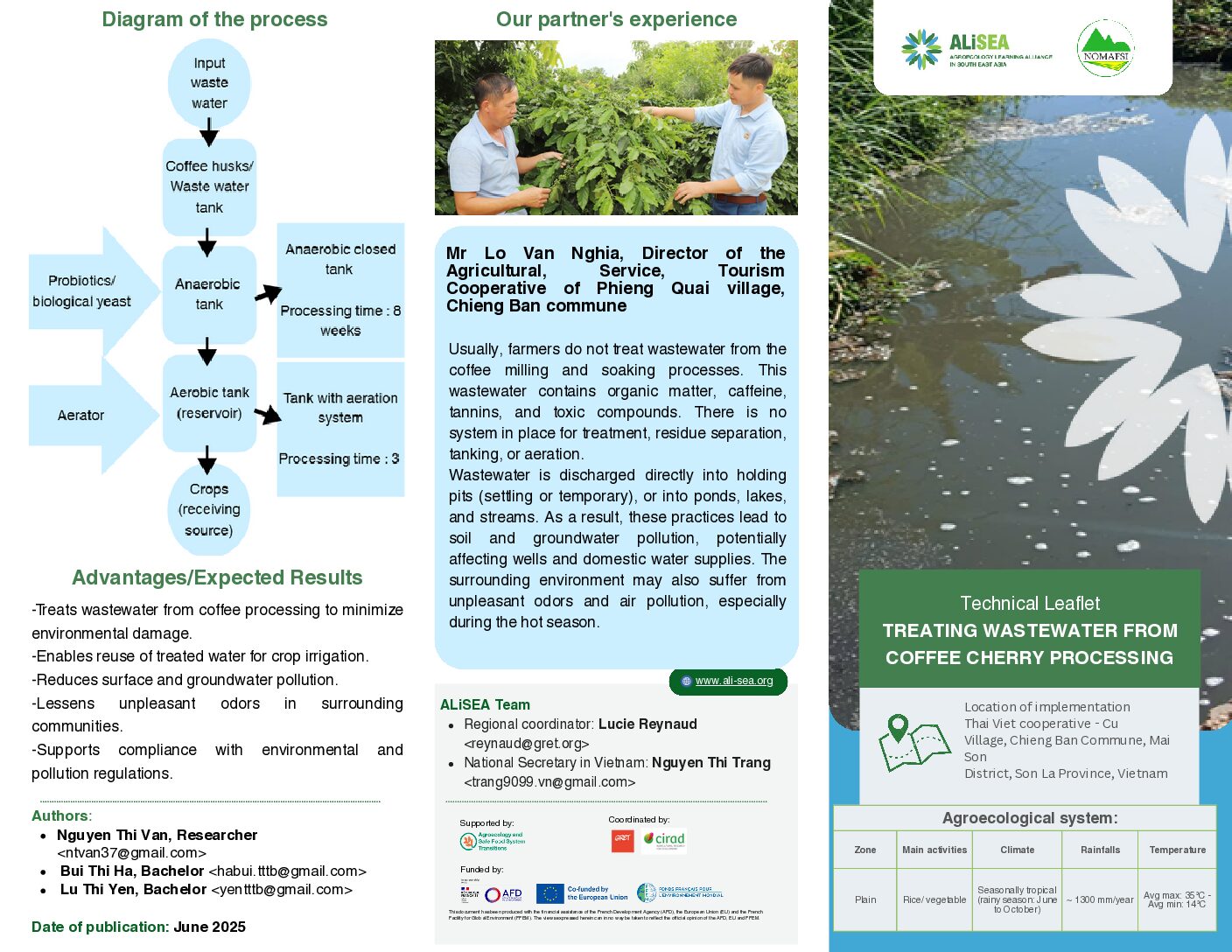
Treating Wastewater from Coffee Cherry Processing
This leaflet describes an ecological system in Son La, Vietnam, for treating wastewater from coffee cherry processing through solid separation, anaerobic and aerobic treatment with yeast, and final storage, enabling safe reuse for irrigation and producing organic fertilizer.

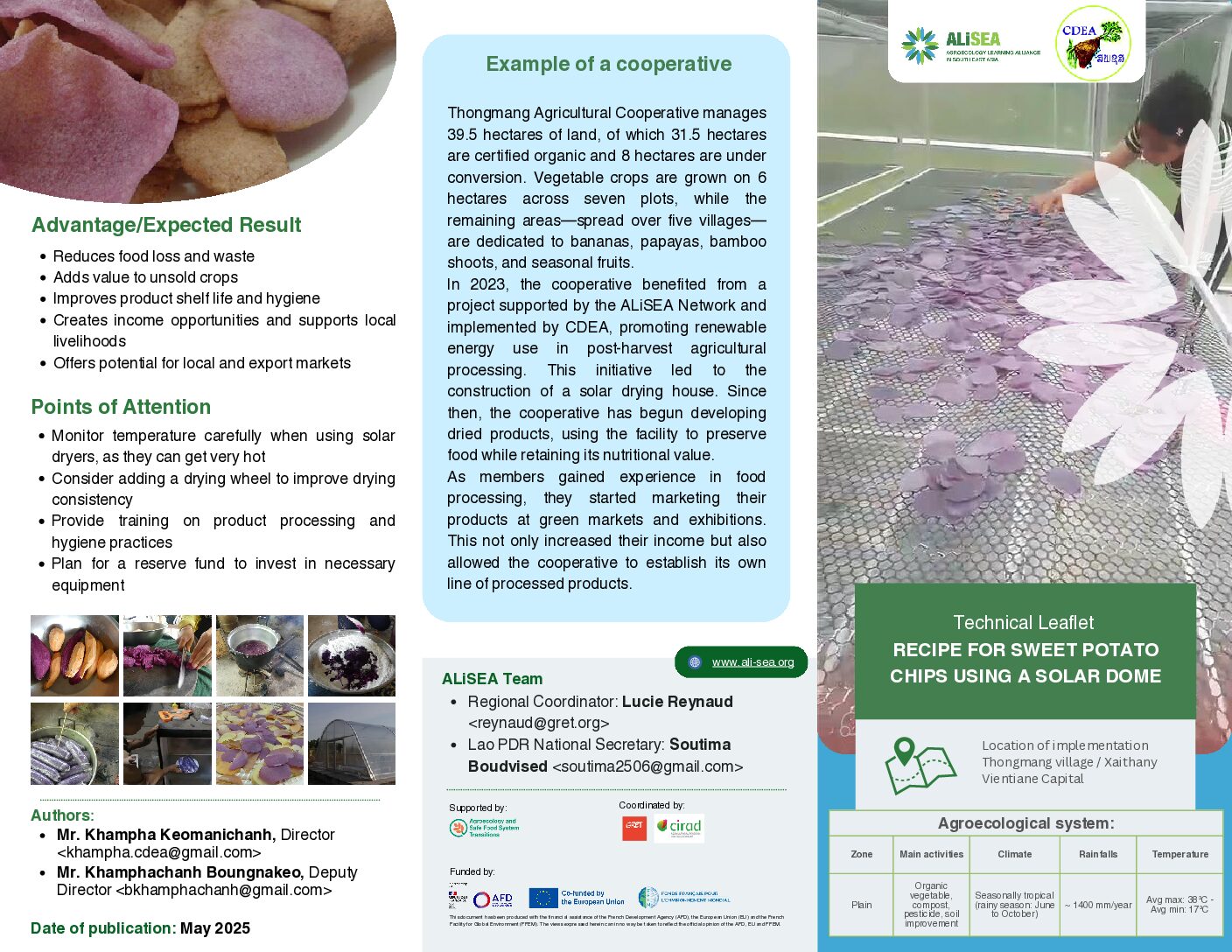
Recipe For Sweet Potato Chips Using A Solar Dome
This recipe focuses on transforming sweet potatoes into crispy chips, providing farmers with a simple method to reduce food waste and create a value-added product. This approach not only helps to preserve surplus crops but also opens opportunities to reach new markets with a branded and exportable product.
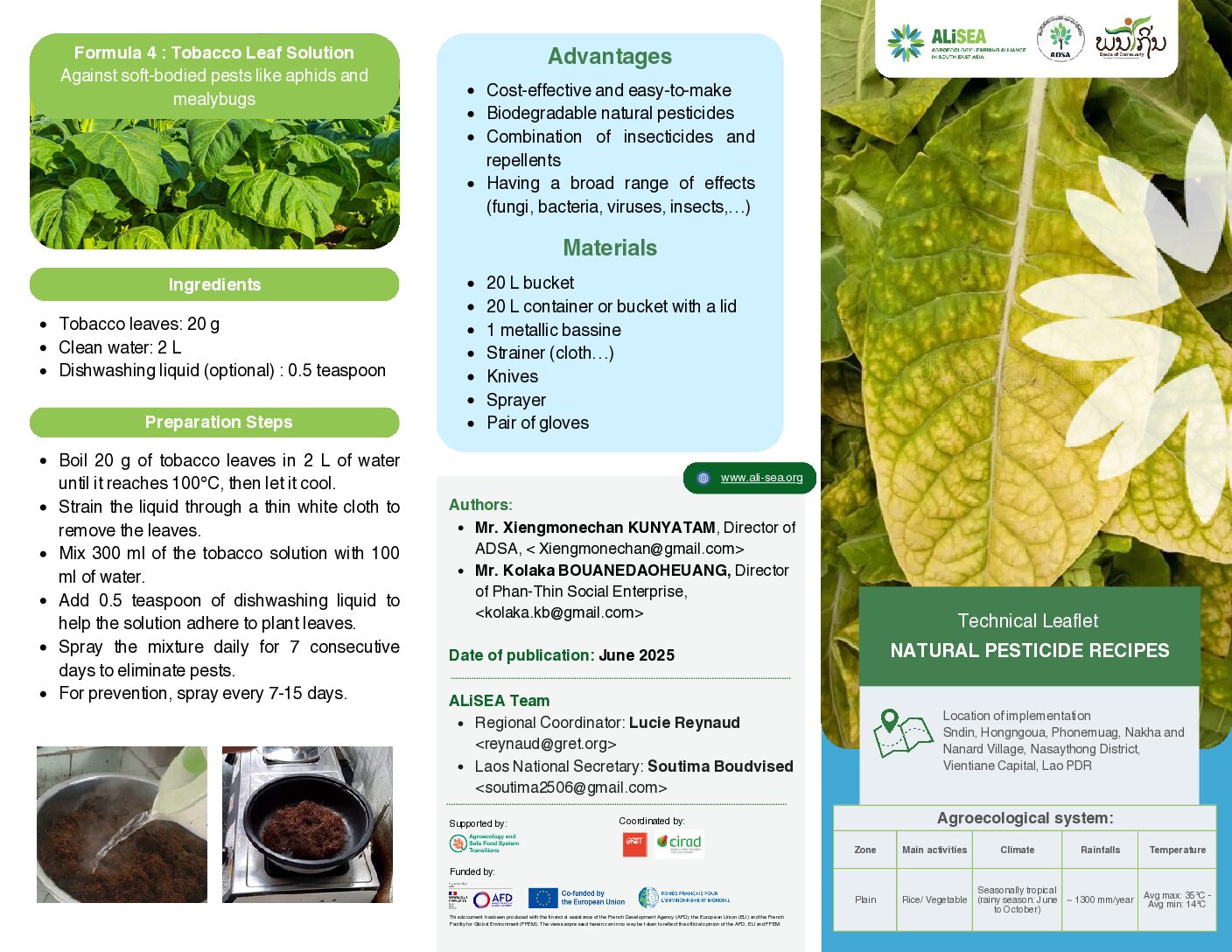
Natural Pesticide Recipes
This leaflet presents simple, biodegradable pesticide recipes made from plants such as lemongrass, galangal, turmeric, chili, garlic, and tobacco, used to control insects, fungi, and other crop pests. It explains how to prepare, dilute, and apply each formula, with guidance on safe handling, storage, and spraying for effective, low-cost pest management in vegetable farming.
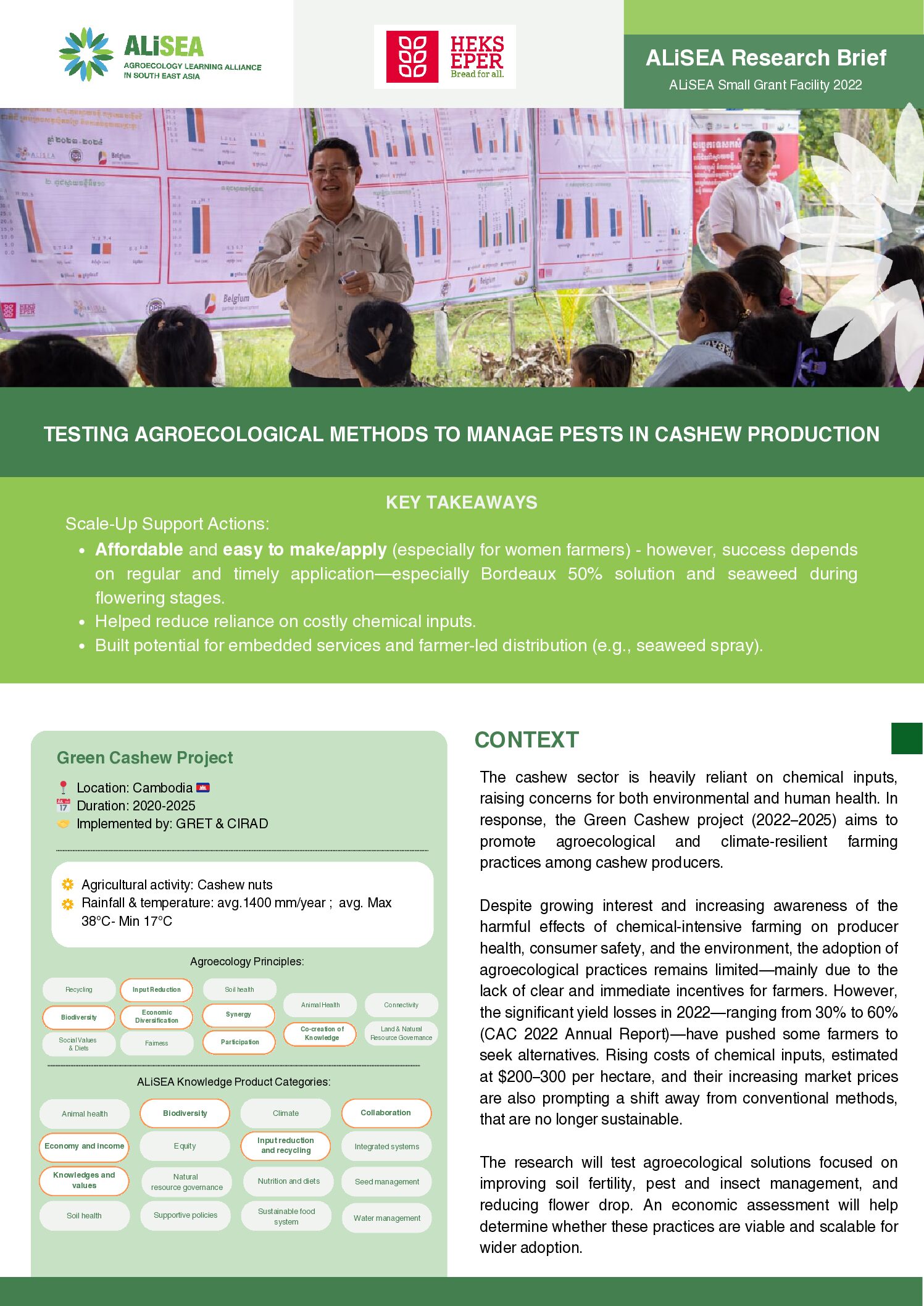
Testing Agroecological Methods to Manage Pests in Cashew Production
The cashew sector is heavily reliant on chemical inputs, raising concerns for both environmental and human health. In response, the Green Cashew project (2022–2025) aims to promote agroecological and climate-resilient farming practices among cashew producers. The research aims to test agroecological solutions focused on improving soil fertility, pest and insect management, and reducing flower drop. An economic assessment will help determine whether these practices are viable and scalable for wider adoption.
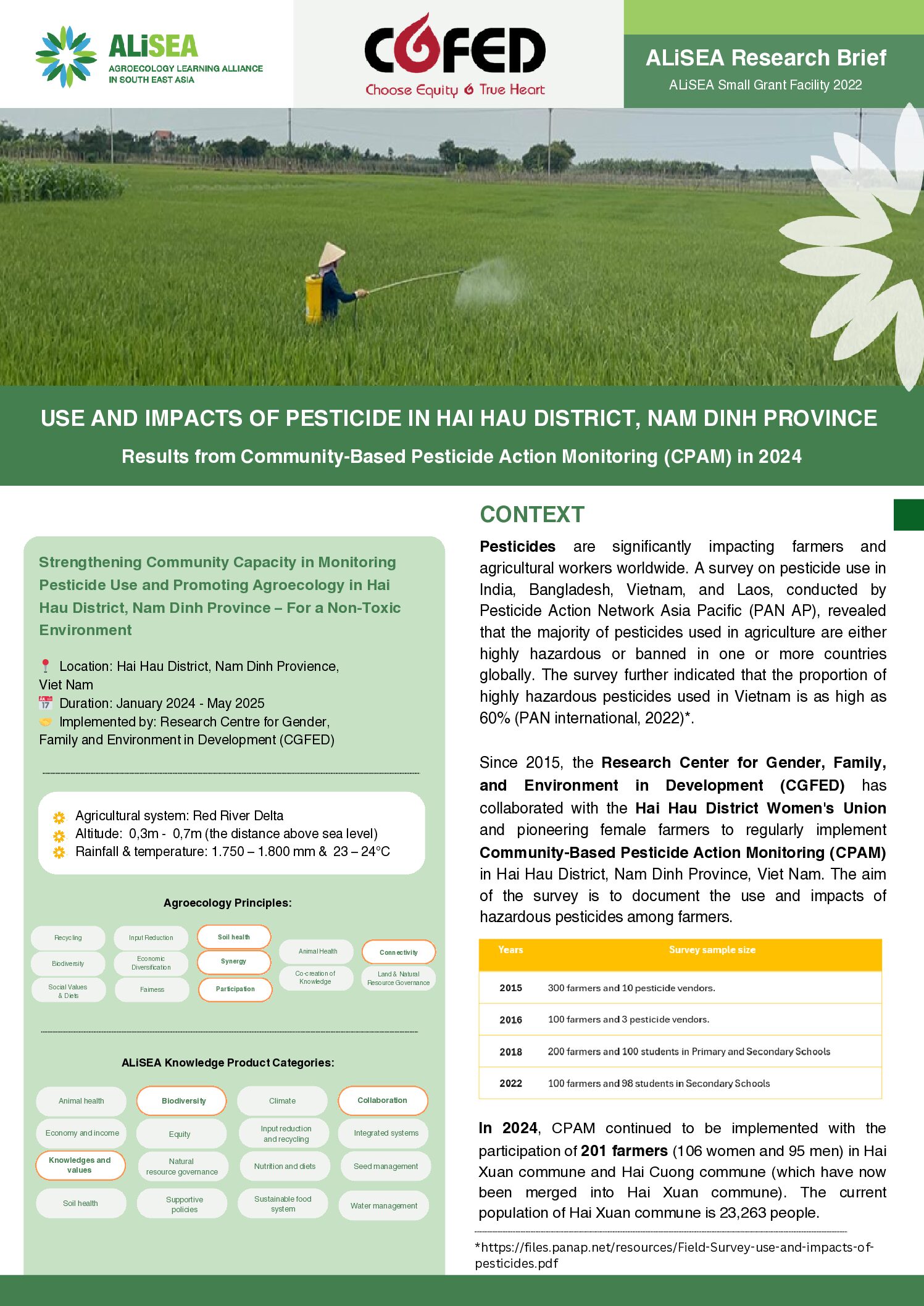
Use and impacts of pesticide in Hai Hau district, Nam Dinh province
This research brief present the results of a survey aiming at documenting the use and impacts of hazardous pesticides among farmers. This survey employed the Community-Based Pesticide Action Monitoring (CPAM) methodology developed by the Pesticide Action Network Asia Pacific (PAN AP)
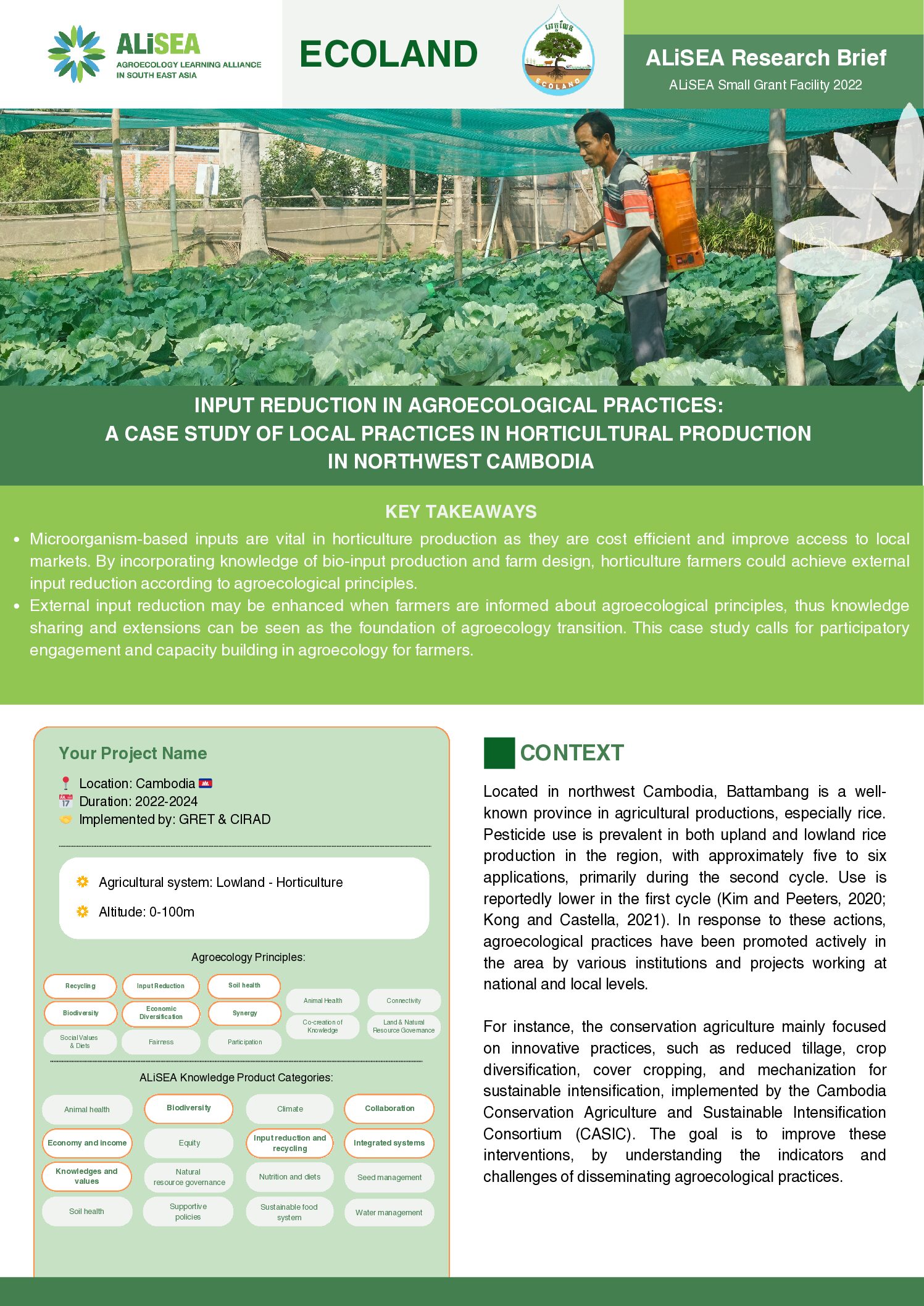
Input Reduction in Agroecological Practices: A Case Study of Local Practices in Horticultural Production in Northwest Cambodia
Located in northwest Cambodia, Battambang is a well-known province in agricultural productions, especially rice. Pesticide use is prevalent in both upland and lowland rice production in the region, with approximately five to six applications, primarily during the second cycle. Use is reportedly lower in the first cycle. In response to these actions, agroecological practices have been promoted actively in the area by various institutions and projects working at national and local levels.
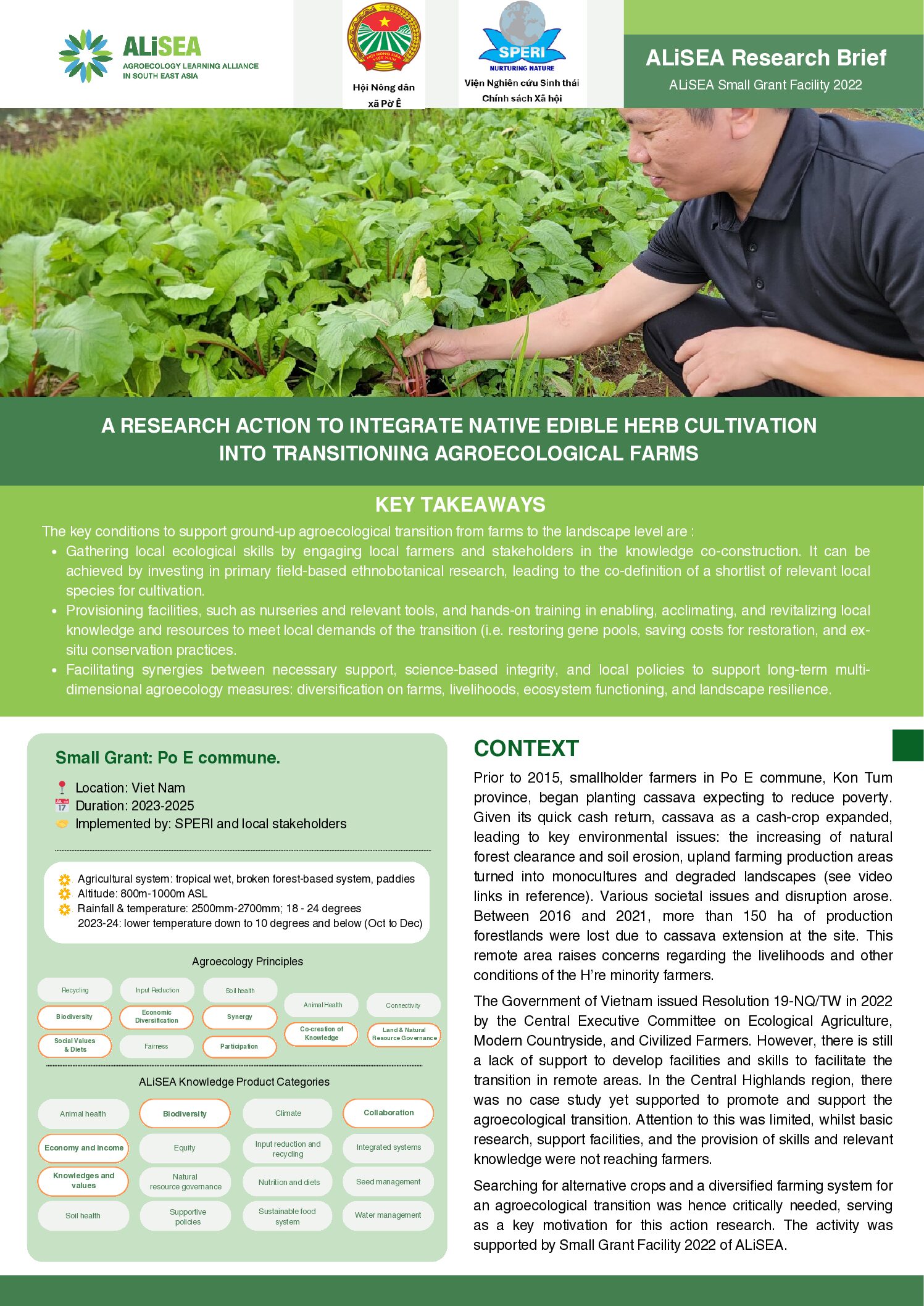
A Research Action to Integrate Native Edible Herb Cultivation into Transitioning Agroecological Farms
This July 2025 research brief by SPERI describes an action-research project in Po E commune, Vietnam, integrating native edible herbs into transitioning agroecological farms to replace cassava monocultures, restore biodiversity, and improve livelihoods. Using a social cluster approach, ethnobotanical research, nurseries, and pilot farms, it engaged farmers, tested local species, and fostered collaboration among communities, scientists, and authorities to support long-term agroecological transition.
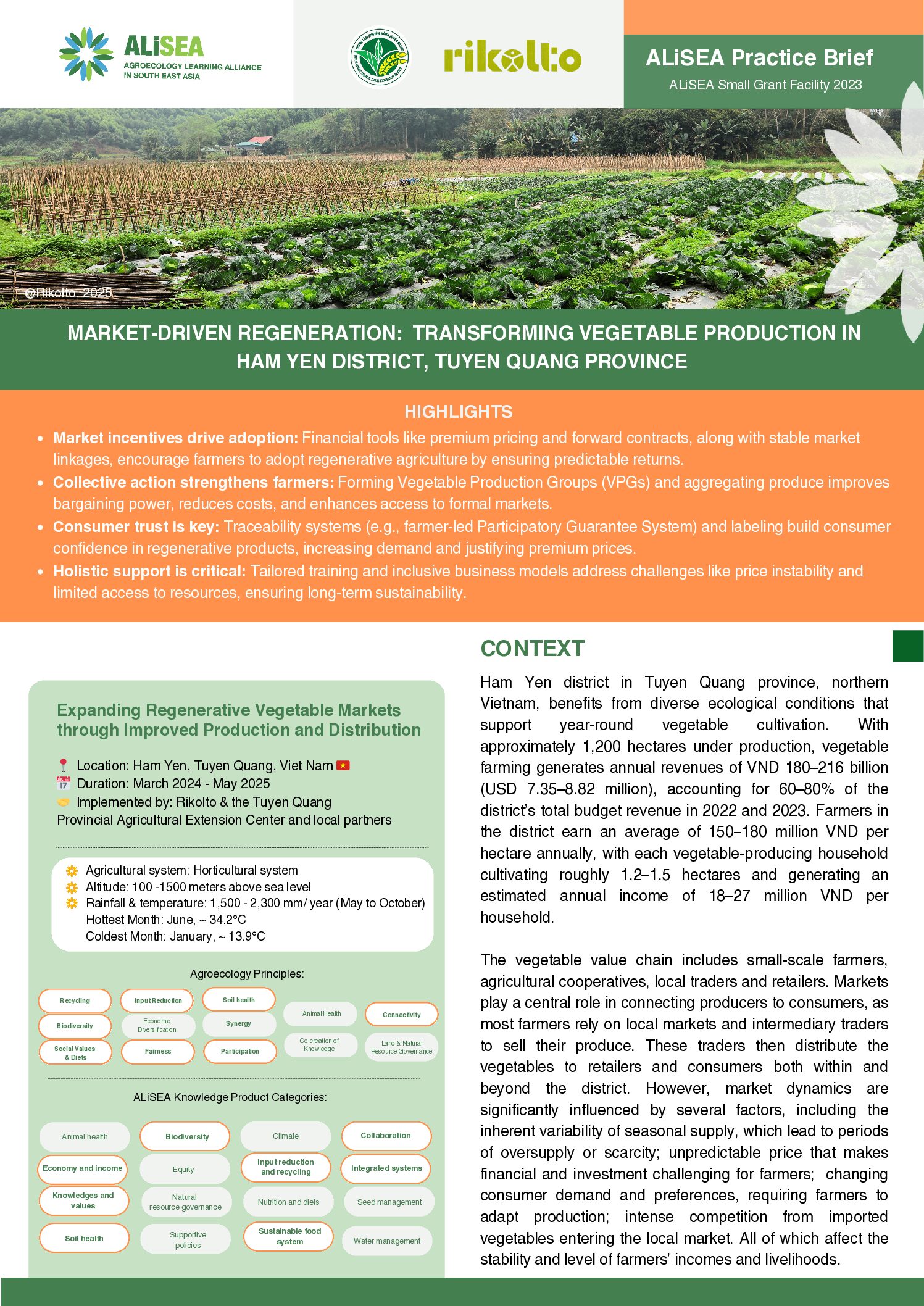
Market-driven regeneration: transforming vegetable production in Ham Yen district, Tuyen Quang province
This practice brief describes how a market driven approach boosted the adoption of regenerative agriculture practices. Based on the results of project “Expanding Regenerative Vegetable Markets through Improved Production and Distribution, 2024-2025 in Ham Yen, Tuyen Quang, Viet Nam
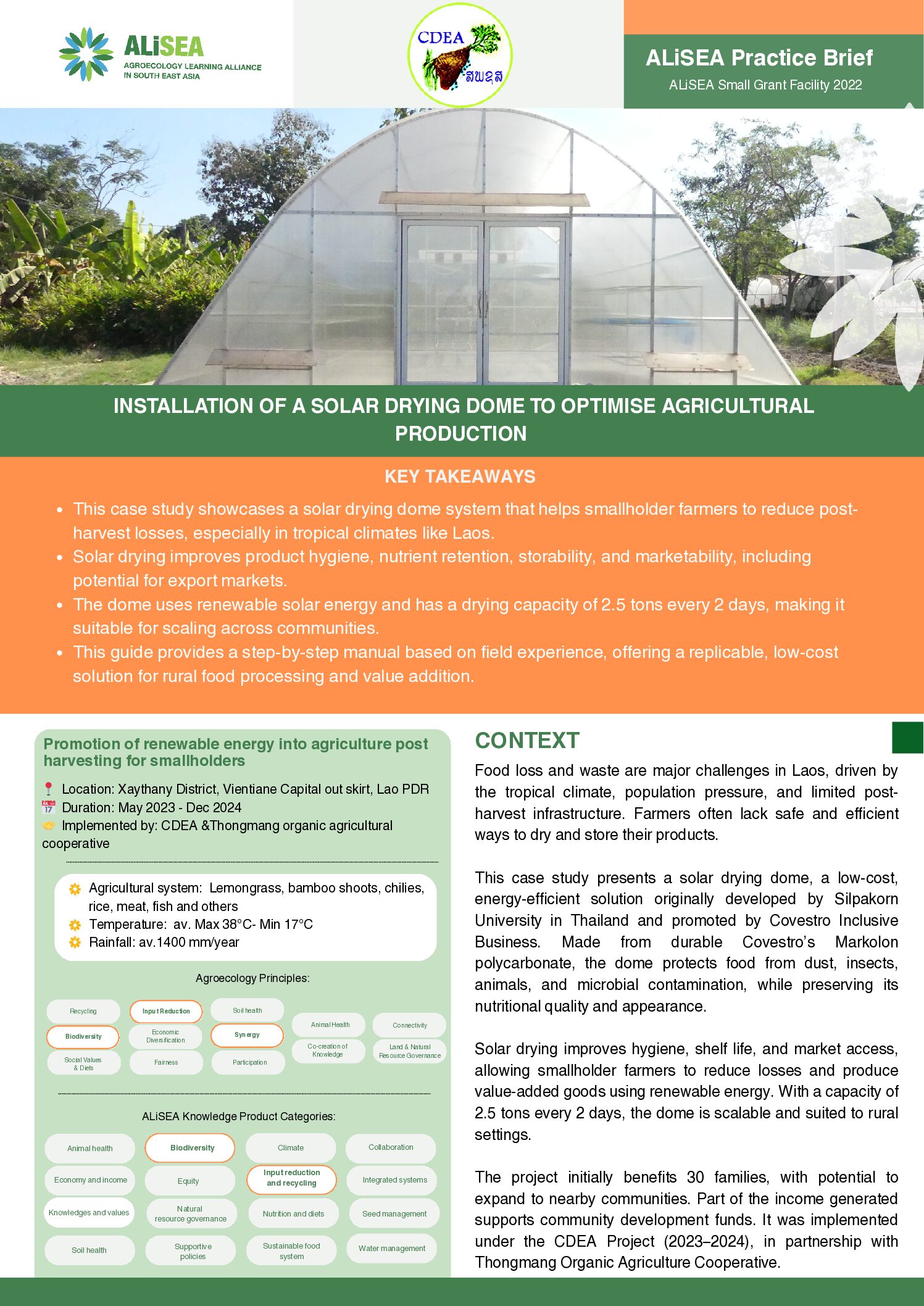
Installation of a solar drying dome for agricultural post harvest
This case study presents a solar drying dome, a low-cost, energy-efficient solution originally developed by Silpakorn University in Thailand . Made from durable polycarbonate, the dome protects food from dust, insects, animals, and microbial contamination, while preserving its nutritional quality and appearance.

Integrated Agroecology: Study, Implementation and Practice (IASIP) an educational curriculum for high school students to engage with agroecology teaching and best practices
This practice brief describes the educational curriculum adopted by GSF to engage sustainably Young students in Cambodia into Agroecology practices through training, field visits and fields trips and practice.