




Direct Seedling Rice System
The direct seedling rice system, or rice broadcasting, involves sowing seeds directly into the field rather than transplanting seedlings. This method reduces labor, especially the transplanting process that is typically carried out by women. It also lowers weed pressure and can indirectly increase rice yields. However, the system has its constraints; heavy rainfall can wash away the seedlings, while insufficient rain can cause pest damage. This method has been successfully adopted in Jaeng Village (Thoulakhom District, Vientiane Province, Lao PDR), where it has helped to improve efficiency in rice production.

Buffalo Benefits in Rice Cultivation
This video shows how buffalo help maintain soil nutrients and support aquatic biodiversity within the rice farming system. Using the example of Phonevieng Village, Vang Vieng District, Vientiane Province, it explains how the buffalo’s behavior creates benefits and synergies for rice cultivation, especially through their use of ponds.
Bio-Pesticides: Why and How to Produce It – The Yone Village Example
This video explains how and why to produce bio-pesticides at home, using Yone Village, Paek District, Xiengkhouang Province, Lao PDR as an example. It highlights the important interactions between insects and plants in agricultural ecosystems, such as pollination. When these interactions are disturbed, plant-eating insects can become pests. Bio-pesticides offer a sustainable, natural way to repel pests without exterminating them, unlike chemical pesticides. The video details the ingredients needed, a step-by-step recipe, and instructions on how to use bio-pesticides effectively.
Beekeeping and Honey Production in Houaytan Village
This video presents beekeeping and honey production in Houaytan Village, Phoukoud District, Xiengkhouang Province, Lao PDR, highlighting their role in generating income. The featured farmer shares his experience, describes the tools and methods he uses, and explains how to build racks for raising bees.
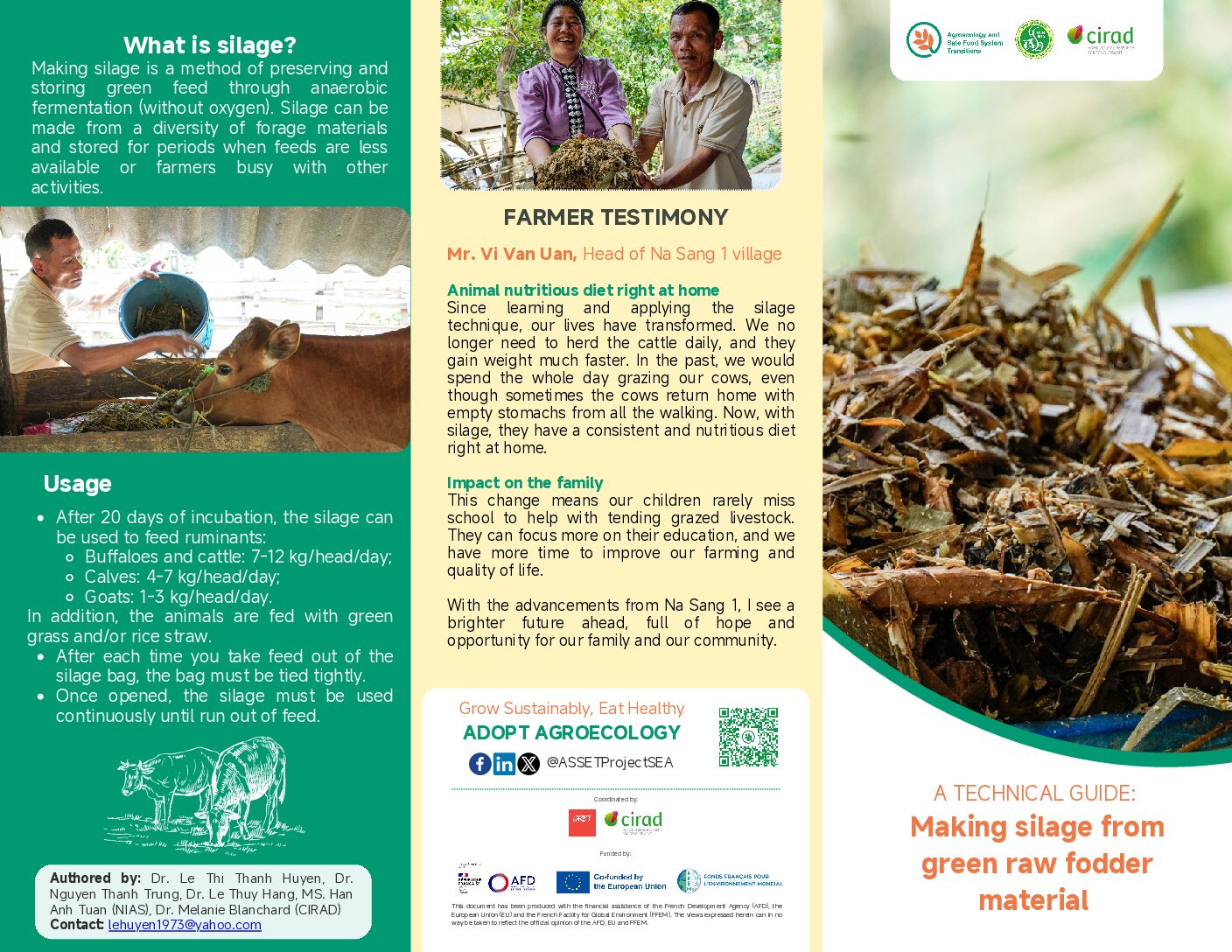
Making silage from green raw fodder material
Making silage is a method of preserving and storing green feed through anaerobic fermentation (without oxygen). Silage can be made from a diversity of forage materials and stored for periods when feeds are less available or farmers busy with other activities.
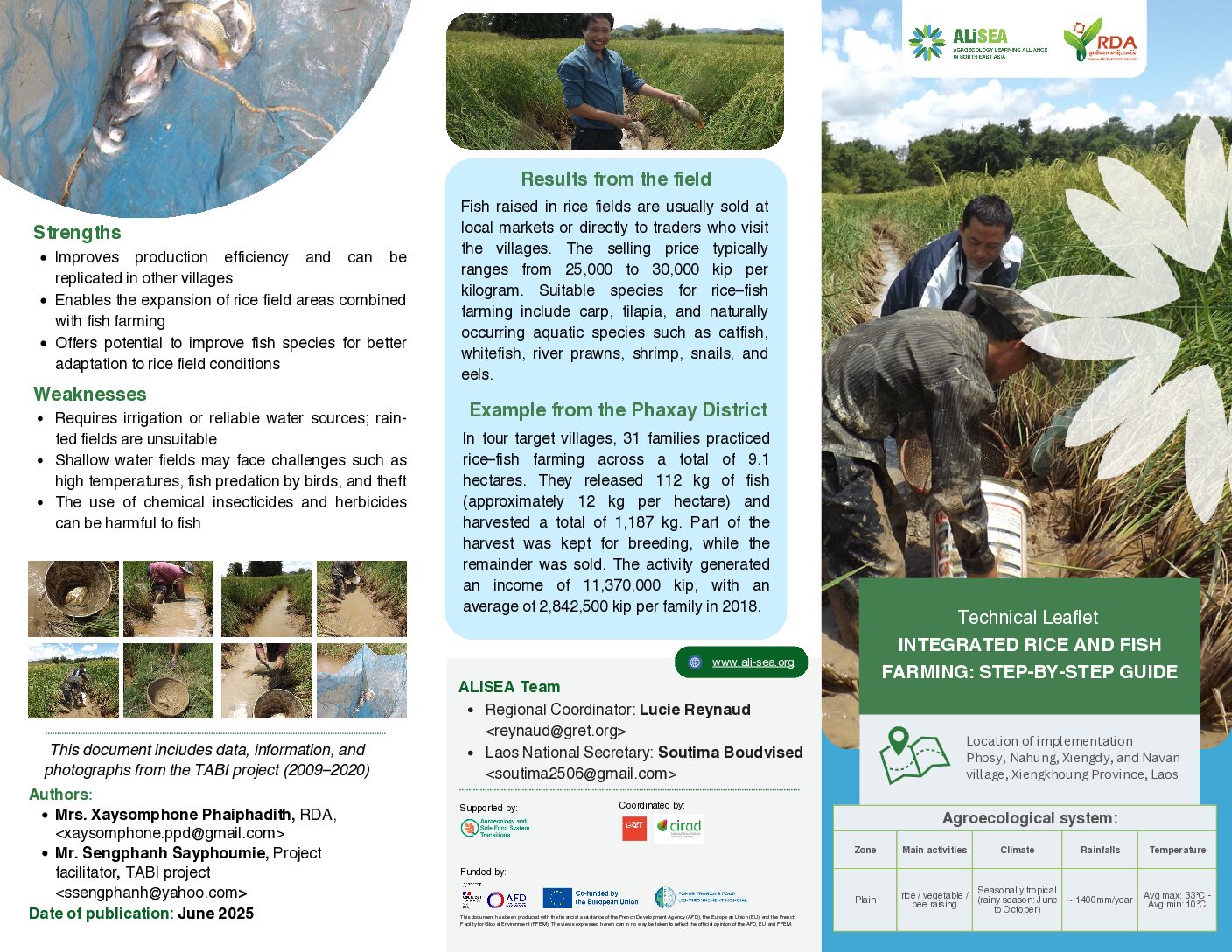
Integrated Rice and Fish Farming, Step-by-Step Guide
This June 2025 technical leaflet from Rural Development Association (RDA) in Laos is a step-by-step guide to integrated rice–fish farming, explaining how to prepare fields, choose suitable rice and fish species, manage stocking, feeding, and maintenance, and outlining benefits, challenges, and field results from pilot villages.
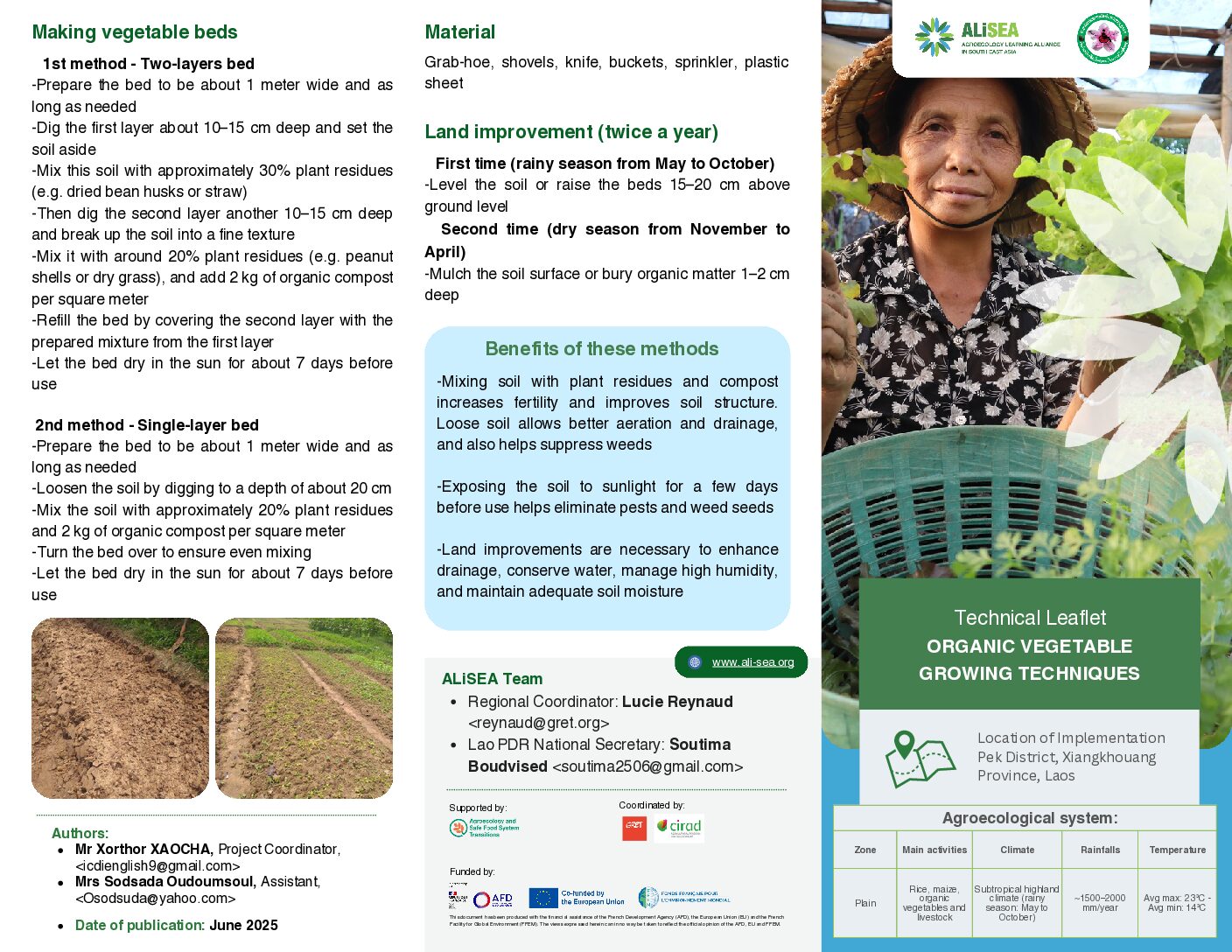
Organic Vegetable Growing Techniques
The leaflet provides practical guidance on organic vegetable cultivation in Pek District, Xiangkhouang Province, Laos. It describes the local subtropical highland climate and outlines methods for improving soil fertility and structure through compost and plant residues, managing pests with sun exposure, and ensuring proper drainage and moisture. It explains two bed preparation techniques, seasonal land improvements, mulching for weed suppression and moisture retention, and watering schedules adapted to seasonal conditions. The guide also covers organic fertilization, crop rotation to reduce pests and diseases, sowing and transplanting methods, integrated cropping for sustainability, and best practices for harvesting to maintain vegetable freshness.
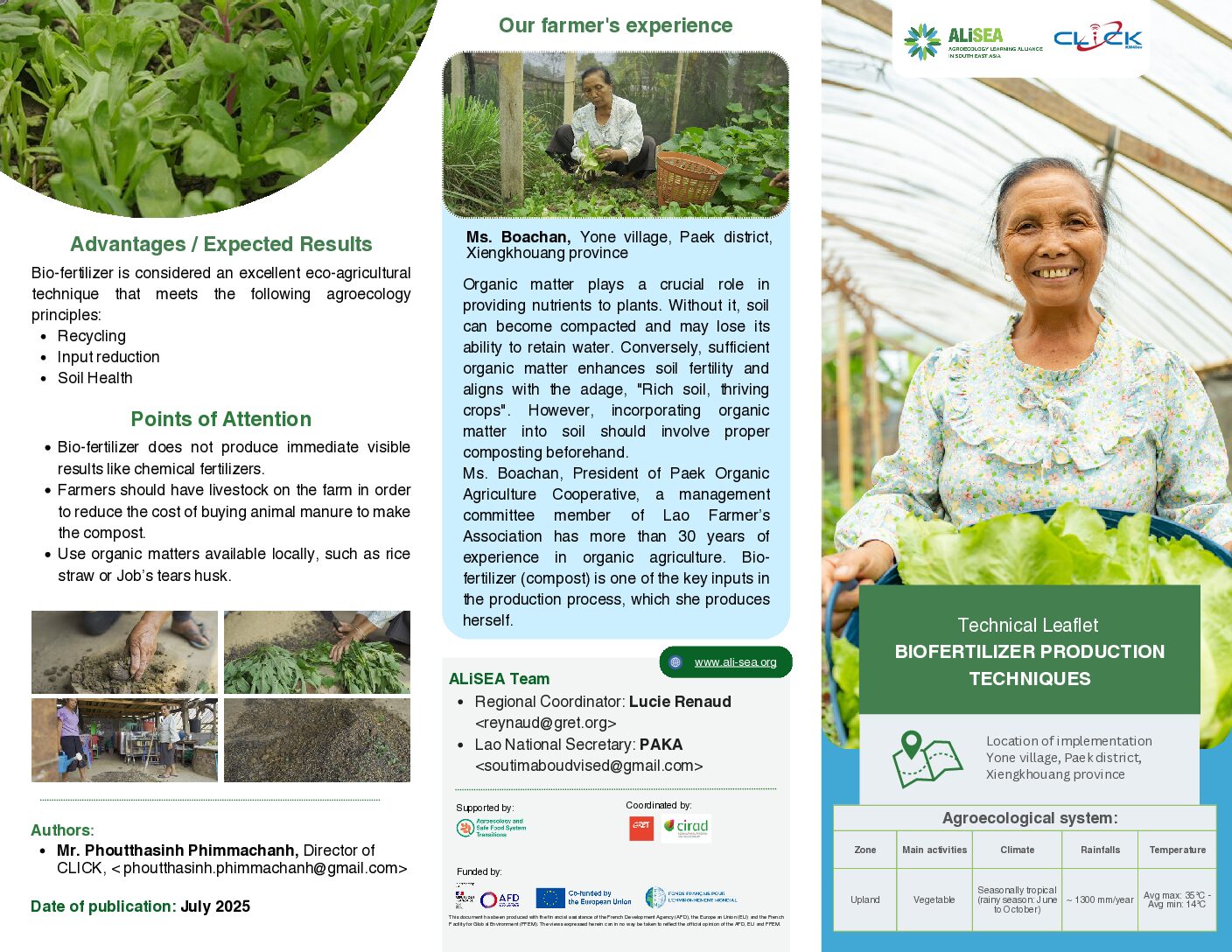
Biofertilizer production techniques in Xiengkhouang Province, Laos
The resource explains biofertilizer production in Yone village, Xiengkhouang Province, based on farmer experience. It highlights compost as a key input for soil health, recycling, and reducing chemical use. The process involves mixing dry animal manure with burnt rice husks, adding bran and optional legumes, and fermenting with a sugar-based bio-extract for about seven days. Proper storage ensures quality for up to a year. Application rates depend on soil quality, with compost gradually improving fertility over time, allowing reduced quantities in subsequent years.
Biofertilizer production techniques in Xiengkhouang Province, Laos
The resource explains biofertilizer production in Yone village, Xiengkhouang Province, based on farmer experience. It highlights compost as a key input for soil health, recycling, and reducing chemical use. The process involves mixing dry animal manure with burnt rice husks, adding bran and optional legumes, and fermenting with a sugar-based bio-extract for about seven days. Proper storage ensures quality for up to a year. Application rates depend on soil quality, with compost gradually improving fertility over time, allowing reduced quantities in subsequent years.
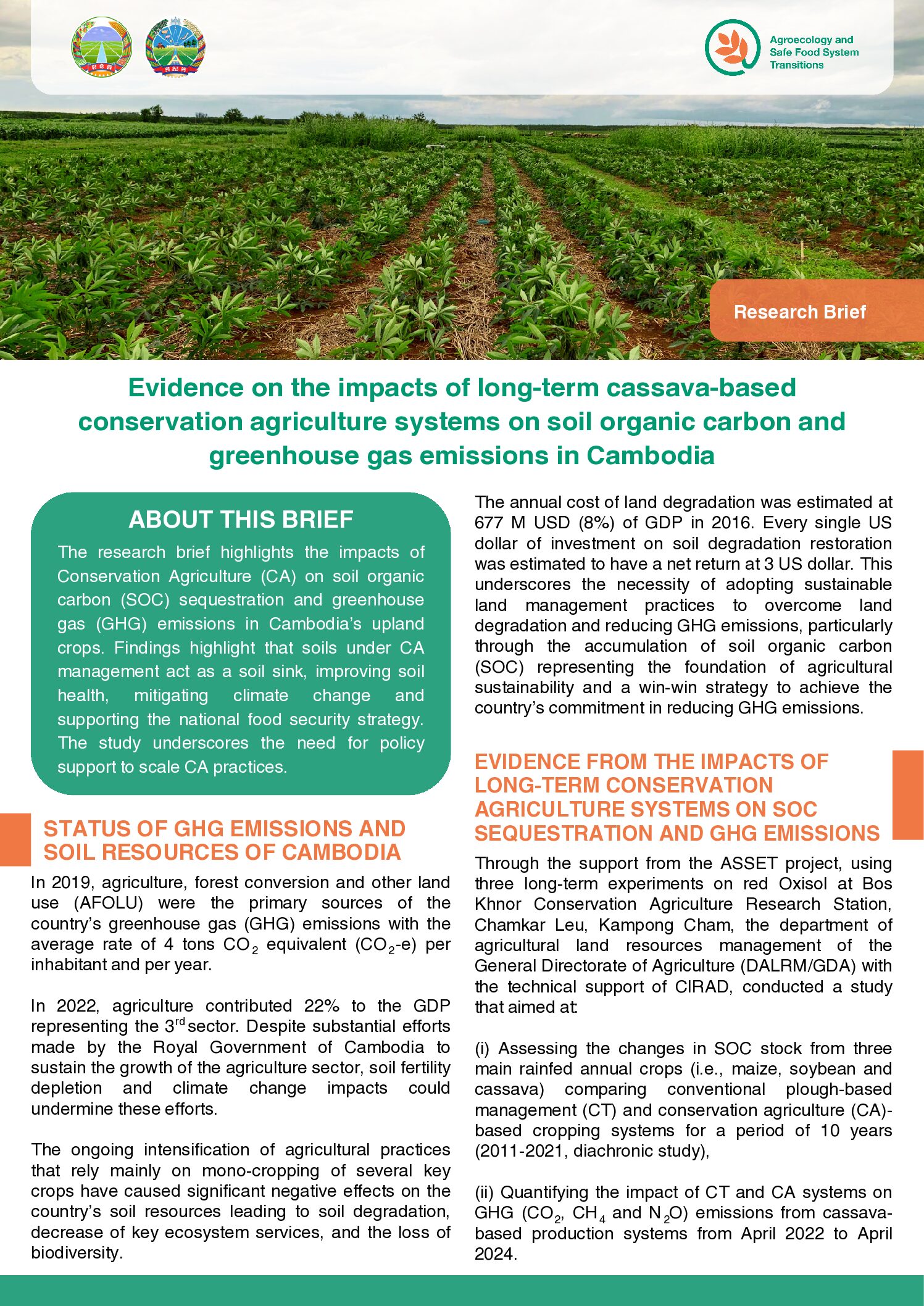
Evidence on the impacts of long-term cassava-based conservation agriculture systems on soil organic carbon and greenhouse gas emissions in Cambodia
The research brief highlights the impacts of Conservation Agriculture (CA) on soil organic carbon (SOC) sequestration and greenhouse gas (GHG) emissions in Cambodia’s upland crops. Findings highlight that soils under CA management act as a soil sink, improving soil health, mitigating climate change and supporting the national food security strategy. The study underscores the need for policy support to scale CA practices.